

In the relentless pursuit of poker excellence, it’s often not the flashy plays or dramatic bluffs that separate the long-term winners from the losers. More often, it’s the hidden leaks that slowly erode your winrate over time. Here are five of the most common and costly poker leaks that might be draining your profits without you even knowing it.
1. Defending the Big Blind Poorly
One of the most misunderstood aspects of modern poker is how to properly defend the big blind. Many players fall into one of two traps: either defending far too loosely with weak, offsuit junk or folding too tightly and giving up massive equity. The truth lies somewhere in between, and it depends heavily on stack depth, opponent position, and raise size.
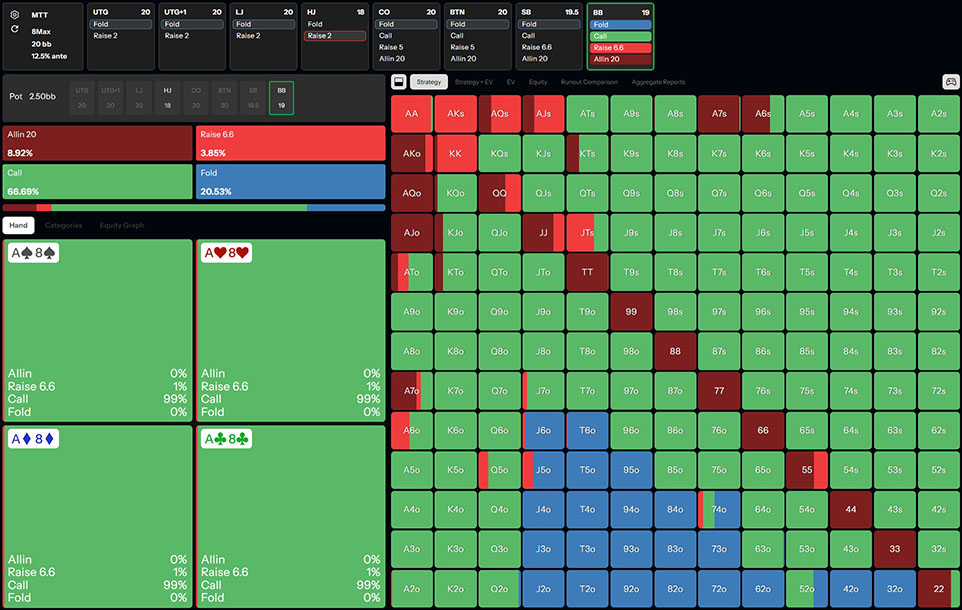
When you’re shallow-stacked, especially against small opens, the math allows you to defend a very wide range. You already have one big blind invested, and with antes in play, you’re often getting an excellent price to see the flop. However, as stacks get deeper, the value of speculative hands decreases, and you must adjust with a tighter strategy.
The charts below illustrate how your defending range changes based on stack size. Notice how wide you are supposed to defend at 20 big blinds against an open from the hijack.
Contrast that with 100 big blind range, where many of those same hands become easy folds because you’ll realize equity poorly in deep-stacked situations.
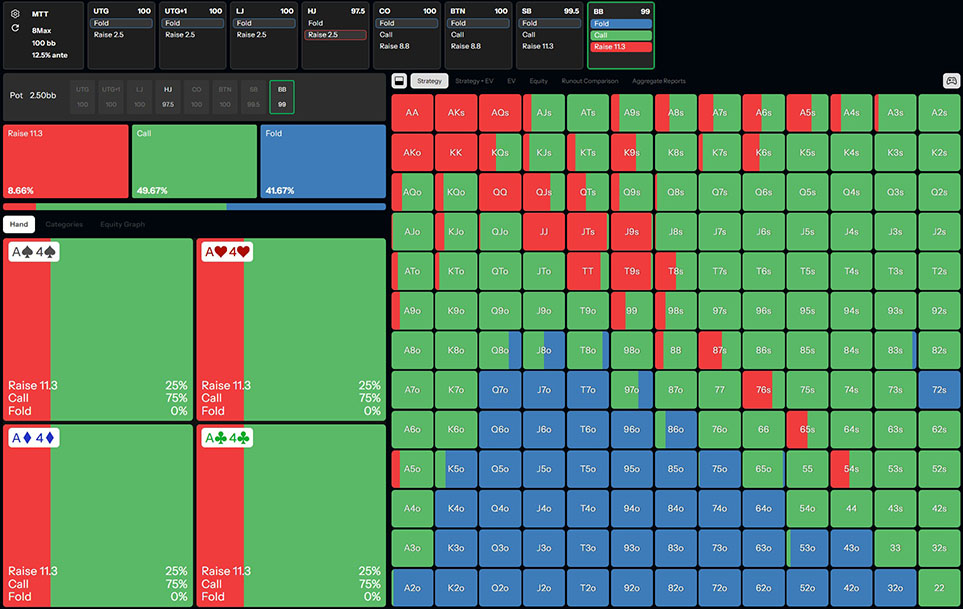
Another common mistake players make is failing to balance their calling vs. 3-betting ranges. Strong hands like big pairs and premium aces obviously 3-bet for value, but you should also mix in a selection of bluffs—hands with good blockers or postflop playability. Without these, your range becomes predictable, making you easy to exploit.
The bottom line: stack size dictates everything when defending the big blind. Use the ranges above as a starting point, and dive deeper with PeakGTO to see more about how your strategy shifts at different depths. Over time, mastering these adjustments will protect your big blind investment and stop this leak from draining your winrate.
2. Slow Playing Too Often
While slow playing can be an effective tool in rare, specific spots, many players rely on it far too frequently, sacrificing long-term value.
The main problem is that most opponents—especially at small and mid-stakes—don’t bluff often enough or fold strong second-best hands. Against these players, slow playing costs you money. Maximizing value usually means betting your strong hands early and often, particularly on boards with potential draws. Waiting for opponents to “catch up” simply doesn’t work when they’re more likely to call than to fire off bluffs.
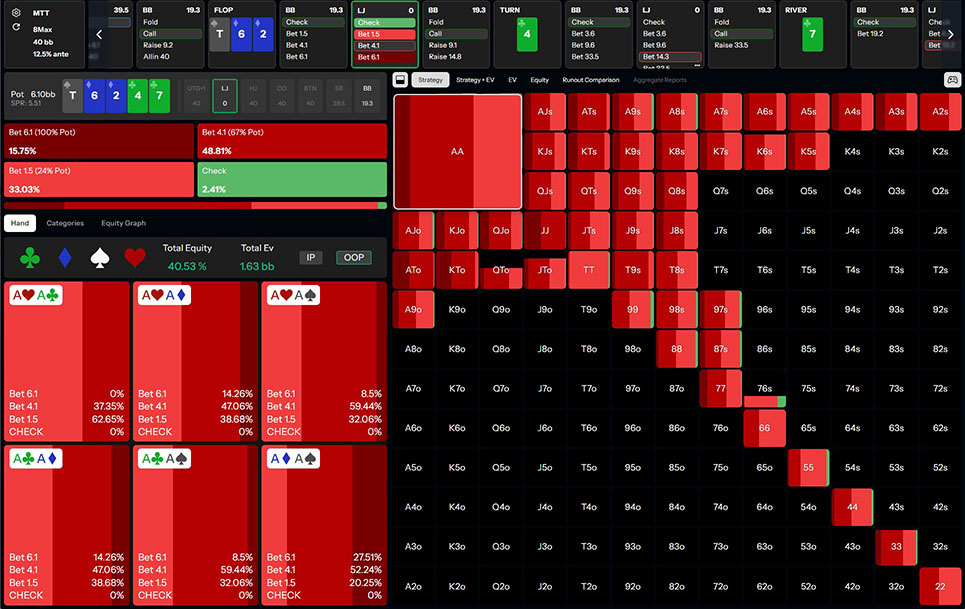
Take this scenario: you hold A♣ A♠ in the lojack and open to 2.3bb. The big blind calls, and the flop comes T♠ 6♦ 2♦. The big blind checks, and you continuation bet 4.1bb (67% pot). They call.
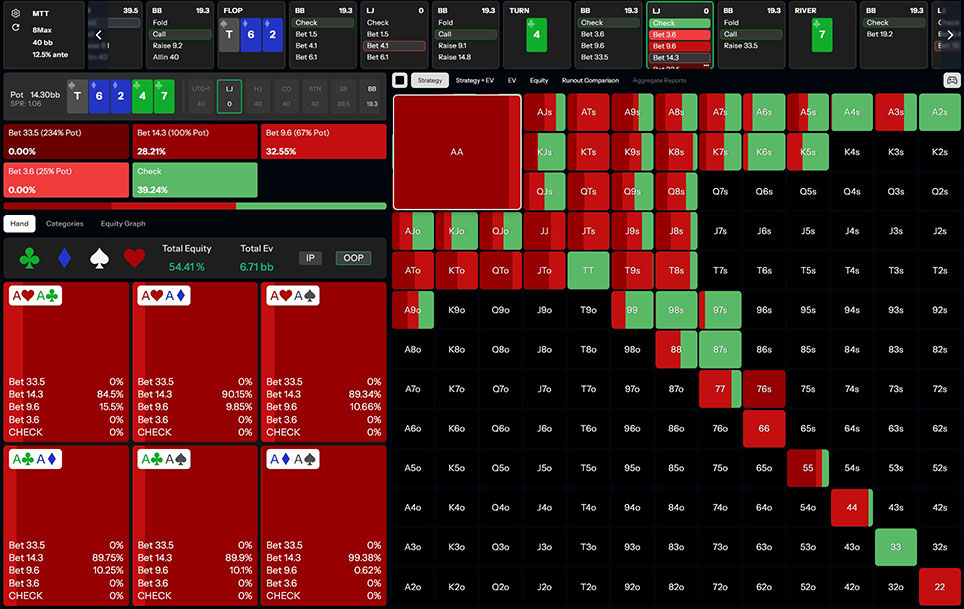
The turn is the 4♣, adding another draw. The big blind checks again, and you fire 14.3bb (100% pot). They call once more.
On the river, the 7♣ falls, and the big blind checks a third time. You move all in for 19.2bb (44% pot).
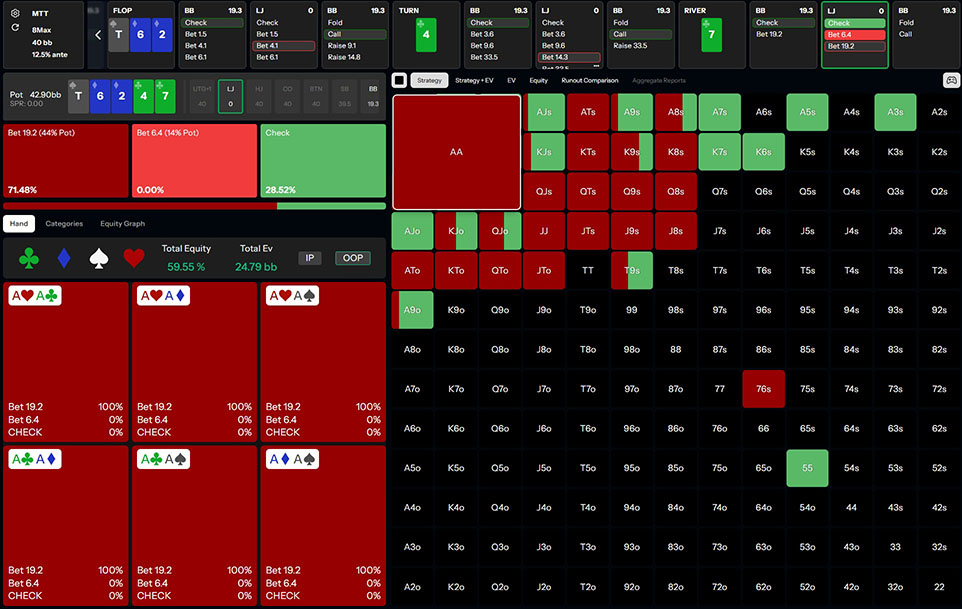
At first glance, some players might consider checking the flop or turn to “trap.” But in reality, this is a textbook example of why you want to bet large on every street:
- Flop: Many worse hands—top pairs, middle pairs, flush draws, and straight draws—will continue. Checking or betting small risks letting free cards or giving your opponent the proper pot odds to realize their equity.
- Turn: The 4♣ introduces additional straight and flush possibilities. Betting big charges those draws heavily while still getting value from one-pair hands.
- River: By the time you shove, your range appears polarized. Many players will convince themselves to call with top pair or even weaker holdings because your line looks bluff-heavy.
If you had slow played at any point, you would have risked losing value against dominated hands or, worse, given your opponent a free shot to outdraw you. By betting aggressively, you ensure you build the pot while ahead and deny cheap equity to drawing hands.
The key takeaway: most of the time, betting your strong hands is far more profitable than checking and hoping your opponent bluffs. Slow playing is the exception, not the rule.
3. Playing Too Loosely in Multi-Way Pots
Another subtle but devastating leak is playing too many hands in multi-way pots. While players often justify these calls with “good pot odds,” they underestimate just how difficult it is to realize equity in bloated, multi-player pots.
Marginal hands and weak draws lose tremendous value when more players are involved, as the likelihood that someone flops a strong hand increases drastically. Even when you hit top pair, it’s frequently with a weak kicker or on a board that interacts well with many opponents’ ranges. The correct adjustment is to tighten your range significantly preflop and avoid marginal spots postflop unless you have strong, clear equity. Folding early in these pots often saves your stack and your winrate.
4. Failing to Practice Proper Bankroll Management
One of the most consistent reasons solid players fail to succeed long-term is poor bankroll management. Whether it’s taking shots above their roll, ignoring variance, or playing under-rolled and hoping to run hot, the end result is often the same: going broke.
Even great players can hit multi-buy-in downswings. The only way to weather these swings is with a bankroll appropriate for your win rate and variance. For cash games, this typically means maintaining 50 to 100 buy-ins depending on your style and edge. In tournaments, you’ll need even more due to higher variance.
Replenishable bankrolls (e.g., from a job) can allow more flexibility, but if you’re treating poker seriously, managing your roll conservatively is essential to avoid being forced out of profitable games due to a downswing. For a deeper dive into this subject, check out The Bankroll Bible—a full guide on how to manage your bankroll optimally for long-term success.
5. Failing to Continue Studying
Poker is not a static game. Strategies evolve, player pools adapt, and edges disappear if you’re not actively working to stay ahead. Yet many players, after achieving a bit of success, stop studying. They rely on instincts or routines, failing to review sessions, study hands, or engage with other players.
Winning players treat studying like a second job. They review hands regularly, track results, and engage with training tools and communities to refine their strategies. Ignoring this part of the game leads to stagnation, and eventually, decline. Whether it’s analyzing your hand histories, using solvers, or discussing hands with peers, continual study is non-negotiable for long-term success.
Each of these leaks, while seemingly minor, can quietly sabotage your profits. The good news? They’re all fixable. By defending the big blind intelligently, betting your strong hands, playing tighter in multi-way pots, protecting your bankroll, and committing to ongoing study, you can eliminate these hidden pitfalls and start maximizing your winrate.
Poker success isn’t just about the hands you play, it’s about the habits you build. Patch these leaks, and you’ll be well on your way to more consistent, confident, and profitable play.
To uncover even more leaks in your game, take the Leak Finder quiz to identify your most costly poker leaks and how to fix them. It’s a quick and eye-opening way to diagnose your biggest areas for improvement.
And if you’re ready to dive deeper, check out the comprehensive video series The 25 Biggest Poker Leaks, an essential resource for any serious player looking to refine their strategy and sharpen their edge at the table.