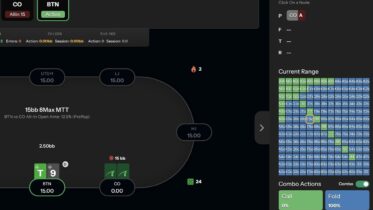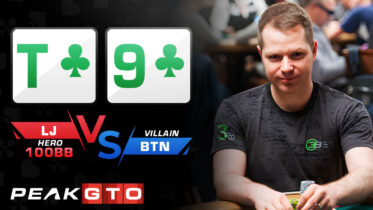

Today, we will analyze a 50bb tournament spot where the low-jack opens with Q♠J♦
Hand setup:
- Stacks: 50bb effective
- Positions: LJ vs BB
- Action: LJ raises to 2.2bb, BB calls
- Flop: J
♣♦♦ - Turn: 8
♥ - River: 2♠ (Pot 13.7bb)
Flop: J♣6♦5♦
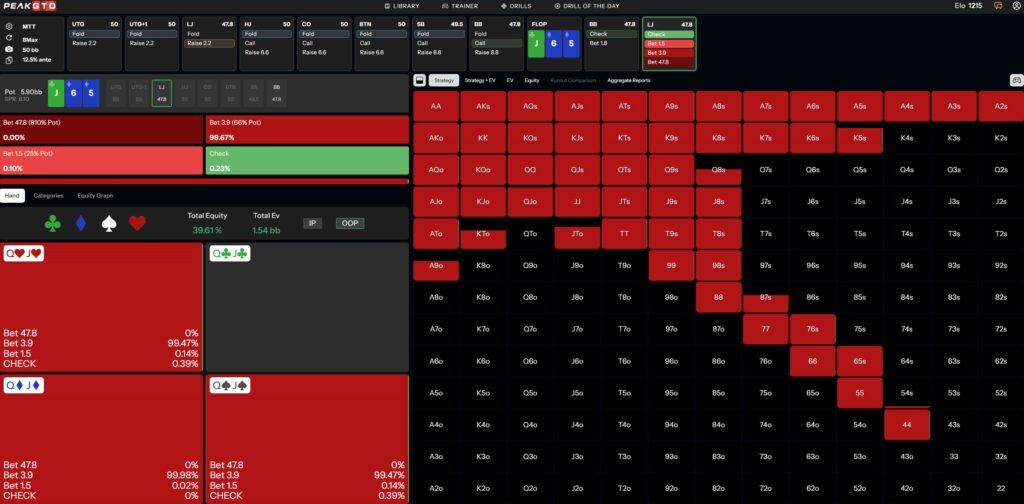
The solver prefers a large continuation bet on this dynamic texture. With range and nut advantage, the LJ bets 3.9bb nearly 100% of the time. The BB folds about half the time and otherwise defends with a mix of calls and occasional check-raises.
This board is highly connected. Many turn cards reduce the value of the top pair, so the GTO strategy pushes aggression early. Hands like overpairs, AJ, and strong top pairs drive this strategy, while weaker Jx and draws are pressured by the big sizing. Betting large front-loads equity denial and maximizes value before the board changes.
Turn: 8♥

After the BB calls, the equities narrow. The 8♥
Q♠J♦ is not a three-street hand here. Without extra equity, such as a draw, it leans toward pot control. Checking preserves value, avoids being check-raised, and keeps the pot manageable with a medium-strength holding. Against weaker opponents, betting may still be profitable, but in balanced GTO play, checking is the default.
River: 2♠
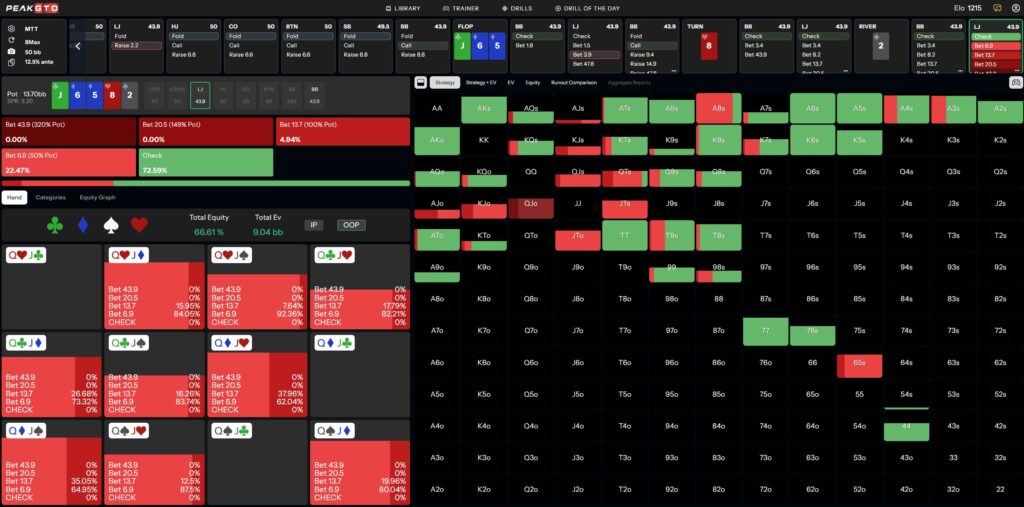
The 2♠ is a blank, leaving the board essentially unchanged. After another check from the BB, the solver strategy reduces LJ’s betting frequency significantly. Because strong hands would usually have bet the turn, the LJ is capped here and holds many Ace-highs and missed hands.
Q♠J♦ stands out as a thin value candidate. Solver recommends betting 6.9bb about 22% of the time, targeting worse pairs and missed draws. The medium sizing is crucial: it extracts value without over-committing and prevents over-bluffing in a range that is otherwise air-heavy.
Key Takeaways
- Flop: Use a large bet nearly always. LJ has range and nut advantage on J-high dynamic textures.
- Turn: Equity shifts to the BB. Check frequently with medium-strength hands like QJ; bet big only at low frequency.
- River: After check-check, LJ’s range is capped. Keep bet frequency low, use medium sizing, and thin value with QJ is correct.
To put it simple, GTO adapts as equities shift. Push advantage early, control pots on equity-shifting turns, and be selective with river value bets.