The big blind is one of the most misunderstood positions in poker. Many players treat it as a forced loss, defending too passively, folding too often, or calling without a plan. Others swing too far in the opposite direction, defending far too wide and bleeding chips postflop.
Strong players take a different approach. They understand that while the big blind is structurally disadvantaged, it is also a position with unique opportunities, especially when opponents open too wide or play predictably.
A disciplined, well-structured big blind strategy is essential for long-term success in cash games. This article explains how to approach big blind defense, focusing on range construction, postflop dynamics, and the most common mistakes players make when defending.

Why the Big Blind Is Unique
Together with the small blind, the big blind is the only position where you are guaranteed to have money in the pot before the cards are dealt. This creates a powerful incentive to defend, but it also creates confusion.
Players feel entitled to see flops simply because they’ve already paid a blind, even when poker math and structure argue otherwise.
What makes the big blind unique is the combination of pot odds and position. You often get attractive odds to call raises, but you will end up out of position for the rest of the hand.
This trade-off defines big blind strategy: you are required to defend wider than any other position, but you must do so with hands that can survive positional disadvantage.
Defending Wide, But Not Carelessly
From a coaching standpoint, one of the most important lessons about big blind play is that wide defense does not mean loose defense. The big blind should defend a wide range, but that range must be constructed thoughtfully.
Hands that defend well from the big blind typically share a few characteristics:
- They avoid severe domination
- They have reasonable equity realization
- They can continue on multiple board textures
- They don’t rely solely on position to function
This is why suited hands, connected hands, and hands with multiple ways to improve gain value in the big blind. Conversely, Texas Hold’em hands that make weak one-pair holdings or rely on initiative tend to struggle.
Calling vs 3-Betting From the Big Blind
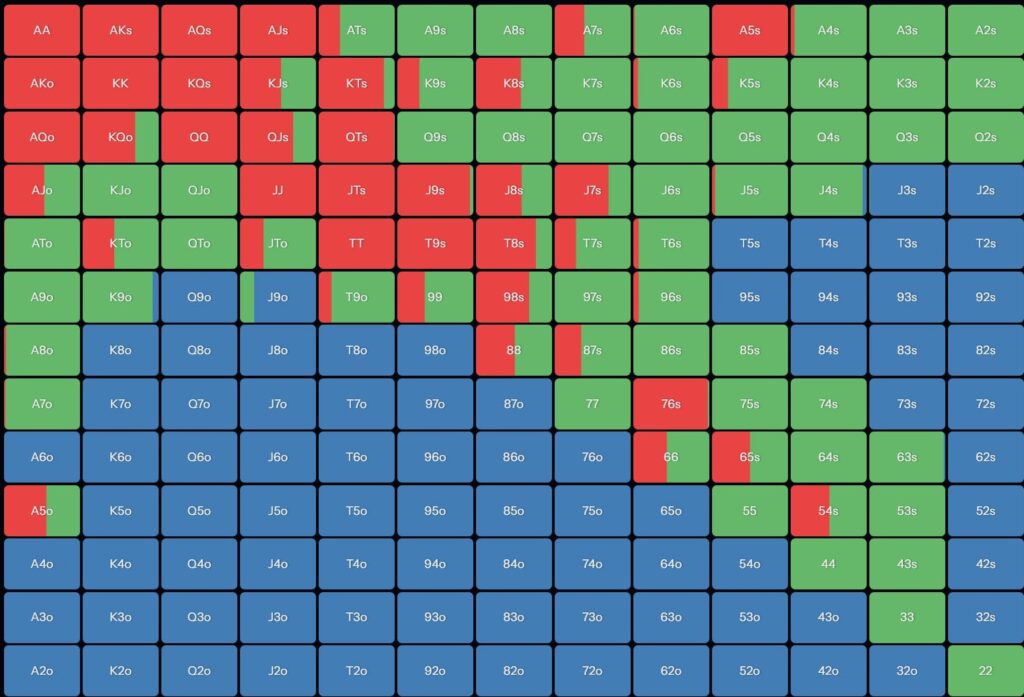
One of the biggest strategic decisions from the big blind is whether to call or 3-bet. Both options are important, but they serve different purposes.
Calling keeps the pot small and allows you to realize equity with hands that play well postflop. This includes suited connectors, suited aces, and many suited broadways. These hands often prefer seeing a flop rather than inflating the pot without initiative.
3-betting, on the other hand, allows you to reclaim initiative, deny equity, and punish wide opens. Value hands like premium pairs and strong broadways benefit from building the pot early, while selected bluff hands with blockers can apply pressure and balance your range.
From a coaching perspective, the key is balance: if you only call, opponents c-bet relentlessly; if you only 3-bet, your range becomes too narrow and easy to play against.
Why Equity Realization Matters More Than Raw Equity
A critical concept in big blind play is equity realization. Many hands have enough equity to call preflop but fail to realize it postflop due to position, board texture, or betting pressure.
For example, a hand like J9o may have decent raw equity against an opening range, but it struggles badly postflop. It makes dominated top pairs, has few clean outs, and often folds to pressure. Meanwhile, a hand like 98s may have slightly less raw equity but performs far better because it flops strong draws and disguised made hands.
Postflop Play: Adjusting to Lack of Initiative
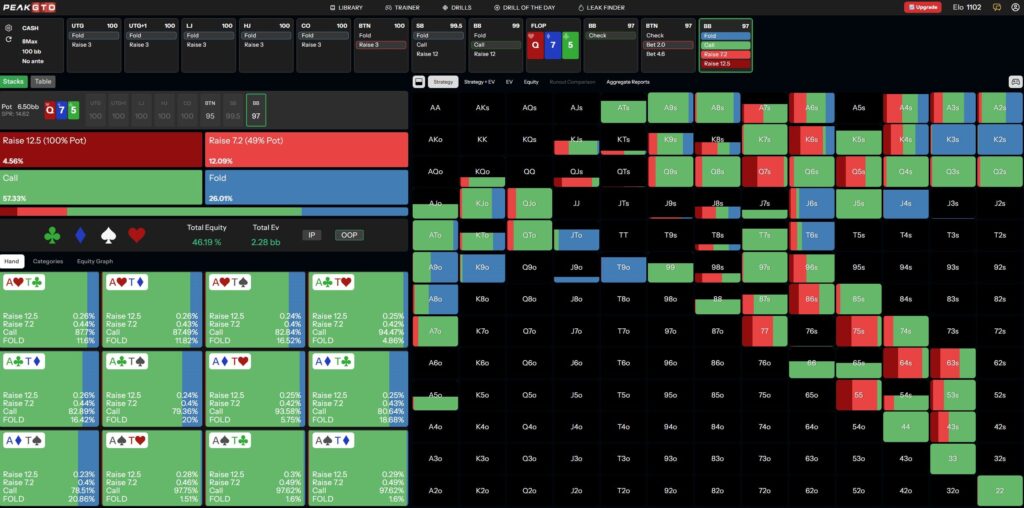
Most of the time, when you defend the big blind, you will not have the betting lead. This changes how you must approach postflop play.
Out of position without initiative, your goals are to:
- Avoid bloating the pot with marginal hands
- Continue with hands that can withstand multiple bets
- Use check-raises selectively to protect your range
- Avoid overfolding against small continuation bets
Many players make the mistake of either check-folding too often or check-raising too aggressively. Strong players use a mix of calls, folds, and occasional check-raises to keep their range protected and difficult to exploit.
Board Texture and Big Blind Defense
Board texture plays a significant role in determining how aggressively you can act from the big blind.
On low, connected, or paired boards, the big blind often has a range advantage. These boards interact heavily with your defending range, allowing for more check-raises and continued aggression.
On high-card, dry boards, the opener’s range is stronger, and the big blind must play more cautiously. Over-continuing on these boards is a common and costly mistake.
Understanding which boards favor your range is a crucial skill for profitable big blind play.
Conclusion
Big blind strategy is one of the most important and most challenging aspects of cash game poker. While you are at a positional disadvantage, you are also given the best price to defend, creating opportunities that don’t exist anywhere else at the table.
When coaching big blind play, the emphasis is always on structure and intention. Every defense should have a reason. Every call should come with a plan for multiple streets. And every 3-bet should fit within a broader range strategy.
The big blind is not about winning pots outright—it’s about minimizing losses while capitalizing on opponent mistakes.
By defending wide but intelligently, prioritizing equity realization, balancing calls and 3-bets, and adjusting postflop play to board texture and opponent tendencies, you can dramatically improve your poker results from the big blind.