

Now that you understand preflop position and stack depth, along with preflop ranges, it’s time to explore effective preflop bet sizing. Bet sizing is one of the most powerful tools in poker because it controls the pot, manipulates your opponents, and protects your range.
Good players do not choose bet sizes randomly. Every raise and re-raise has a purpose, and understanding that purpose separates skilled players from those who simply gamble.
Why Preflop Bet Sizing Matters
Bet sizing defines the risk and reward in every hand. The size of your raise influences your opponents’ ranges and how they respond to your actions.
A well-chosen bet size can generate folds from better hands or build value with strong ones. A poorly chosen one can waste chips or reveal unnecessary information about your strength.
Before every raise, ask yourself what you are trying to accomplish. The answer will determine how large or small your bet should be.
Opening Sizes
Your first raise in a hand is called an open raise. The ideal size for this raise changes depending on stack depth, position, and game type.
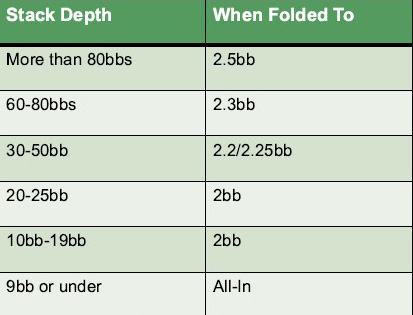
In most games, raising between two and three times the big blind is standard. Larger raises, when deeper stacked, build bigger pots but risk more chips, while smaller raises, when shallower, keep your range flexible and manageable.
Consistent sizing across every position keeps your opponents guessing. Avoid raising bigger only with strong poker hands, or they will quickly adjust.
3-Betting and 4-Betting
A 3-bet is when you re-raise an opponent’s open, and a 4-bet is when you re-raise again. These actions dramatically change the size of the pot and the structure of the ranges involved.
When 3-betting, you can use two main range types: linear and polarized. A linear 3-bet range includes strong and medium-strength value hands that play well against calls, while a polarized range mixes premium hands with bluffs that have good blockers, like A-5 suited or K-9 suited.
Sizing for a 3-bet depends on whether you are in position or out of position. In position, you can use smaller sizes because you will have more control postflop. Out of position, larger 3-bets discourage opponents from calling and make your decisions easier later in the hand.
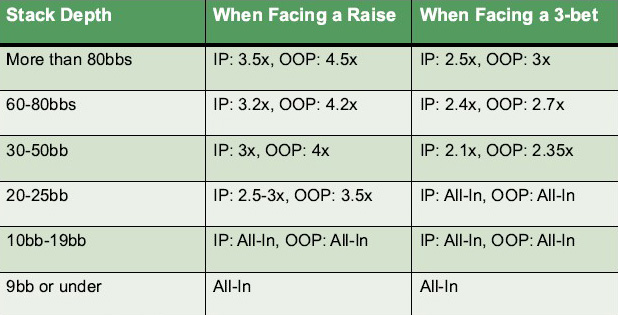
A 4-bet is a statement of strength or pressure. Against aggressive players, a smaller 4-bet size can still earn folds as they are likely to have more 3-bet bluffs, while against passive ones, a larger 4-bet can get called by many worse hands and build a larger pot.
Adapting to Stack Depth
Stack size should always influence your bet sizing. Shorter stacks mean smaller bets, since you have fewer chips to maneuver with.
Deep stacks allow for more creative play and larger bets that apply real pressure. When everyone has 100 or more big blinds, increasing your open or 3-bet size slightly helps extract more value from big hands.
Conversely, with shorter stacks, staying between two and two-and-a-half times the big blind is often enough. This keeps your strategy efficient and avoids unnecessary risk.
The deeper the stacks, the more important precision becomes. Small changes in sizing can dramatically shift your range and the odds you give your opponents.
Game Theory and Preflop Bet Sizing
In GTO strategy, your bet size is not based on your specific hand. It is based on the situation and applies to your whole range.
For example, if you raise to two-and-a-half big blinds from the button, you use that size with all your hands in that spot. You do not raise bigger with A-A or smaller with A-5 suited.
The same idea applies to 3-bets and 4-bets. Your size stays the same for that position, whether you are bluffing or have a strong hand.
If you change your sizing depending on your cards, good players will notice and exploit it. Consistent sizing keeps your range balanced and your strategy unpredictable.
Practical Preflop Bet Sizing Guidelines
Start by standardizing your open sizes in each position to avoid giving away information. Two to two-and-a-half big blinds is a solid default for most situations.
When 3-betting, go about three times the size of your opponent’s raise when in position and closer to four times when out of position. This helps control pot size while maintaining fold equity.
When short-stacked, your bet sizes should naturally shrink to preserve flexibility. When deep-stacked, use larger bets to put pressure on opponents who might otherwise call too lightly.
Always link your bet size to your goal. Every raise should have a clear purpose, whether that is building value, isolating weak players, or forcing folds from marginal hands.
Final Thoughts: Control the Pot, Control the Game
Preflop bet sizing is about control. You are deciding how large the pot will be, how your opponents respond, and how your hand will play postflop.
Understanding how and why to adjust your bet sizes will make you a far more dangerous player. You will apply pressure when it matters, extract value when it counts, and keep your poker strategy balanced across all situations.
With position, ranges, and bet sizing mastered, you now have the essential preflop toolkit. Everything you do after the flop builds on these principles, and mastering them sets the stage for long-term poker success.