
Poker strategy tips separate consistent winners from players who break even for years, and the gap almost always comes down to the same handful of mistakes.
I have reviewed tens of thousands of student hands throughout my coaching career, and the problems I see repeated most often are predictable: basic poker rules mistakes, too many hands played from the wrong positions, passive play in spots that call for aggression, and no clear plan for common situations that arise in every session. These ten tips address what actually moves the needle.
- Poker Tip #1. Preflop Hand Selection
- Poker Tip #2. Be the Aggressor at the Poker Table
- Poker Tip #3. Size Your Bets Like a Pro
- Poker Tip #4. Position is Everything
- Poker Tip #5. Get Your Baselines Right
- Poker Tip #6. Think in Ranges, Not Specific Hands
- Poker Tip #7. Pay Attention to the Details
- Poker Tip #8. Learn to Exploit Others’ Mistakes
- Poker Tip 9. Defend Your Big Blind Frequently
- Poker Tip #10. Recognize and Eliminate Tilt
- Poker Tip #11. Choose the Right Game
- Poker Tip #12. Don’t Be Afraid to Bluff
- Poker Tip #13. Never Stop Studying
- Final Thoughts on Our Best Poker Tips from The Pros
- Poker Strategy FAQ
Poker Tip #1. Preflop Hand Selection
Everything you do at the poker table starts somewhere, and the way you play your hands before the flop gets compounded across all the latter betting streets. For that reason, preflop is the most important betting street in many ways, but one that many novice poker players take lightly.
You will often see beginners in poker simply limp into the pot without thinking about why they are doing it and relinquish a vast portion of their equity.
Instead of just blindly calling bets with any cards that seem nice and hoping to hit the right flop, you will need to start thinking about poker ranges you actually want to play from each position at the poker table.
Your entire poker strategy will be built around the starting range of hands you play in different scenarios, so you must get this part just right.
Of course, preflop hand selection is too complex to explain all at once, but we highly recommend looking at preflop hand charts and trying to memorize them to the best of your ability before you play.
In my experience coaching players at every stake, preflop leaks account for more lost EV than any other phase of the game. I regularly see players limping 40-50% of hands from early position, then wondering why they are constantly out of position with marginal holdings on difficult boards.
Memorizing your preflop ranges and playing them consistently is the single fastest path to a positive win rate. Our free preflop charts are the right starting point.
By knowing exactly which poker hands make sense to play from each position, you will already be well ahead of many of your opponents. Once you master the preflop hand selection, make sure not to deviate from it much and try to play only the hands that are actually profitable to play from different seats.
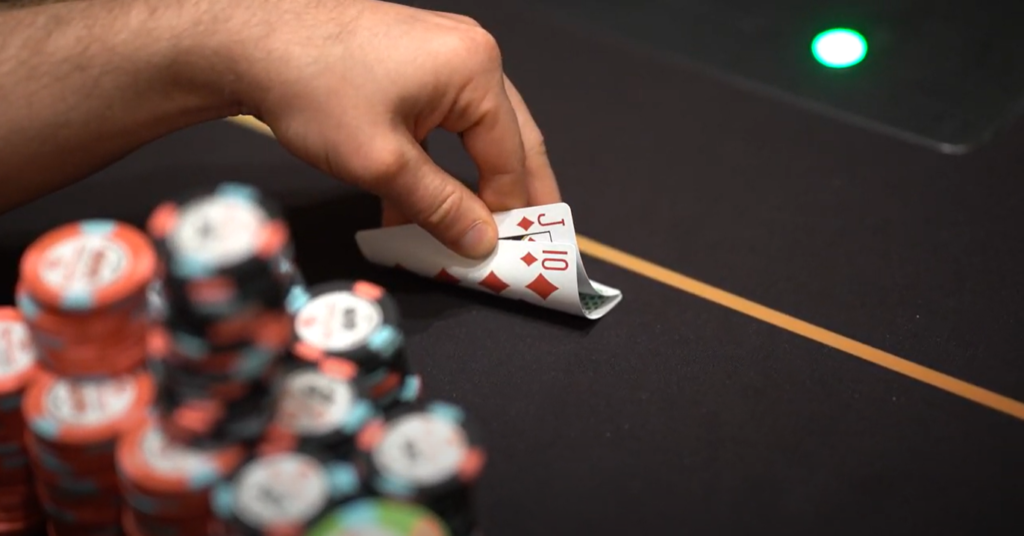
Some hands are worth playing in some positions but are worth avoiding in others,
making it critical you study the proper preflop ranges!
Poker Tip #2. Be the Aggressor at the Poker Table
The next key tip of your poker strategy has to do with your aggression factor. More often than not, you want to be the player making the bets and the raises in a poker hand.
While there are definitely times in poker when you want to let an opponent bluff off their stack into you, there are many more when you want to leverage your equity and make bets to try and get your opponent to either fold or pay you off.
By being aggressive from the preflop betting round to the river, you open more different ways to win pots. You will be able to protect your equity against draws and win hands with bluffs more often.
For the same reason, you should almost never limp. Making a raise instead of calling will give you a chance to pick up the blinds or at least to get some hands between you and the blinds to fold out of the way.
There is something to be said for being too aggressive as well, as you don’t want to be the maniac who is always raising and betting when the action is on them.
Instead, you will want to learn the power of well-timed aggression and be just aggressive enough to make sure you are the dominant force at the poker table.
Poker Tip #3. Size Your Bets Like a Pro
Another part of poker strategy that every professional player pays a lot of attention to is bet sizing. Beginners, on the other hand, don’t really think about their bet sizes too much.
Instead, novice players often make bet sizes that are either too small or too big for a given spot, missing out on a lot of value.
If you want to take poker more seriously and learn proper strategy, you will want to pay close attention to bet sizing.
This starts before the flop when you need to decide on how much to raise with the hands you are opening and how to size your 3-bets and 4-bets.
Bet sizing is one of the most underrated skills at the table. In my hand reviews, the most common error I see is players making the same bet size on every board, regardless of texture. A 33% pot c-bet on A♦6♠6♣ and a 33% pot c-bet on J♥T♥9♠ are completely different plays.
The first board is static — call with your backdoor draws, bet big with your value hands, and nothing else. The second board connects with many hands your opponent can have, which means a range-based smaller size pressures more of their range than an overbet would.
The truth is that there are different sizings to use in different scenarios, and all of them depend on your position, previous actions, and the players you are playing against. We could discuss bet sizing in particular a lot, but for the time being, it is useful to know a few basic things.
- When sizing up your bets, you should use the same sizes for your bluffs and your value hands so as not to tip off the strength of your hand based on the bet size.
- If you make a small continuation bet on the flop with your straight draw, and you want to keep bluffing with it on the turn, you should tend to make a big bet, similar to what you would do if you had flopped a set.
- Your bet sizes should also have a lot to do with the texture of the board you are betting on, with different boards requiring different bet sizes.
For example, when betting on the flop, it is typically recommended to c-bet small on static boards like Ad6c6s and bigger on dynamic boards like Jh9h7s, as it is more likely your opponents connected with the latter board in some marginal way.
What’s even more, you should always be thinking about your and your opponent’s range and whose range has an advantage on the board in question.
When your range contains more strong hands than your opponents, you can make bigger bets and exert maximum pressure.
On the other hand, when the board favors your opponent, making big bets is typically not recommended, as it puts you in a position to lose a big pot more often than win a big one.
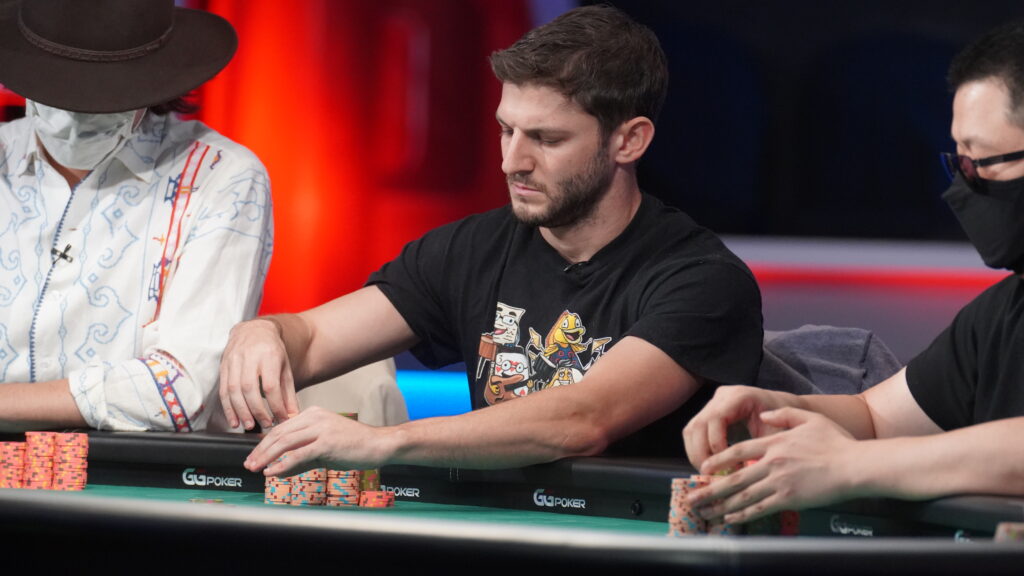
To play an optimal poker strategy, you must be able to consider
and execute strategic bet sizes.
Poker Tip #4. Position is Everything
There are few poker concepts more important than the position at the table. Your table position can give you all the power or get you into a world of trouble.
To ensure you are getting the most out of it, you should try to play more hands on the dealer button and other late positions while playing very few hands from early seats.
The logic here is quite simple. The more players behind you, the more of a chance that someone has a very big starting hand.
Having a position will help you extract more value from your good hands and bluff other players when you don’t have it, adding significant value to all of the hands that you play.
What’s even more, late-position players get to go last after the flop is dealt, and that gives them a massive advantage against other players. By playing last on every street, you will gain a lot of free information, see free cards, and control the size of the pot.
Poker Tip #5. Get Your Baselines Right
We see new poker players constantly trying to get fancy and make big plays, but they often forget about the most basic poker strategy in the process.
It is always tempting to try and be the hero by pulling a big bluff or making a hard river call, but the truth is poker can be much simpler than this.
By learning GTO poker baselines very well and playing a fairly simple poker strategy, you will be able to win in most poker games out there.
You don’t need to get too fancy or invent new plays to beat low-stakes cash games or tournaments. You need to play a good basic strategy.
Spend some time looking at preflop hand charts, learn good bet sizings for pre and postflop action, and try not to play too deep early on. This alone should be enough to give you an edge over player fields in low-stakes games.
Poker Tip #6. Think in Ranges, Not Specific Hands
Most recreational players try to put opponents on a specific hand mid-hand: “he must have top pair” or “she definitely has the flush draw.” This is a flawed approach because no player holds exactly one hand — they hold a range of all hands consistent with their actions.
When an opponent raises from early position, calls a 3-bet, and checks back on a dry ace-high flop, you are not guessing whether they have A-K or A-Q. You are narrowing a distribution of hands and making the decision that performs best against that entire range.
In my experience, the biggest mental model shift I see in students who go from losing to winning is learning to think in ranges. They stop asking “what does he have?” and start asking “what range of hands fits every action he has taken, and how do I respond to that range?” This shift alone changes how every street feels — you stop playing guesses and start playing strategy.
Poker Tip #7. Pay Attention to the Details
Once you are in the game, you should try to pay attention to everything that’s going on, from how many chips players buy to the things they are saying and the way they are playing their cards.
While poker tells may not be the most reliable tool in your arsenal, there is a lot to say about picking up on players’ tendencies and their general style of play.
Most players play far from mathematically optimal, which means there are massive errors in their games that you can exploit. If you want to play the game at the highest possible level, you should be looking to find these mistakes and find ways to capitalize on them.
Of course, all of this only comes once you have mastered the basics of poker strategy, and you should not be concentrating on exploiting people’s leaks too early in your poker career.
However, even if you are not immediately going to make some big exploits, try staying aware of your surroundings and always getting any information you can.
Contrary to popular belief, there is a lot you can pick up even in online poker games if you pay attention, so don’t play too many tables and don’t get distracted by less important things that have nothing to do with the game.

Paying attention to your opponent’s actions will help you make better decisions.
(Photo Courtesy of Katerina Lukina)
Poker Tip #8. Learn to Exploit Others’ Mistakes
Many poker players and coaches these days swear by the idea of GTO poker, which is designed to prevent others from exploiting you.
However, while GTO does prevent you from being exploited, it also ignores the idea of exploiting other players’ mistakes, which is a mistake in the vast majority of poker games.
An average poker player makes tons of mistakes every time they play, and exploiting these mistakes is what’s going to make you the big bucks, not playing optimally in every situation.
The most common mistake I see recreational players make is when an opponent is clearly folding too much to continuation bets. Players will c-bet a flop, get called, and then give up on the turn automatically — even when the board runs out in a way that should give their range an advantage.
If your opponent folds to flop c-bets 70% of the time and you know it, fire the turn too. The fold equity is there. The EV calculation is straightforward. Most players just don’t do the math and follow through.
For another example, imagine a player who limps every hand and calls every raise they face before the flop, which is very common in live cash games.
While GTO may still be saying to raise a range made up of value hands and bluffs to 3.5x, going for a 10x raise with your big hands and folding or overlimping with your speculative hands is going to make you more profit against this particular opponent.
Similarly, imagine a player who always chases draws regardless of the price they are getting. When you notice this, go ahead and overbet both flop and turn on dynamic boards since you will likely get paid by tons of drawing hands that have limited equity.
Of course, these are extreme examples to illustrate the point. That said, exploiting the mistakes other players make is how you become a truly great poker player and how you make your win rate skyrocket.

Poker legends like Phil Hellmuth have built a career off of knowing how to exploit opponents.
Poker Tip 9. Defend Your Big Blind Frequently
The blinds are some of the most difficult positions in poker. Playing in the blinds forces you to play out of position, which is why many players try to avoid this situation by folding too much. And yet, you should understand that by being in the blinds, especially in the big blind, you are getting such good odds against most raises and are closing the action, so you simply need to play many hands.
This is especially true in tournament poker, as the presence of ante increases the pot size, and most players tend to make fairly small pre-flop raises.
For instance, facing a 2.2x raise in the big blind, you will need to call 1.2bb to potentially win a pot of 5.9bb, giving you nearly 4:1 on your money. As you probably guessed, you don’t need too much equity to make this call.
What’s even more, facing raises from late positions in the blinds, you should know that many of these raises are simple steal attempts, which means that you are in an ideal situation to re-steal and go for a re-raise to win the pot right then and there.
In fact, many professional poker players suggest never making a call out of the small blind but rather always 3-betting or folding all the hands in this particular position against an open.
Whether you are facing an early or a late position raise, you should always be aware of the amazing price you are getting on a call in the blinds, but also the implications of playing certain hands in these situations.
Calling raises with hands that tend to realize more of their equity, such as suited and connected hands, will make a lot of sense, while off-suit hands will often become great candidates for a re-steal against late position raisers.
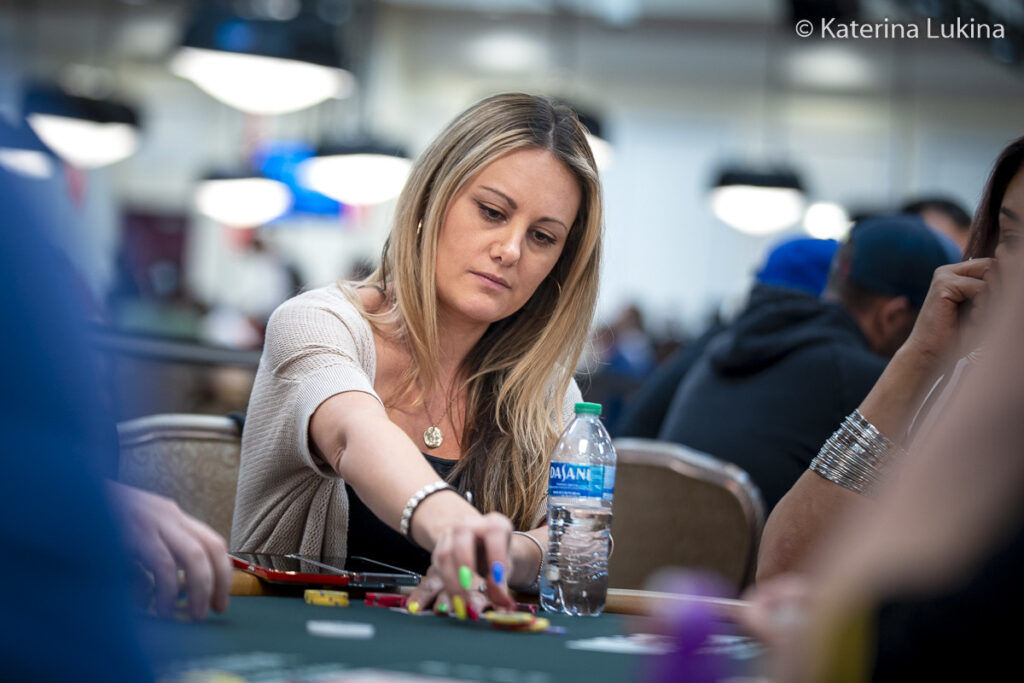
Making big preflop three-bets is a great way to defend your big blind.
(Photo Courtesy of Katerina Lukina)
Poker Tip #10. Recognize and Eliminate Tilt
Tilt is the single fastest way to reverse a winning session into a losing one. It happens when emotional reactions — a bad beat, a poorly played hand, a run of cold cards — begin overriding your decision-making. The signs are usually obvious in retrospect: calls you knew were wrong, bluffs with no coherent plan, decisions made out of frustration rather than logic.
The most effective system is a session stop-loss set before you sit down. Choose a threshold — typically two to three buy-ins — and when you reach it, the session ends. Not in a few more hands. Not after you get even. The session ends.
I have reviewed sessions where players built a two buy-in profit over three hours and surrendered it in twenty minutes after a single bad beat triggered a tilt spiral. The strategy tips in this article are irrelevant if you cannot protect winning sessions from emotional decisions. A pre-committed stop-loss rule converts discipline from a willpower problem into an automatic decision.
Poker Tip #11. Choose the Right Game
The most overlooked poker strategy tip is game selection. You can apply every concept in this article correctly and still lose long-term if you are consistently playing against opponents better than you. Choosing where to play is one of the highest-EV decisions you make before a card is dealt.
The practical checklist: Are there players at the table limping into pots regularly? Are stack depths comfortable for your bankroll? Are you one of the stronger players at the table, or one of the weaker ones? Be honest with the last question.
I tell students: finding one weak player at a table of regulars is not a good game. Finding a table with four or five recreational players who play too many hands and call too often — that is where consistent winning happens. Identify that game and sit down there. The skill gap you develop studying strategy means nothing if you are not deploying it in the right environment.
Poker Tip #12. Don’t Be Afraid to Bluff
Bluffing is an essential part of poker, but one of the biggest leaks that many players have in their game is that they are afraid to pull the trigger at the right time.
While we are by no means suggesting you play like a maniac and turn random hands into bluffs, we are definitely saying that knowing the right moment to bluff is of extreme importance.
Not only does bluffing pay dividends by allowing you to make your opponents fold their cards when you don’t have it, but it also balances out your ranges to make you more unpredictable, which is how you get paid when you do have the goods.
The most profitable bluffs in poker are semi-bluffs — spots where you have real equity even when called. A flush draw on the flop carries roughly 35% equity against top pair. When you bet this draw aggressively, you can win two ways: your opponent folds immediately, or you hit your flush by the river. Compare this to a pure bluff with no outs, where a call ends your options entirely.
In my hand reviews, I see players routinely check-call their draws when they should be building the pot by betting or raising. Checking costs you fold equity. Betting gives you two paths to the pot. The choice between passive and aggressive play with a drawing hand is one of the most consistently wrong decisions recreational players make, and correcting it is worth real money every session.
More important than just being willing to bluff is picking the right time to do so.
When choosing the hands to bluff with, be aware of your equity against the ranges your opponent might call with, and make sure that you still have a way to win on later streets if your early bluffs get called.
Equally as importantly, make sure not to give up on bluffs just because you got called on the flop. Changes to the board texture might let you represent a made draw, while continued pressure might be enough to simply force your opponent to fold.
Aggression is key in poker, and being willing to bluff under the right circumstances is what sets poker champions apart from average players.

Whether you are bluffing or have the goods, maintain a calm image
at the poker table so you do not give away tells.
Poker Tip #13. Never Stop Studying
There is more to the game of poker than meets the eye, and the best players never stop studying it. From the basic poker strategy concepts we mentioned in this article to the more advanced ones, there will always be something left to learn.
What’s even more, poker is a game that’s always evolving, and the way people play today is much different from the way they played ten years ago.
So, if you want to keep improving as a poker player and always keep up with other players, you will need to keep studying.
Fortunately, there are countless teaching tools and programs available these days, and getting some help from more experienced poker players is always a good idea as well. Depending on your preferred method of learning, you can try out private poker coaching or learn how to use poker solvers yourself. Whatever you pick, try to approach studying systematically and always devote some time to it while you progress through the stakes.
Final Thoughts on Our Best Poker Tips from The Pros
Most players who struggle at poker are not missing some secret technique. They are repeating the same fundamental errors in the same spots: too-wide preflop ranges, passive play when aggression is profitable, ignoring position, and letting tilt undo their good decisions.
Fix those first. Once the fundamentals are correct, the game becomes clearer. You start recognizing spots to semi-bluff, to attack opponents who show weakness, to fold in the right situations, and to choose tables where your edge is real.
If you want to accelerate the process, a structured study is the fastest path. Start with our free preflop charts, then work through hand histories in PeakGTO to see where your decisions differ from optimal. The gap between where you are and where you want to be is smaller than it feels.