The small blind is the worst position at the poker table. You are forced to put money in before the cards are dealt, and then you play every postflop street out of position against everyone who remains in the hand. It is a seat that punishes passive play and rewards players who understand its structural problems.
The goal in Texas Hold’em small blind is not to play many hands. It is to play the right hands in the right way and avoid the most common mistake players make here: calling raises and hoping things work out.

Two Reasons the Small Blind Creates Structural Problems
There are two distinct reasons why flat calling from the small blind is almost always the wrong play.
The first is the rake. In most poker games, every pot that goes to a flop gets raked. When you call a raise from the small blind, you are creating a raked pot, have already posted one of the blinds, and are committing to playing out of position for the entire hand. That combination makes calling a losing play in most situations, even with hands that would be profitable calls from other seats.
The second is relative positional advantage, which is less obvious but equally important. When you call a raise from the small blind in a three-way pot, here is what happens on the flop: you check, the big blind checks, and the original raiser bets. Now you have to act before the big blind, without knowing what they will do. The big blind sits behind you with the full option to call, raise, or fold after you act.
Compare that to being in the big blind. When you defend from the big blind in the same spot, you act after the small blind on every street. You have more information before every decision. That is a structural advantage the small blind simply does not have.
These two problems, the rake and relative position, are both solved by a simple default: three-bet or fold. When you three-bet, you either take the pot immediately or go heads-up with the initiative. Either way, you eliminate the multiway relative position problem entirely.
Default Rule: Three-Bet or Fold From the Small Blind
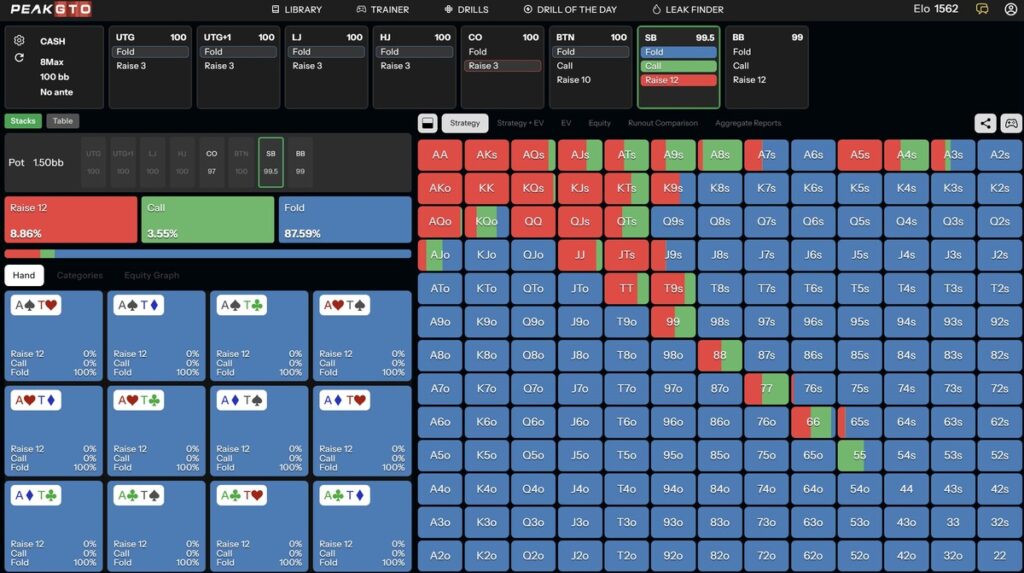
The correct default from the small blind when facing a raise is to three-bet or fold. Calling is almost never the right play.
The specific hands you three-bet will depend on who raised and from where. Against an under-the-gun open, you use a very tight range based on preflop charts: only your best hands plus a small number of well-chosen bluffing candidates. The UTG raiser has a strong range, you are out of position, and the structural disadvantage is at its worst. Three-betting needs to be justified by a hand that can hold up as a value three-bet or works well as a well-selected bluff.
Against a button open, you can three-bet a somewhat wider linear range. The button opens a wide range, which gives your three-bet more value. You are still playing out of position against the button if the hand goes to the flop, but the button’s wide range means more of your hands have value as re-raises. The core principle remains the same: you are playing for initiative and trying to avoid the multiway structural problem.
In both cases, you are not looking to play a large volume of hands from the small blind. You are looking to play them on your terms.
When Flat Calling Is Correct From the Small Blind

There is one scenario where calling from the small blind makes sense: when the player in the big blind is weak.
When you know the big blind is a bad player who is likely to call and stay involved, the dynamic changes. Now you have a multiway pot against an opponent who will make significant mistakes. In my experience, these are exactly the spots where calling with the right type of hand becomes genuinely profitable.
But the hand selection matters a great deal. You are not calling with offsuit Broadway hands that make marginal top pairs. You are calling with hands that have high implied odds in multiway pots: hands that can build to very strong holdings by the river and get paid off in large pots.
Suited aces, suited connectors, and small pairs fit this profile. Poker hands like eight-seven offsuit or king-ten offsuit do not.
Suited Aces
Suited aces, from ace-two through ace-nine suited, can make nut flushes and strong flush draws that have significant equity on multiple streets. They also make top pair with a reasonable kicker when the ace comes. In multiway pots against a weak player who calls wide, the implied odds are high when you hit. The nut flush is a hand most players will pay off, and having the best flush is exactly what you want in a large multiway pot.
Suited Connectors
Suited connectors like six-seven, seven-eight, or nine-ten suited can make nut straights and strong flushes. They benefit from the extra dead money in the pot and the weaker player who will stay in and pay off strong holdings. The same rule applies: suited only. Offsuit connectors do not have the raw equity to make calling from the small blind profitable. The difference between seven-eight of a suit and seven-eight offsuit is significant enough to change the decision entirely.
Small Pairs
Small pairs may be the cleanest calling hands from the small blind because of the clarity of the decision. When you call a preflop raise with pocket threes and the flop comes king-jack-seven, you know immediately you are done with the hand. There is no guessing, no marginal situation to navigate, and no money going in with a weak holding.
But when a three appears on that flop, you have made the best hand in most situations. You play it aggressively and confidently. That clarity, knowing right away whether you have a great hand or nothing, makes small pairs ideal for this specific situation.
How the Big Blind Quality Changes Everything
The calling exception only works when the big blind is actually a weak player. Against a competent big blind who plays well postflop, you are back in the structural problems you are trying to avoid. A good big blind will apply pressure when you show weakness and realize the positional edge they have over you across every street.
This is why the default is three-bet or fold until you have a clear read on the big blind. Once you identify the big blind as a weak player who calls too wide and makes postflop mistakes, you can expand your hand ranges from the small blind to include implied odds hands. But do not make that adjustment against a big blind you do not have information on.
In small-stakes games, weak big blind players are common. You will often have enough information early in a session to identify them. When you do, the calling strategy becomes available. But the starting point is always three-bet or fold.
Conclusion
The small blind forces you to pay money to play in the worst position at the table. The correct response is to respect that structural disadvantage: play tight, three-bet when you enter a pot, and only expand into flat calls when the big blind is weak enough to make multiway implied odds plays worthwhile.
Players who default to calling from the small blind have one of the most consistent and correctable leaks in poker. Fixing this position alone, tightening to three-bet or fold and reserving calls for the specific situations that justify them, is one of the highest-value adjustments in small-stakes games.