
A bluff catcher in poker is any hand that beats the bluffs in your opponent’s range but loses to all of their value hands. It does not have to be a strong hand in absolute terms. Any holding that beats a missed draw or a polarized bluff but folds out to a set or a flush qualifies, even if it is just second pair or ace-high.
I have spent years reviewing hand histories and coaching live sessions, and I can almost always identify the players who are bluff-catching too often within the first orbit. They call in spots where the math doesn’t support it, against players who simply don’t bluff enough. Getting bluff catching right means understanding three things: which of your hands function as bluff catchers, when the pot odds justify the call, and how to read your opponent’s range construction.
- What Is Bluff Catching in Poker?
- When to Bluff Catch: Putting Your Opponent on a Hand Range
- Things to Consider: Player Tendencies, Blockers, and Unblockers
- How to Make Money Bluff Catching
- Don’t Be Afraid to Bluff Catch and Lose
- Bluff Catching Frequency: What GTO Tells Us
- Frequently Asked Questions About Poker Outs
What Is Bluff Catching in Poker?
Before we can proceed to explain the specifics, it is important to understand the concept of bluff catching as such and what exactly it means to bluff catch.
In essence, anytime you make a call that can’t beat any of your opponent’s actual value hands, you are bluff catching, regardless of the absolute strength of your hand.
For instance, calling a river bet with KsQs on a KdQcJdTs6d board is pure bluff catching, as it is highly unlikely for your opponent to be bluffing the river with a hand weaker than two pairs on this highly connected board.
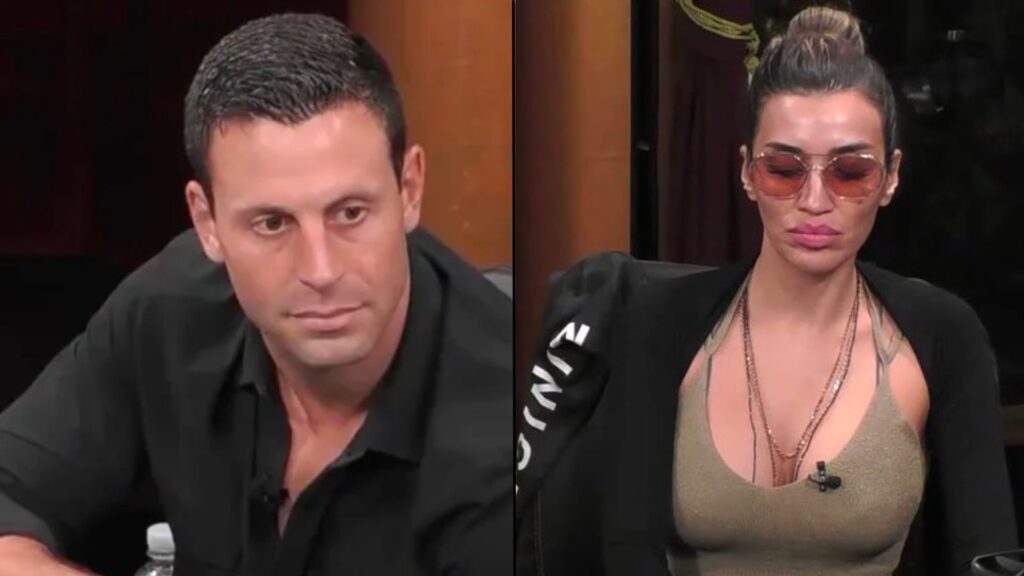
In some situations, you might even be tempted to bluff catch with a hand as weak as Jack-high, much like Robbi Jade Lew decided to do against Garrett Adelstein in that legendary HCL hand.
Of course, not all bluff catching attempts actually make sense, and some players bluff catch way too often, which is why we are here to teach you exactly when it makes sense to bluff catch and how you should pick the right time to make that call with a marginal holding.
When to Bluff Catch: Putting Your Opponent on a Hand Range
The single most common bluff-catching mistake I see in hand reviews is players focusing on their own hand strength rather than their opponent’s range. “I had two pair, I had to call” – no, you didn’t. Two pair is only a bluff catcher if your opponent’s range in that spot contains enough bluffs to make the call profitable.
The card strength in your hand is almost irrelevant. What matters is whether the opponent you’re up against would actually bet the way they just did with a value hand versus a bluff, and at what ratio.
You probably know by now that you should never think about your opponent’s hand in terms of two particular cards but rather a range of all the poker hands they could have in a given spot.
When thinking about bluff catching, you should also think in terms of ranges. If your opponent’s range is weak on a particular board, this is a good time to consider making that hero call and bluff catching the river.
A good example of when bluff catching makes sense is in scenarios in which hyper-aggressive opponents 3-bet or 4-bet you before the flop and then continue to barrel off on boards that highly favor your range over theirs.
For instance, let us consider the following scenario:
Playing in a $1/2 cash game with effective stacks of $500, we open from UTG with 9s8s to $6. Other players fold and the small blind 3-bets to $25. We make the call and go to a flop of:
Ts8c5c
Our opponent c-bets $30 into $52, and we make a fairly standard call in position.
The turn brings the 7h, and our opponent once again bets out for $85 into the $112 pot, representing a strong hand. Once again, we call and go to the river.
The river brings an inconsequential 4s, and our opponent now goes all in for $360 into the $282 pot. What do we do?
Clearly, our one-pair hand is not a monster in this spot, but what we should focus on more is what exactly our opponent is representing.
If they had pocket Aces or Kings, which is what they were representing preflop and on the flop, would they really keep on barreling every street like this without ever checking to pot control and potentially catch some bluffs of ours?
On the other hand, with the 3-bet from the small blind, what strong hands does our opponent have? A hand like TT or 88 is certainly possible, but that’s really one of the only hands that make sense in this given spot.
On the other hand, our opponent could also have a whole bunch of Broadway’s hands with clubs that bricked out on the flush, as well as straight draws like QJ that they decided to take all the way.
One thing to remember is to always consider your opponent as well and not to make these kinds of calls against players who typically don’t empty the clip for no good reason.
On the other hand, playing against your typical aggressive cash game player these days, a call with a hand like 9s8s in this spot could make a lot of sense and prove to be extremely profitable.
Things to Consider: Player Tendencies, Blockers, and Unblockers
Here is a hand I remember clearly from a live cash game that illustrates how blockers change the profitability of a bluff catch. I held Qh9h on a Jh8h6s3s2c board after my opponent had bet all three streets. In isolation, queen-high is a terrible bluff catcher. But I held two hearts, meaning every flush draw in the opponent’s range was ruled out, and the runout missed every backdoor draw.
My hand blocked nothing of my opponent’s value range (they still had sets, two pair, and straights) but the removal of flush draws from their bluffing range was significant. I folded. The point is that blockers cut both ways: check which combinations you remove from your opponent’s range before deciding whether your hand functions as a genuine bluff catcher or just feels like one.
Before you make a big hero call, it is worth taking your time to consider all the available information. After all, the more things you have to work with, the more correct your decisions will be.
The first thing to consider, as we already mentioned, is your opponent’s tendencies. This cannot be overstated, as knowing who you are up against is critical.
Some players will almost never fire 3-barrel bluffs regardless of their hand, position, or the situation, while others are constantly looking for spots where they can do just that.
If you want to be successful at bluff catching, doing it against the right players will be of critical importance, and we highly recommend only ever making big bluff catching attempts against extremely aggressive players.
Another thing worth considering when bluff catching is blockers. Blockers are cards that you are holding that block your opponent from having a certain hand.
Perhaps the best example of blockers is holding the As on a board with three Spades, where you believe your opponent would only be making a big river bet with a flush.
Holding that As means your opponent can’t possibly have the nut flush and generally decreases the number of flush combos they could be holding.
Similarly, holding TsTc on a Js9h8h5c5s board gives you a great bluff catching opportunity, as the two Tens in your hand make it that much less likely that your opponent has a flopped straight.

Sure enough, you will run into some AA or KK in spots like these, but you will also often end up being against a missed heart draw that kept on barreling.
On the same hand, the concept of unblockers also comes into play. While you have two Tens that block your opponent from having a straight, you also hold no Hearts, which means you are not holding any of the cards that make up your opponent’s main bluff candidates.
So, the next time you are considering bluff catching, remember to take into account your cards and how they prevent your opponent from having certain hands or make it more likely that they do.
How to Make Money Bluff Catching
Bluff catching becomes a mechanical decision once you understand pot odds. The formula I use: divide the pot size by the total amount you would need to call (pot plus the bet). That ratio tells you the minimum frequency at which your opponent needs to be bluffing for the call to break even. For example, if the pot is $100 and your opponent bets $100, you must call $100 to win $200. Your break-even frequency is 100/300 = 33%.
If you believe your opponent is bluffing more than 33% of the time in that spot, the call is profitable. If you think they’re bluffing less often, fold. This math does not care about your hand. It cares about your opponent’s bluffing frequency and the price you’re being offered.
| Opponent Bet Size (vs. pot) | Pot Odds % | Bluffing Frequency Needed to Break Even |
|---|---|---|
| 25% pot bet | 17% | Bluffing 1 in 6 times |
| 50% pot bet | 25% | Bluffing 1 in 4 times |
| 75% pot bet | 30% | Bluffing 3 in 10 times |
| 100% pot bet (full pot) | 33% | Bluffing 1 in 3 times |
| 150% pot bet (overbet) | 40% | Bluffing 2 in 5 times |
When you play poker, you will have to make some tough calls and sometimes put a lot of money into the pot with a marginal hand, especially when playing against very aggressive opponents.
If you bluff catch often, you will be right every once in a while, but that alone is not alone to actually make you money in the long run.
If you want to turn bluff catching into a profitable endeavor, you will need to bluff catch at the right time, against the right opponents, and with the right hands.
We already briefly discussed how you should pick the hands you bluff catch with in terms of blockers and unblockers, but it’s also worth talking about some other points that are key in making money with bluff catching.
The price you are getting laid on a call is an important one, as you typically want to be getting a reasonable price when calling with nothing but a bluff catcher.
The smaller the bet your opponent makes, the less often you need to be right on your bluff catching attempt to make a profit.
For example, anytime your opponent bets a full pot on the river, you need to be right one out of three times just to break even. At the same time, you need to be right only one out of four times if your opponent bets half pot instead, and that can make a huge difference in the big picture.
As long as you have a hand that can beat a reasonable number of bluffs, you are facing an opponent capable of bluffing in a given spot and are getting the right price. You should be more or less printing money by calling river bets with your bluff catchers.
Don’t Be Afraid to Bluff Catch and Lose
One thing I tell students who are afraid of making hero calls is this: the goal is not to be right every time. The goal is to be right often enough that the call shows a positive expected value over thousands of repetitions.
If you fold every time an aggressive opponent fires the third barrel, you will be over-folding, and they will exploit you by bluffing more frequently. A hero call that loses is not a mistake if the math supports the call. A fold that loses the pot is not correct just because you “played it safe.”
Many players who are not very experienced at poker are afraid of making a call and looking bad when they end up losing to a monster hand instead of a bluff.
Anytime you try to bluff catch, you run the risk of your opponent having a big hand, but that’s really nothing to worry about.
As long as your bluff catchers are good often enough for the price you are getting laid, you will be making money and winning in your games, and that’s all that matters.
The opinions of other players should not concern you too much, and if they happen to think you are bad at poker because of a call you made, that can only help you get them to play badly against you in the future hands you play together.
Bluff Catching Frequency: What GTO Tells Us
Game theory optimal play gives us a framework for understanding how often opponents should be bluffing, which in turn tells us how often we should be calling with bluff catchers. At GTO equilibrium, a player making a pot-sized river bet should have a ratio of roughly two value hands for every one bluff. That means in a vacuum, a pot-sized bet warrants a call with bluff catchers one in three times, which lines up exactly with the pot odds math from the previous section.
In practice, most players at stakes below mid-stakes live games and high-stakes online games deviate from GTO in one direction: they do not bluff enough on the river. This is the key insight. Against most player pools, the default assumption should be that you are being bluffed less often than GTO predicts, which means the correct adjustment is to fold more, not call more.
The exception is when you have specific reads: an opponent who frequently triple-barrels missed draws, fires into checked-down pots, or shows a history of large river bets with air. Against those players, calling with your bluff catchers becomes highly profitable.
If you want to see how solver output distributes bluffing ranges on specific runouts, PokerCoaching’s own solver PeakGTO lets you explore river bet-size decisions and bluffing frequencies across any board texture, so you can study which of your hands function as correct bluff catchers in any given spot rather than relying on feel alone.