Cold calling a raise is a common action in Texas Hold’em, but it is one of the most misunderstood moves. Many players treat cold calling as the “safe” or “default” option when they don’t feel strong enough to re-raise but don’t want to fold.
In reality, cold calling without a clear strategic reason is one of the fastest ways to bleed chips, especially in small and mid-stakes games.
Strong players do not cold call casually. When they call a raise, it’s because the hand, position, stack depth, and table dynamics all align in their favor. This article explains when cold calling is profitable, when it’s a mistake, and how to build disciplined calling ranges that actually work.

What Cold Calling Really Means
Cold calling refers to calling a raise when you have not already invested money in the pot (i.e., you’re not in the big blind). Unlike defending the big blind, cold calling does not come with discounted pot odds. You are voluntarily entering a pot, often without initiative, and frequently without position.
That combination—no initiative and often no position—is what makes cold calling so dangerous. Any hand you choose to cold-call must be able to overcome these disadvantages through strong equity realization, implied odds, or both.
From a coaching perspective, this leads to a simple truth: if a hand needs perfect conditions to be profitable, it probably shouldn’t be cold called.
Why Most Cold Calls Are Losing Plays
The biggest mistake players make is cold calling with poker hands that look playable but perform poorly in practice. These calls often create structural problems that surface later in the hand.
Cold calling often leads to:
- Playing out of position without initiative
- Facing multiway pots unexpectedly
- Inflated SPRs that punish one-pair hands
- Reverse implied odds with dominated holdings
- Difficult postflop decisions with capped ranges
Hands like AJo, KQo, or QTs may feel reasonable to call with, but they frequently make second-best hands and struggle to withstand pressure. Over time, these small leaks add up to a significant loss.
The Three Conditions That Make Cold Calling Viable
Cold calling becomes profitable only when certain conditions are met.
- First, position matters enormously. Cold calling from the button or cutoff is fundamentally different from cold calling from an early position or the small blind. Position improves equity realization, enables better position control, and provides more information before acting.
- Second, the hand must be highly playable. This usually indicates it is suited, connected, or capable of making strong hands disguised. Hands that rely solely on making top pair are poor cold calls.
- Third, stack depth must support the call. Cold calling speculative hands requires sufficient depth to recognize implied odds. Short stacks reduce maneuverability and make calling with marginal hands unprofitable.
When all three conditions align, cold calling can be part of a strong strategy. When even one is missing, folding or 3-betting is usually superior.
Hands That Make Good Cold Calls
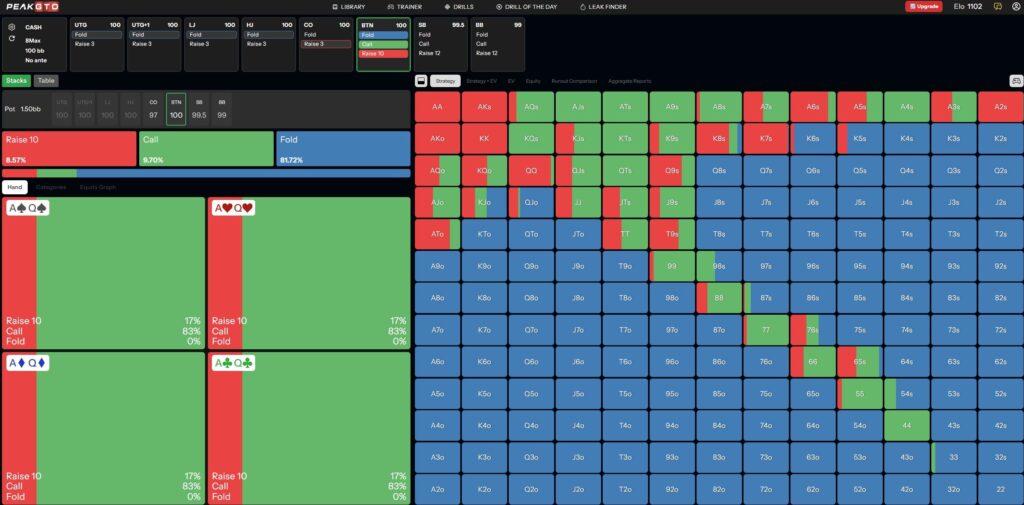
From a coaching standpoint, good cold-calling hands share a few characteristics: they avoid domination, they play well multiway, and they can win large pots when they connect.
Pocket Pairs
Small and medium pocket pairs are classic cold calls when stacks are deep, and position is favorable. Their value comes from set mining and winning large pots against strong ranges. Without sufficient stack depth or position, however, their profitability drops quickly.
Suited Ac Hands & Suited Connectors
Having some suited Ax hands in your calling range is good because you can then have better board coverage on various runouts.
On top of that, hands like 98s, 87s, and 76s could sometimes be played as cold calls because they rarely make dominated hands and have strong implied odds. They perform best on the button or cutoff, especially against loose openers.
Suited Broadways (Selectively)
Hands like QJs or KQs can be cold called in position, particularly against late-position opens. Suitability is critical since it significantly improves playability and equity realization.
On the other hand, offsuit broadways such as KQo, KJo, and QTo are among the worst cold calls in poker. These hands are dominated too often, struggle postflop, and create reverse implied odds situations that are difficult to escape.
Cold calling from the small blind is especially problematic. You are out of position against multiple players, and the big blind still has the option to squeeze.
Conclusion
When coaching players, I emphasize that cold calling should never be a default. Every call should pass a simple test:
- Do I have a position?
- Does this hand avoid domination?
- Can it win a big pot when it hits?
- Is the stack depth sufficient?
- Am I comfortable playing without initiative?
If the answer to more than one of these questions is “no,” the call is almost certainly a mistake.