
Short Deck Poker, also called 6+ Hold’em, is a Texas Hold’em variant played with a 36-card deck where the 2s through 5s are removed, changing hand frequencies and flipping the rankings so that flushes beat full houses.
The game plays with antes and a button blind rather than traditional small and big blinds. I started paying close attention to Short Deck when it exploded on the high-stakes tournament circuit, and the biggest adjustment I see Hold’em players struggle with is trusting the new hand rankings when real money is in the pot.
You know intellectually that a flush beats a full house, but when you are sitting with aces full in a large pot, that knowledge needs to be automatic.
With the popularity of the new game expanding by the year and more games being offered both live and online, we thought it was the right time to teach you the rules of Short Deck Poker.
We will cover everything from the basic Short Deck Poker basics to simple strategy and gameplay in order to give you a head start and allow you to jump into the game with enough knowledge to hold your own.

- Basic Rules of Short Deck Poker
- Short Deck Poker Hand Rankings
- Antes and Betting in Short Deck Poker
- Choosing Your Starting Hand in Short Deck Poker
- Short Deck Odds and the Rule of 6 and 3
- How to Win at Short Deck Poker – Preflop Play
- Bet Sizing and Bluffing in Short Deck Poker
- Short Deck Poker in a Nutshell
- Short Deck Poker FAQ
Basic Rules of Short Deck Poker
The most important difference between Short Deck Poker and most other poker variations is the fact this game is played with a “short deck,” which does not include any 2s, 3s, 4s, or 5s.
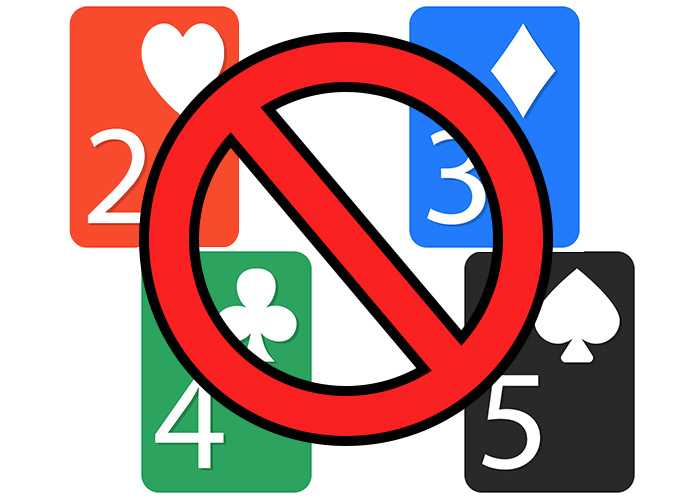
With 16 cards in total taken out of the deck, there are only 36 left in there, which means you are more likely to be dealt combinations of high cards, big pocket pairs, and strong suited connectors.
However, this also means hands are more likely to connect with the board, which makes hitting a pair on the board more common, completing a straight easier, and turning a set into a full house more likely.
The reduced number of overall cards also means flushes are harder to come by, which is why the poker hand rankings are changed so that a flush beats a full house in Short Deck Poker.
In some variations, trips also beat a straight, although official Short Deck games like those in Triton Poker don’t use this rule.
Speaking of straights, it is worth noting that the Ace has a special place in the game of Short Deck Poker, as it can be used as the low card of the lowest possible straight. That is to say, if you have A6789, you have a low straight with the Ace filling in for the Five.
Other than this, the rules of Short Deck Poker are more or less the same as Texas Hold’em, so players switching from one game to the other should not have too hard of a time adjusting.
To summarize, here are the basic differences in rules of Short Deck Poker that you should keep in mind:
- No 2s, 3s, 4s, or 5s in the deck
- A flush beats a full house in Short Deck Poker
- Ace can be used to form a low straight
Now that you understand these basic differences in rules let’s talk a bit about the betting structure of 6+ Hold’em Poker, which is also a bit different than what you might be used to.
Short Deck Poker Hand Rankings
The most important rule change in Short Deck is the hand rankings. Because flushes are harder to make in a 36-card deck (fewer cards means fewer possible flush combinations), they rank above full houses. Here is the full ranking order from strongest to weakest:
| Rank | Hand | Short Deck vs Standard Hold’em |
|---|---|---|
| 1 | Straight Flush | Same |
| 2 | Four of a Kind | Same |
| 3 | Flush | Moves up one spot (beats full house) |
| 4 | Full House | Drops one spot (loses to flush) |
| 5 | Straight | Usually ranks above three of a kind (see note below) |
| 6 | Three of a Kind | Usually ranks below a straight (see note below) |
| 7 | Two Pair | Same |
| 8 | One Pair | Same |
| 9 | High Card | Same |
Note on straights vs. three of a kind: In most Short Deck games, including Triton Poker events and the majority of online platforms, a straight beats three of a kind. Some older variants reverse this, ranking trips above a straight. Before sitting down at any Short Deck table, confirm which version is in play. I always verify before the first hand. Getting this wrong in a meaningful pot is an expensive lesson.
Antes and Betting in Short Deck Poker
Apart from the few differences in basic poker rules we already discussed, Short Deck Poker also uses a different forced bets structure, which is designed to create more action and make the game more exciting to play.
At the start of every Short Deck Poker hand, each player at the table posts an ante bet, while the player on the dealer button posts 2x that amount.
So, for example, in a $1/2 Short Deck Poker game, each player posts $1, and the button posts $2 while starting stacks will usually be either $100 or $200.
From this point forward, the game is played in a no-limit format, which means players are allowed to raise to any amount they want, up to the size of their stack.
However, thanks to the structure of the game, you will also notice a lot of players limping into pots, as doing so is very cheap, and everyone is given a great price for a limp. If there is no raise, you have excellent pot odds and get to realize your equity even with very weak hands.
Once all preflop action is closed, you will notice the game plays the same way as Texas Hold’em, with flop, turn, and river dealt out and no limit betting structure applied.
It is also worth noting that many Short Deck Poker games allow players to remove chips from the table once they reach a certain number of antes so as to prevent massive cooler pots, which can be quite common with the equities running so close.
Speaking of equities running close, let’s talk a bit about starting hands in Short Deck Poker and the value of different hand types in this game.
Choosing Your Starting Hand in Short Deck Poker
My general framework for starting hand selection in Short Deck comes down to one key principle: suited connectors and pocket pairs go up in value, while high-card hands like ace-king offsuit go down relative to their Hold’em strength.
In Hold’em, A-K offsuit is a premium preflop hand that dominates most of the range. In Short Deck, it is roughly a coin flip against suited connector hands like J-T suited, because drawing equity is so much higher across the board. That adjustment takes real discipline to internalize, especially if you have years of Hold’em experience telling you to play A-K aggressively in every spot.
If you are a Texas Hold’em player transitioning over to Short Deck Poker, mastering the differences in the rules won’t be the hard part. Instead, the hard part will be understanding the differences in equities between various starting hands.
Texas Hold’em players are used to a hand like AA being an absolute powerhouse and holding 80% equity against any other hand, but this is not the case in Short Deck Poker.
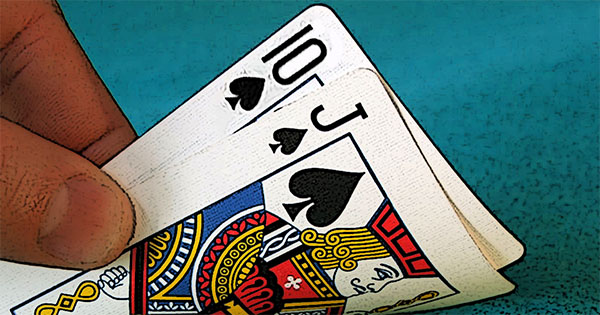
For instance, AA is only about a 63% favorite against JTs, a 70% favorite against TT, and a 64% favorite against T8s, which means the hand does not hold as much power as you might be used to.
Similarly, a hand like AKs is only a slight favorite against T9s before the flop. On the other hand, unlike in Texas Hold’em, AKs will be a slight favorite against smaller pocket pairs instead of a slight underdog.
Another very interesting fact is that KK loses a lot in its value and is only a 53% favorite against AKs, which may seem almost incredible but is very true considering the overcard, straight, and flush options AKs have with the short deck.
So, before you start piling those chips into the pot, make sure to spend some time experimenting with the Short Deck Poker odds simulator and get a full understanding of how preflop equities and poker ranges work in this game.
Short Deck Odds and the Rule of 6 and 3
Because the deck has 36 cards instead of 52, drawing probabilities change significantly. Sets hit more often, straight draws carry more equity, and drawing hands are more powerful than you are used to in standard Hold’em.
The easiest way to estimate draw equity at the table is the Rule of 6 and 3. Multiply your outs by 6 on the flop (for two cards to come) and by 3 on the turn (for one card to come). In standard Hold’em, the equivalent rule is 4 and 2. The higher multiplier reflects the increased drawing power when fewer cards remain in the deck.
| Situation | Outs | Flop equity (rule of 6) | Turn equity (rule of 3) |
|---|---|---|---|
| Open-ended straight draw | 8 | ~48% | ~24% |
| Flush draw | 9 | ~54% | ~27% |
| Gutshot straight draw | 4 | ~24% | ~12% |
I pay much closer attention to my opponents’ drawing hands in Short Deck than I do in regular Hold’em. A player with an open-ended straight flush draw on the flop has close to half the deck working for them. You cannot give those hands a free card and expect to hold up with top pair or two pair.
One other probability shift worth noting: pocket pairs flop a set roughly 18% of the time in Short Deck, compared to about 12% in standard Hold’em. Sets and draws are both dramatically more common, which is why Short Deck plays so much more action-packed than standard Hold’em at equivalent stack depths.
How to Win at Short Deck Poker – Preflop Play
To help you win more often at Short Deck Poker, we are going to introduce you to a bit of basic strategy as well.
Now that you know all the important Short Deck Poker rules, it’s time to think about how to play your hands, and this starts with preflop play.
Thanks to the ante structure of Short Deck Poker, limping into pots is quite a good strategy, as it only costs you one ante to do so, and there are usually already seven or eight antes in the pot to start with.
If you look at the top pros playing the game, you will notice them limping in with a lot of suited hands and various connectors instead of raising, and you may be a bit surprised.
However, there is simply less of an incentive to raise a wide range of hands in Short Deck Poker, as other players are not as likely to fold to your raise as they would be in Texas Hold’em.
With equities running so close, many players will defend their antes, which means bigger raises are in order, with players routinely shoving as many as 40 antes before the flop.

If you think about it, going all-in for 30 antes makes perfect sense, as you get to pick up eight antes at a 7-handed table without any fight each time other players fold.
Of course, you are also going to get called quite a bit, but when you do, you will not be as big of an underdog as you will in Texas Hold’em.
In fact, if you shove a hand like a suited Ace, pocket Aces are literally the only hand you are really worried about, and there are only three combos of AA left in the deck.
Hands like JTs and QJs play so well, even against AA, that you can easily go all-in when playing in a tournament format and pick up all the dead antes or stand a very good chance to double up and play with an even bigger stack.
So, contrary to the profitability of limping in Texas Hold’em, preflop play in Short Deck Poker is all about limping a lot when you have a big stack and going all-in a lot when your stack gets into that 20-40 ante territory, and this is exactly the way pros have been playing it.
Bet Sizing and Bluffing in Short Deck Poker
The sizing mistake I see most often from Hold’em players entering Short Deck is betting too small with made hands on draw-heavy boards. I had a hand that illustrated this clearly: I held A♠K♠ and flopped top two pair on an A♣K♣8♣ board. My opponent called with Q♣J♣ and was on a flush draw. The turn came 7♣, completing the flush. The river brought A♦, improving me to a full house. In Short Deck, a flush beats a full house. My opponent won the pot.
That hand reinforced something I have seen at Short Deck tables repeatedly: strong draws complete at a much higher rate than in standard Hold’em, and giving cheap cards is far more costly here. When I have top pair or two pair on a wet board in Short Deck, I default to betting between 60 and 100 percent of the pot to deny equity to drawing hands that are far more dangerous than they look on the surface.
Other gameplay differences between Short Deck Poker and Texas Hold’em come into play once the flop is dealt out and further betting streets ensue.
If you plan on playing Short Deck Poker, you will have to get a lot more familiarized with playing multi-way pots, as these are so common in this new poker variation.
Multi-way pots happen so much because players are incentivized to limp in, and there will often be no one with a big enough hand to go for a raise before the flop.
Playing multi-way Short Deck Poker pots can be super complicated, and no one has really solved these spots just yet, which means you can play in many creative ways and discover the best ways to play for yourself.
One thing that we can tell you for sure is that making your bets bigger than you would in Texas Hold’em is definitely important, as a lot of drawing hands will simply have more equity.

For example, an open-ended straight draw will have about a 50% chance of getting there by the river, which means your typical half-pot bet won’t be enough to price out such a draw.
This is exactly why you will often see the top players go all-in on the flop when they have top pair or overpair on boards that look like they might give their opponents a lot of draws.
As always, it is important to balance between protecting your own hand and value-owning yourself, but as long as the stacks aren’t too deep, you won’t go wrong by playing aggressively and protecting your equity whenever you can.
When it comes to bluffing, note that there are many opportunities to bluff in Short Deck Poker, as the board changes so much from one street to the next, and so many drawing situations arise.
Remember to leverage your position at the table and represent straights often, especially when you have blockers to the straight. On the other hand, don’t lean too much on representing a flush, as flushes are very hard to make in Short Deck, and experienced players won’t believe you.
Short Deck Poker in a Nutshell
Short Deck Poker is a very new form of the game that most players are only just starting to play and figure out, which means it could be the right time to get in on the action.
While there are so many great teaching tools out there for games like Texas Hold’em or PLO, learning to play Short Deck is a lot harder these days, which means you may be able to find a lot of soft competition.
The game is evolving every day, with top poker players realizing new ways to play optimally and dominate their opposition, so make sure to watch them play and try to mimic some of their strategies in your own game.
Short Deck Poker is now available at several online poker rooms, and there is no shame in trying to introduce the game to your local home game, as well as seeing how well you can do against other novice players who are just learning the game.