The small blind is the most difficult position in poker. You act first postflop, you’re forced to invest money preflop, and every decision you make is magnified by positional disadvantage.
Yet many players approach the small blind with the same mindset they use in later positions by calling too often, defending weak hands, and entering pots without a clear plan.
Strong players know better. In most cases, your decision should come down to either 3-betting or folding. Calling is rarely optimal.
This article explains why the small blind is unique, why calling is usually a mistake, and how to build a profitable 3-bet-or-fold strategy that holds up in small-stakes cash games.

Why Calling from the Small Blind Is Usually a Mistake
Many players feel tempted to call raises from the small blind because they’re “getting a price.” But the apparent pot odds are misleading. When you call, you invite the big blind into the pot, create multiway situations, and commit yourself to playing out of position with a capped range.
Calling from the small blind creates several problems at once:
- You allow the raiser to c-bet aggressively
- You rarely control pot size
- You struggle to realize draws
- You’re vulnerable to squeezes
- You end up overfolding postflop
As a result, the EV of calling from the small blind is often far lower than players expect—even with hands that look playable.
This is why modern small-blind strategy dramatically reduces the frequency of calls and shifts toward aggression or folding.
The Power of a 3-Bet-or-Fold Strategy

A 3-bet-or-fold approach solves many of the small blind’s structural problems in one stroke.
By 3-betting, you:
- Regain initiative
- Force the big blind out more often
- Narrow the raiser’s continuing range
- Lower SPR, making postflop play simpler
- Compensate for positional disadvantage with aggression
By folding, you avoid entering pots where your hand cannot perform profitably.
This clarity is crucial. Instead of trying to “outplay” opponents from the worst position, you either apply pressure immediately or step aside.
Which Hands Make Good 3-Bets from the Small Blind
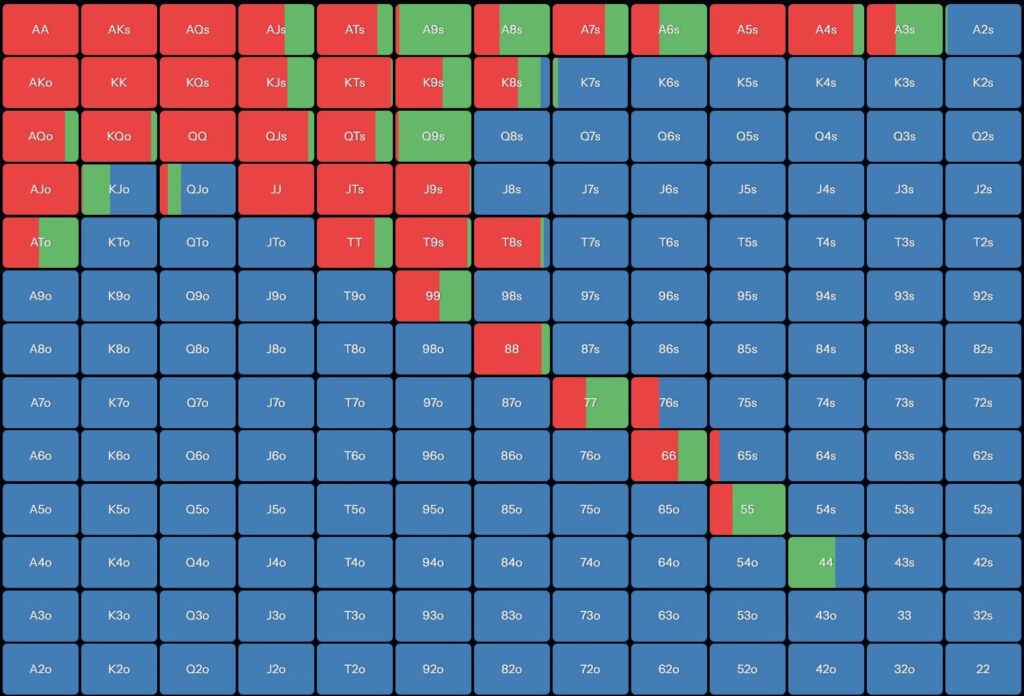
From the small blind, your 3-bet range should be polarized, consisting of strong value hands and well-chosen bluffs.
Value 3-Bets
Hands that want to build the pot and are happy playing for stacks include:
- AA, KK, QQ
- AK
- Often JJ and AQs, depending on the opener
These poker hands benefit enormously from denying equity and lowering SPR. Flatting them from the small blind is almost always inferior to 3-betting.
Bluff and Semi-Bluff 3-Bets
Your bluffs should be chosen strategically, not emotionally. The best candidates:
- Block strong continues from the opener
- Have playability if called
- Avoid domination
Hands like A5s–A2s, KQs, and certain suited broadways perform well because they block premium hands and retain equity postflop.
By contrast, calling or 3-betting weak offsuit hands like KJo or QTo is usually a losing strategy.
Why Flat Calling Should Be Rare
Calling from the small blind should be the exception, not the rule. When it does happen, it’s usually with hands that:
- Have excellent multiway playability
- Can flop strong disguised hands
- Perform reasonably well out of position
Examples include some small pocket pairs or specific suited connectors against late-position opens, but even these hands are often better used as folds or occasional 3-bet bluffs in small-stakes games.
From a coaching standpoint, if a player frequently calls from the small blind, it’s usually a red flag that their preflop discipline needs tightening.
Adjusting for Small-Stakes Tendencies
In small-stakes cash games, opponents tend to:
- Open too wide
- Call 3-bets too often
- Play passively postflop
This environment rewards value-heavy 3-betting from the small blind. You don’t need to balance GTO poker strategy perfectly since your edge comes from punishing loose opens and capitalizing on postflop mistakes.
Against tighter players who open narrow ranges, you can reduce bluff frequency and tighten your value range. Against loose openers, you should expand your 3-bet range aggressively.
Conclusion
The small blind is not a position where you can afford to be passive. Calling too often leads to weak ranges, poor equity realization, and difficult postflop spots.
A disciplined 3-bet-or-fold strategy allows you to reclaim initiative, protect your range, and avoid the structural disadvantages that plague most small blind play.
By tightening your calling range, choosing strong value and blocker-based 3-bets, and adjusting intelligently to opponent tendencies, you turn the worst seat at the table into a controlled, manageable position.
The goal isn’t to win every pot from the small blind—it’s to stop losing the ones you never should have played in the first place.