
A set is three of a kind made with a pocket pair: you hold two matching hole cards and one of that rank hits the board.
Trips is three of a kind made with one hole card: two of that rank appear on the board and you hold the third. Both rank the same in hand rankings, but they play very differently and knowing the distinction changes how you extract value from each.
In my experience coaching live and online players through PokerCoaching, the players who confuse the two poker terms are usually making the more important strategic error: treating trips with the same aggression as a set.
A set is disguised in a way trips almost never is, and that hidden quality is what makes it such a consistently profitable holding. The breakdown below covers exactly why and how to play each.
The Difference between Trips vs Sets
There is one major difference between trips and a set, and that difference comes from the way you make your three of a kind.
- A set is a term used to refer to three of a kind made with two hole cards. You can only have a set if you start with a pair in the hole and hit another card on the board to make three of a kind.
For example, if you hold KhKd and the flop comes Ks7c4d, you now hold a set of kings, and your hand ranking is three of a kind.
- Trips, on the other hand, is a term that refers to three of a kind made using only one of the cards from the hole and two cards on the board.
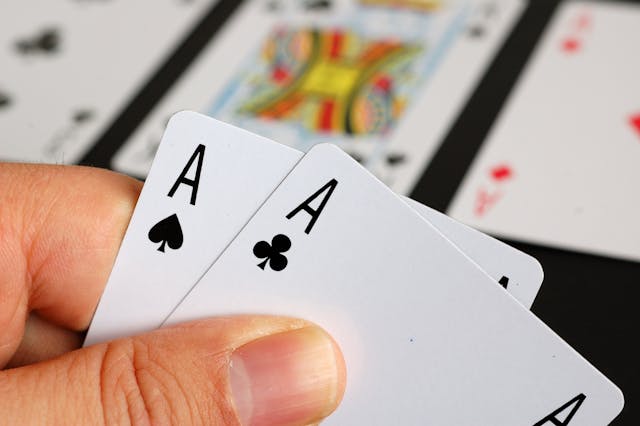
For example, if you hold AsKd and the flop is KsKhJc, you now have trips. Your hand ranking is three of a kind, the same as the earlier example, but the method in which you made the hand determines which moniker should be used.
Note that saying you have a set when you actually have trips is not a massive mistake and certainly not one that will directly cost you money in any way, but it may influence the way other players in the game see you.
Generally speaking, players who are quite inexperienced or don’t really understand the poker basics too well tend to make this mistake, and you may even want to use this to your advantage and pretend like you don’t know the difference to make the table think you are a fish.
In my experience, the clearest way to remember this is to connect the terminology to the visibility of the hand. When you have a set, your opponents see only one copy of your rank on the board. When you have trips, they see two. That visibility difference drives almost everything that follows in terms of how you should play the hand.
Using Trips to Refer to All Three of a Kind
While the word set is almost always used to refer to three of a kind made with a pocket pair, the word trips can be used to refer to any three of a kind.
While most players, especially of the younger generation, will only call a hand trips when it’s made with one hole cards, many players do use the moniker trips to refer to any three of a kind.
Since there is really no right or wrong answer here, you may keep calling any three of a kind trips if you do so now, or you may choose to introduce the term set into your poker lingo in the future.
In professional poker circles, the distinction matters for another practical reason: accurate hand communication in coaching and review settings. When I review a hand with a student and they say they had trips, I immediately know two board cards matched their hole card.
When they say set, I know their pocket pair hit. Using the terms precisely saves time and prevents miscommunication when analyzing spots after the fact.
Odds of Making a Set vs Trips
One major difference between sets and trips is the likelihood of making the two hands in the first place, with sets being a lot more common than trips.
Once you do hold a pocket pair, you will make a set on the flop about 11.8% of the time, which translates to needing pot odds of about 7.5:1, which isn’t too bad at all.
Making trips with one of your cards when you have an unpaired hand is a lot less likely, with only 1.35% of all flops giving you three of a kind in this way.
However, since any two unpaired cards can make trips, it may seem like making trips is easier than making a set for an innocent bystander.
The 11.8% set-flopping rate is the foundation of set mining strategy: calling raises with small pocket pairs specifically to hit a set and win a large pot. I apply a version of the 10-to-1 implied odds rule when deciding whether to set mine: if I can realistically win at least 10 times the call amount when I hit my set, the call is justified. The 7.5:1 odds against hitting give some room, but not all spots qualify.
I have run set mining spots extensively through PeakGTO, PokerCoaching’s native solver. The solver confirms that set mining with small and medium pairs is a high-frequency call in most deep-stack scenarios, but breaks down in short-stack situations or against opponents who will not pay you off when the set arrives.
Which is Better – Trips vs Sets?
Sets and trips rank identically in the poker hand rankings. The hand strength on paper is the same. But as a practical matter, having a set is almost always more valuable than having trips, and the reason comes down to disguise.
For one, sets are a lot less visible than trips, and it is a lot harder for your opponents to assume you have a set.
For example, if you hold 2s2c on a board of Ks8d2s and play aggressively, your opponents may think you have a pair of Aces, a King, a flush draw, and a number of other hands.
On the other hand, holding As2s on a board of Kd2c2h and playing aggressively will often alarm your opponents to the fact that you might have trips, as that is the one hands you would want to get a lot of value with.
What’s even more, having a set allows your opponents to have many different hands that seem strong but are far inferior to yours.
For instance, in the example above, another player may have a hand like AK, KQ, or even K8s, as well as a number of flush draws, all of which they will gladly pay you off with.
In our trips example, your opponent may give you some action with a King, but will also be very careful, as you having a single Deuce to beat them is reasonably likely when you continue playing aggressively.
What’s even more, the sheer number of hands that your opponents can have and continue with is smaller since two of the cards on the board are Deuces, reducing the number of poker combos that connect with the board.

For all of these reasons, having a set is a sneakier hand and often a lot better than having trips, as sets are valued by Texas Hold’em players on a different level.
How to Play Sets in Poker
As mentioned before, the set is a superior poker hand to trips and is one of the most coveted holdings for the players, as it offers real potential for a huge payoff.
When you are fortunate enough to flop a set, you should make sure to take several things into account to play a poker strategy to get maximum value for your hand.
For one, you should consider who the last aggressor before the flop was, as this plays a significant role in how you proceed with your set on the flop.
Secondly, the board texture will matter a lot in choosing the right way to play your hand. On some boards, you will prefer playing your set aggressively, while on others, you will want to lay a trap.
For example, imagine you are sitting on the button in a deep-stacked cash game and call a 3-bet from the big blind before the flop holding 4s4d.
On the flop of KsTh4h, you flop the bottom set, and your opponent fires out a continuation bet. This would be an ideal example of a set you want to raise on the flop.
You have a bottom pair, which means your opponent can still have plenty of strong hands like AA, AK, and KQ, as well as plenty of heart flush draws.
Since you can expect to get more action from all these hands, and you want to protect your equity against straight and flush draws, raising right here would be the right play.
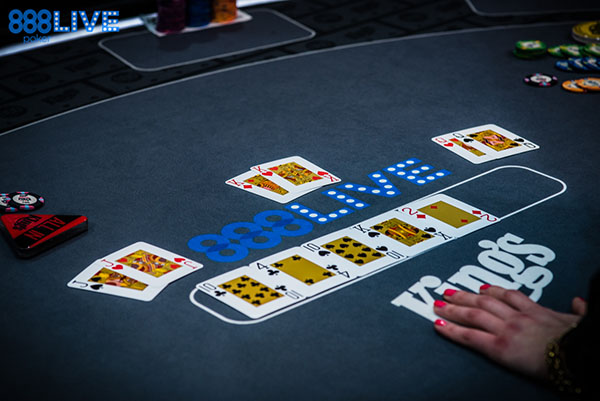
On the other hand, if the board was 8d4h2s in the same spot, you would probably prefer to just call, as your opponent would have way fewer hands they could continue with.
Instead, by calling the flop, you would allow the opponent to catch up by making a top pair or a draw on the turn some percentage of the time, and you to get more action on future streets.
The general principle I use for sets is: the more the board connects with hands your opponent can credibly have, the more aggressively you should play your set. On wet boards, where opponents can have flush draws, straight draws, or top pair hands with good kickers, your set is disguised enough to get raised or re-raised and still have many hands that will continue.
On dry boards, where the texture does not provide as many opportunities for opponents to continue, taking a slower line often generates more value across multiple streets.
How to Play Trips in Poker
Trips may have the same absolute value as sets, but they are often much harder to get paid off on, as they are more obvious, and it is much more difficult for others to have a hand when you have them.
The only scenarios where you get paid big with trips in Texas Hold’em are those where you make trips and another player makes the same hand with an inferior kicker.
In most other situations, you will be hoping to get one or two streets of value from a hand, like two pairs. For instance, AK or KQ might be willing to call some bets on a board of Ks5d5c when you hold As5s, but there are many more hands that will be simply folding.
You should still be happy to put in money with your trips in most cases, especially when facing bets, as your opponents are usually more likely to be bluffing than actually having a good hand.
Yet, you will want to be quite careful if your trips have a poor kicker, as these kinds of spots can cost you a lot of money when faced with superior trips.
The one situation I handle differently with trips compared to what many players do is when I have trips with a weak kicker on a paired board. Many players over-call in this spot because the absolute strength of three of a kind feels strong.
But when the kicker is weak, for example trips with a 4 on a board pairing an Ace, anyone holding a better kicker has the same trips and is ahead. In those spots, I play more carefully and am not looking to build a huge pot unless I have a clear reason to believe the opponent has a strong enough hand to pay off but is still losing to mine.
Sets and Trips are Not the Same
There is a principle that circulates in serious poker study circles: sets win money and trips lose money. That is an exaggeration, but it captures something real. Sets are disguised, generate more action, and rarely put you in danger of losing to a better hand of the same rank.
Trips are visible, harder to extract value from, and vulnerable to being beaten by superior kickers.
Understanding the difference changes your approach before and after the flop. It informs when set mining is profitable. It shapes how aggressively you play three of a kind on a paired board. And it helps you communicate hand histories precisely when reviewing spots with other players or a coach.
The goal in both cases is maximum value extraction when you have the best hand. The path to that goal looks different depending on how the three of a kind was made.