
4-betting is one of the most powerful weapons in Texas Hold’em, yet it remains one of the least understood. Many players see 4-bets only as “aces or bluffs,” or they avoid 4-betting altogether unless they wake up with a monster. Others choose the wrong hands as bluffs.
A well-constructed 4-bet strategy creates enormous advantages:
- You win pots uncontested preflop.
- You deny your opponent the chance to realize equity.
- You extract maximum value with your best hands.
- You protect your opening range from being bullied.
- You become impossible to exploit.
This article breaks down the logic behind 4-betting, shows how to build value ranges, select the right bluffs, adjust for opponents, and use position to your advantage. Think of it as a clear, structured blueprint for turning 4-betting into a profitable and reliable tool in your game.

Why 4-Betting Matters More Than Most Players Realize
The moment you face a 3-bet, the game changes. Ranges tighten, pot sizes grow, and the cost of making a mistake increases significantly.
If you don’t have a plan for these moments, aggressive opponents can attack you relentlessly. They can 3-bet light, pressure your medium-strength opens, and push you off hands that should be defended.
A strong 4-betting strategy prevents this. Even against tighter opponents, proper 4-betting extracts more value from hands that deserve to play for stacks and denies equity to hands that don’t.
One of the most important concepts in 4-betting is that your range should be polarized. This means that your 4-bet range contains two very different categories of hands:
- Hands that want to get all the chips in preflop, because they dominate your opponent’s calling range.
- Hands that prefer your opponent to fold, because they block the strongest hands but don’t play well as calls.
What you don’t want in your 4-bet range are hands that fall in the middle and are too weak for value but too strong to turn into bluffs. These “middling” holdings tend to perform poorly in inflated pots and often become expensive mistakes.
4-Betting for Value: Building the Pot With Premium Hands
In cash games with 100 big blinds, your core value 4-betting hands are straightforward: Aces and kings should almost always be a 4-bet. These are the hands that want to play for stacks and don’t benefit from keeping the pot small.
Many players slow-play them too often, giving opponents cheap ways to realize equity or leaving the pot far too small.
Beyond AA and KK, the next tier is QQ and AK, where some nuance comes in play. These poker hands are runaway favorites against most 3-bet ranges but sometimes perform better as calls, particularly when you’re in position.
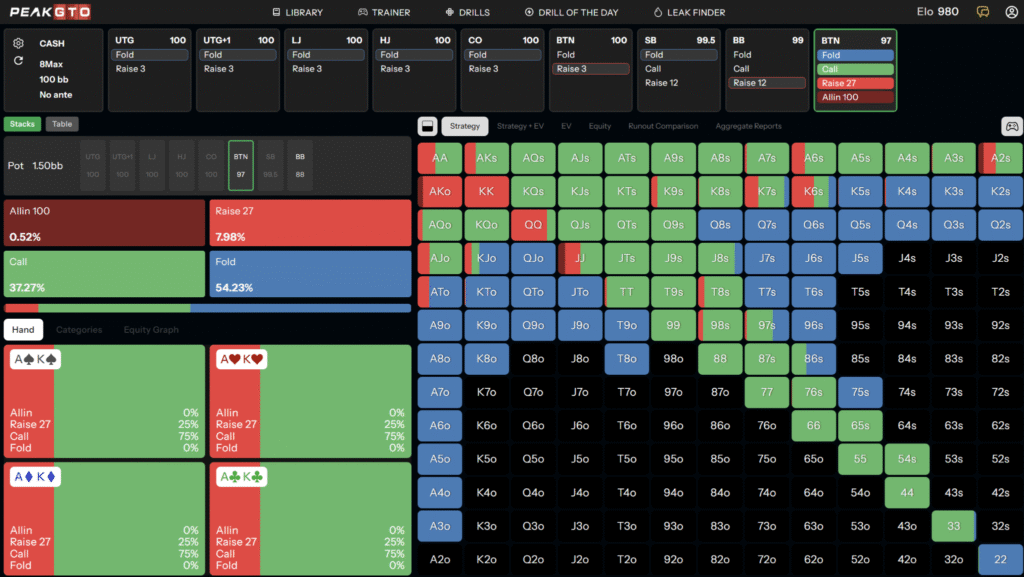
For example, AKs on the button against a big blind 3-bet often performs exceptionally well as a call because you retain position and allow dominated hands to continue. But the same AKs facing a 3-bet when you’re out of position, or facing an aggressive opponent with a wide 3-bet range, become a highly profitable 4-bet candidate.
QQ follows a similar pattern. Out of position, 4-betting avoids tricky postflop situations and leverages your hand’s raw equity. In position, calling is sometimes attractive, especially against balanced or tight 3-bet ranges. Your job as a player is to identify which dynamic you’re in and deploy AK and QQ accordingly.
Choosing the Right 4-Bet Bluffs: Blockers Over Beauty
Most players select their 4-bet bluffs based on how pretty a hand looks, not on whether the hand is strategically sound, and that can quickly become a costly mistake.
A great 4-bet bluff must accomplish two things:
- Make it less likely your opponent has a premium hand.
- Retain enough equity and playability when called.
This is why the best 4-bet bluffs are not hands like KJs or QJs, which are dominated too often and don’t block the strongest ranges.
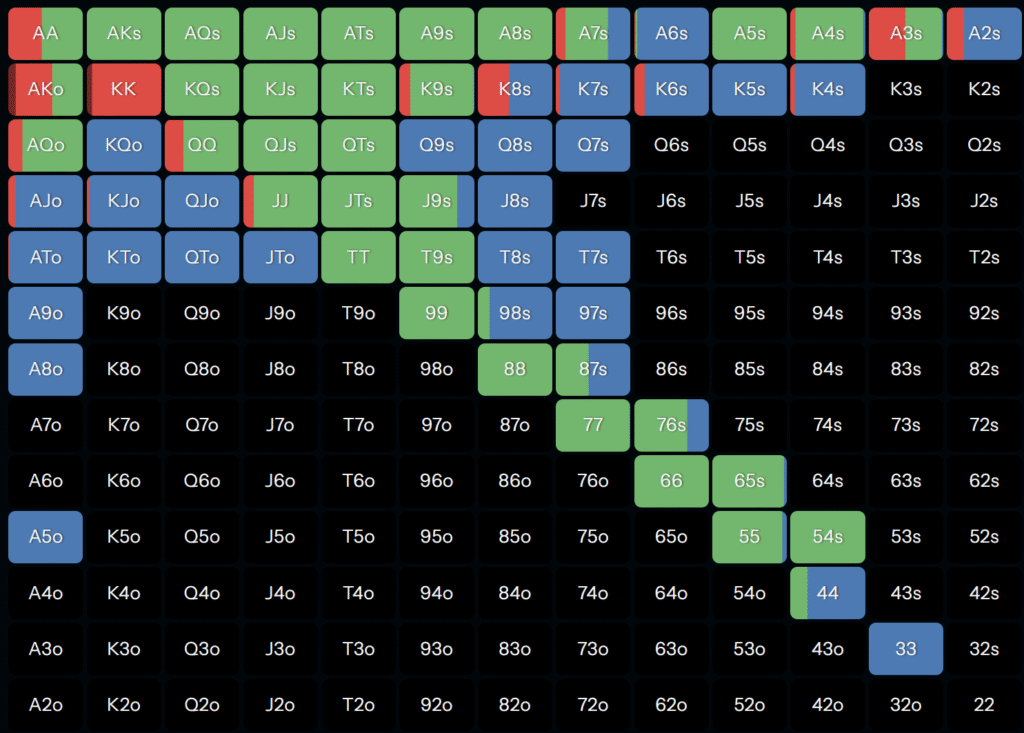
Instead, the best bluffing candidates are hands such as A3s, A2s, or suited Kx hands like K8s. These hands are strategically perfect for several reasons:
- They block AA, KK, and AK combinations, which are the hands most likely to continue
- Their equity is surprisingly resilient when called
- Their straights and flushes are well-disguised
- They play cleanly in low SPR situations
- They don’t suffer from domination in the same way Broadway bluffs do
By contrast, hands like KJs or QTs might be pretty enough to tempt a player into a 4-bet, but they force the opposite reaction from your opponent than you would like. Other players are likely to fold all worse holdings and continue only with the hands that dominate them.
For that reason, these holdings are much better for calling than turning them into a bluff and 4-betting.
Understanding why certain hands work and others don’t is a turning point in your development as a player.
On top of that, position has an enormous influence on how wide or narrow your 4-bet range should be. Against the blinds when you’re on the button, your 4-bet range naturally widens. This is because players in the blinds tend to 3-bet you with many more hands, and you have position for the rest of the hand. Fold equity increases, and your blockers become more valuable.
In contrast, when the button 3-bets your cutoff open, his range is typically narrower and more value-dense. Your 4-bet range should tighten considerably since you don’t gain as much by bluffing into a strong, well-constructed 3-bet range.
How a Coach Thinks About 4-Betting
From a coaching perspective, understanding why to choose a certain hand is more important than memorizing preflop charts. When teaching players how to build 4-bet ranges, I emphasize a few essential questions:
- Does this hand want to get all the money in preflop? If yes, it belongs in the value bucket.
- Does this hand block my opponent’s strongest holdings? If yes, it’s a potential bluffing candidate.
- Is this hand easily dominated when called? If yes, you should avoid 4-betting it.
- Is my opponent the type to fold too often or call too often? Your ranges must adjust accordingly.
This framework is what allows you to develop your own 4-bet ranges rather than copy something you don’t understand.
Conclusion
A strong 4-bet range is a cornerstone of modern poker strategy. It stops opponents from attacking your opens, ensures your value hands win maximum money, and gives you a structured, profitable way to apply pressure.
When you understand why suited wheel aces are the best bluffs, when QQ and AK should mix between calling and raising, and why position shapes the entire landscape, you gain control over the most aggressive parts of preflop play.