Bluffing means betting or raising with a hand that probably won’t win at showdown, so that a better hand folds. It’s how you win pots you’d otherwise lose, and it’s the reason your value bets get paid.
Most players get bluffing wrong in one of two ways. Some almost never bluff, so nobody pays them off. Others bluff on gut feeling and keep firing into players who never fold.
This guide shows you how to bluff in poker with a simple decision process. You’ll learn the five questions to ask before you bluff, which hands to bluff with, how big to bet, how often to bluff on the river, and when to give up, in any Texas Hold’em game.
What Is a Bluff in Poker?
A bluff is a bet or raise with a hand that’s unlikely to be best at showdown. You win when your opponent folds a better hand.
A semi-bluff is a bluff with a hand that can still improve, like a flush draw or an open-ended straight draw. It has two ways to win. Your opponent folds now, or you hit and win at showdown. That’s why most good bluffs on the flop and turn are semi-bluffs.
Why You Have to Bluff
If you only bet your strong hands, observant opponents fold to your bets and call only when they beat you. Your big hands stop getting paid.
Bluffs fix that. They make your bets hard to read, and they win pots on their own through fold equity, the chance your opponent folds.
At small stakes, the most common mistake isn’t bluffing too much. It’s bluffing too little. Plenty of players check every river where they missed, even in big pots where a bet would take it down. Others won’t overbet because it feels reckless, or won’t bluff live because they’re embarrassed to get caught. Each of those habits leaves money on the table.
Five Questions to Ask Before You Bluff
Before you bluff, especially on the river, run through these five questions. The more yes answers you get, the better the bluff.
1. Is My Opponent Capable of Folding?
This one matters most. If a player won’t fold bottom pair or ace-high, don’t bluff them. Value bet them instead.
Most players are capable of folding in reasonable spots. The question isn’t whether they ever fold, but whether they’ll fold the hands they’re likely to have here to the bet you’re about to make.
2. Do I Lack Showdown Value?
If your hand can win by checking, you have less reason to bluff. A small pair is one of the weaker made poker hands, but on a quiet board it often wins at showdown, so check it.
If you have six-high after a missed straight draw, checking loses every time. That’s a hand that wants to bluff.
3. Do I Have Value Hands in My Range?
A bluff needs to look like something. If you’d logically play some strong hands this way, your bet is believable. If your line almost never contains a strong hand, good players will call you down.
4. Do My Cards Block Calls and Unblock Folds?
Blockers are cards in your hand that make certain hands less likely for your opponent. On a three-spade river, holding the ace of spades means your opponent can’t have the nut flush, which removes a big chunk of their calling range.
The flip side matters just as much. You want your opponent to have the hands that fold. If their folds are ace-high and king-high, holding an ace or a king in your hand makes those folds less likely.
5. Does My Bluff Tell a Credible Story?
Think about how your line looks from the other side. Would you play a strong hand this way? Checking the flop and turn and then betting big on a river that changes nothing usually isn’t believable. A bet that matches what you’ve represented all hand is.
Spot factors feed into these answers. Bluff less into more players and more in position. Bluff more on boards that favor your range and less on boards that hit your opponent. And bluff less when your table image is wild, because your opponents will already be calling you down.
Choosing Your Bluffing Hands
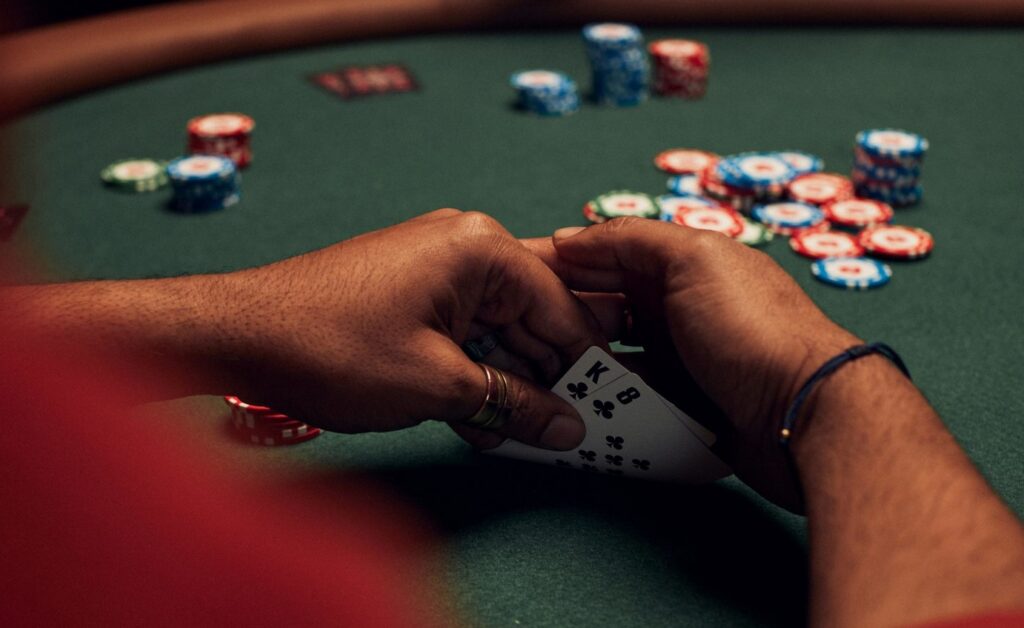
On the flop and turn, choose bluffs that can improve. Flush draws, open-ended straight draws, gutshots with overcards, and backdoor draws all give you a second way to win when you’re called. A hand with no draw and no pair can only win if the bluff works right now.
On the river, choose hands with no showdown value and the right blockers. The same draw can be a good or bad river bluff depending on the cards it holds.
Say the flop is jack-nine-eight with two spades. You bet ace-ten of spades, get called, bet again on a 3 of diamonds turn, and get called again. The river is a 5 of clubs and your opponent checks.
Ace-ten of spades is a poor river bluff. You hold the ace and ten of spades, so your opponent is less likely to have missed spade draws and ten-x straight draws, which are exactly the hands that would fold. Ace-ten of hearts is a better bluff on the same river. It leaves all those missed draws in your opponent’s range.
How Big Should Your Bluff Be?

On the Flop
Board texture decides most of it. On dry boards like eight-three-three, a small bet with most of your range works, because your opponent misses most of the time and folds a lot even for a quarter of the pot.
On wet, connected boards like jack-nine-eight with two spades, bet bigger with your strong hands and your best draws. A small bet gets called by too many hands with equity. A bigger one folds out gutshots and weak pairs.
On the River
Ask these four questions.
- Do I have no showdown value at all? Lean bigger, so your opponent can’t call with king-high. With a hand like ace-high that might win sometimes, a smaller bluff is fine.
- Does my opponent have lots of medium-strength hands? If they have many middle pairs, bet big to fold them out. If they either have a strong hand or nothing, a small bluff does the job, because the nothing hands fold to any bet and the strong ones never fold.
- Do I block the nuts? If you do, you can represent them, so a big bet makes sense.
- Am I trying to fold a good hand? To fold top pair or two pair, you need a big bet. To fold ace-high or bottom pair, a smaller bet can be enough.
Against a capped opponent in a big pot, such as a player who check-called the flop and turn, err on the side of a bigger bluff. A third of the pot gives one pair an easy call. A pot-sized bet makes them think. Our step-by-step framework for deciding when to bluff covers these river spots in more detail.
Putting the Questions Together
Here’s how it looks in a real hand. You open seven-five of clubs on the button and a weak-tight player calls from the big blind. The flop is ten-nine-four with two diamonds. They check, you bet a third of the pot, and they call.
The turn is the nine of spades. They check, and you check behind, since they won’t fold a ten, nine or four. The river is a six, and they check again.
Your opponent is capable of folding, and seven-high has no showdown value. You don’t hold a king, queen, jack or diamond, so you don’t block the high-card hands and missed draws they’ll fold. That’s mostly yes. On size, you’re not trying to fold a ten, and you’re not representing the nuts, so a medium bet of about half the pot is enough to fold their fours and high-card hands.
How Often Should You Bluff on the River?
On the river, your bet size tells you two different things. How often a single bluff needs to work to break even, and how many bluffs a balanced betting range can hold.
| River bet | Folds needed for a bluff to break even | Bluffs in a balanced betting range |
|---|---|---|
| 1/3 pot | 25% | 20% (1 bluff for 4 value bets) |
| 1/2 pot | 33% | 25% (1 bluff for 3 value bets) |
| Full pot | 50% | 33% (1 bluff for 2 value bets) |
| 2x pot | 67% | 40% (2 bluffs for 3 value bets) |
The middle column is what one bluff needs. A half-pot bluff only has to work one time in three. The right column is how to balance your whole river betting range so your opponent can’t profit by always calling or always folding.
As a table-side shortcut, for a pot-sized river bet, have about one bluff for every two value hands. For a half-pot bet, about one for every three. Against players who rarely fold, use fewer. Against players who fold too much, use more.
These ratios are for the river. On the flop and turn, your bluffs still have equity, so you can bluff more often.
Following Through on the Turn and River
A bluff isn’t one decision. In my experience, the players who struggle most with bluffing aren’t the ones who bluff too much. They’re the ones who bluff the flop with no plan for the turn and river.
Before every barrel, ask two things. Did this card help my story or my opponent’s range? And have they shown they’re holding something strong?
Keep firing when the card fits your range better than theirs, or when their line has capped them. A player who check-called the flop and the turn without raising usually has one pair or a draw, and a big river bet puts real pressure on them. Our guide on when to double barrel the turn as a bluff covers which turn cards keep a bluff going.
Give up when the card improves the hands that call you, when your hand blocks the folds you need, or when your opponent’s line says they’re strong. Checking and giving up isn’t failing. It’s spending your bluffs where they work.
When Not to Bluff
- Multiway pots. Every extra player is one more person who has to fold. Bluff far less, and mostly with strong draws. Here’s why bluffing in multiway pots rarely pays.
- Against calling stations. If they don’t fold, there’s no bluff. Bet your value hands bigger instead.
- Against tight players showing strength. When a nit raises or keeps calling, believe them.
- On boards that favor your opponent. If the board hits their range far more than yours, they can call wider and even bluff you back.
- When you have a reason to win at showdown. Hands with real showdown value usually do better checking.
Conclusion
The most useful thing to remember about how to bluff in poker is that a good bluff needs a reason. Before you fire, ask whether your opponent can fold, whether your hand can win any other way, and whether your cards and your story make the bet believable.
Pick bluffs that can improve on early streets and hands with the right blockers on the river. Size them to the hands you need to fold, and keep your river bluffs close to the ratios for your bet size.
Do that, and your bluffs start working for a second reason too. Your value bets get paid, because your opponents can’t tell which is which.