Most players in small-stakes games are afraid to bluff. They check rivers where a bet would win the pot uncontested. They give up on semi-bluffs the moment they miss. And they wonder why their win rate doesn’t reflect the effort they put into the game.
The fear of being caught bluffing is mostly irrational from a math perspective. If every bluff you attempt gets through, you are not bluffing enough. Bluffs are supposed to fail some of the time. The goal is not to avoid getting caught — it is to bluff in spots where the math and the situation make it profitable.
Here is the framework I use to decide when to bluff in Texas Hold’em, step by step.

Step 1: Accept That You Must Bluff to Win
Before anything else, you need to get comfortable with the idea of bluffing.
In live small-stakes games, many players work all week, show up with a couple of buy-ins, and are terrified of losing their stack. That fear makes them predictable. They bet their strong hands and fold everything else. When they check the river in a large pot, they almost always want to see a showdown and will fold to any bet they cannot beat.
That behavioral pattern is a gift. These players fold far more than they should to meaningful river bets. But you can only take advantage of it if you are willing to fire.
Step 2: Identify Whether Your Opponent Is Capped
The clearest sign that a bluff is likely to work is an opponent who is capped on the river.
Most players raise the flop or turn with their strongest poker hands. When a player check-calls the flop and check-calls the turn, they are almost always arriving at the river with one pair, a weak two pair, or a missed draw. They rarely hold a set or a straight because they would have raised at some point with those holdings.
This is where fold equity is at its highest. A player sitting in a large pot with a capped range does not want to call a substantial bet with one pair. They played passively to get there since they knew their hand was marginal, and a big bet puts them in an uncomfortable spot.
Actively look for the check-call, check-call pattern before committing to a river bluff. When you see it, the conditions for a profitable bluff are often already in place.
Step 3: Check Whether the Math Supports the Bluff
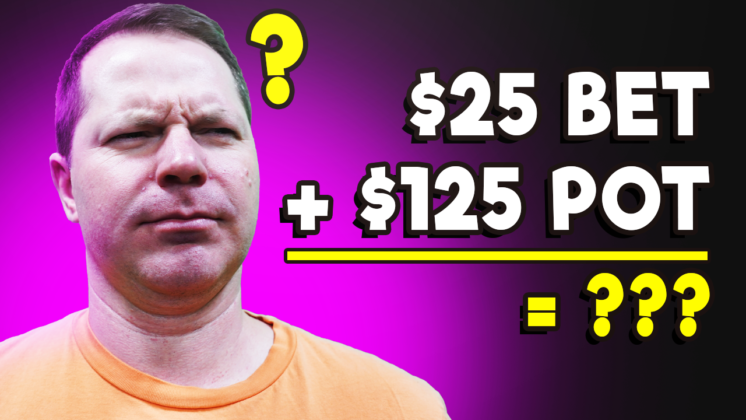
Before bluffing, it is worth understanding the basic poker math behind why river bluffs are profitable when opponents fold often enough.
A pot-size bet risks one unit to win the one unit in the pot. That means you need your opponent to fold more than 50% of the time to profit. If the player across from you folds one pair to a big river bet 65 or 70% of the time, a pot-size bluff is clearly profitable even when it occasionally fails.
Overbets raise the break-even threshold but work better against capped ranges. If you bet two times the pot, you are risking two units to win one, so you need your opponent to fold 67% of the time. Against a player sitting with the top pair in a large pot, that number is very achievable.
In my experience, the players who push in a meaningful overbet at these stakes get folds at a rate that far exceeds the break-even point, while players who size down to a third or half pot are giving their opponents too good pot odds to justify folding any pair.
Run the numbers in your head before bluffing. Large pot, capped opponent, your hand has no showdown value: this is a high-percentage spot to fire.
Step 4: Look for Blocker Advantages
Not all bluffing spots are equal. The best bluffs are ones where the cards you hold reduce the likelihood your opponent has a reason to call.
Blockers work in your favor when you hold a card that is part of the strongest hands your opponent might call with. The clearest example: when a third card of a flush suit arrives on the river, and you hold the ace of that suit, your opponent is significantly less likely to have the nut flush. The one hand that would call your bet confidently is less likely to exist in their range because you are holding a key card.
Straight card blockers work the same way. On a board of jack-ten-seven-six-two, if you hold an eight or a nine, your opponent is less likely to have made a straight. Holdings they might otherwise call with are simply less available to them.
There are also spots where turning a pair into a bluff makes sense. If your hand has no real showdown value, blocks some of your opponent’s strongest calling hands, and does not unblock their automatic folds, bluffing with it can be very effective. The hand’s value is no longer about what it makes at showdown. It matters because of what it prevents your opponent from holding.
Step 5: Do Not Abandon the Bluff on the River
One of the most costly bluffing mistakes is betting the flop and turn and then giving up on the river.
The reasoning behind this mistake is understandable. You think: I have missed my draw, I have given this opponent two chances to fold, and they have called both times, my hand is worthless, and I have already spent enough chips. So you check.
This is precisely the wrong conclusion. If an opponent check-called the flop and check-called the turn without raising, they are almost certainly sitting on a capped range by the river. That is the moment the bluff is most likely to work. You have spent two streets building a story. Abandoning it at the point where your opponent feels the most pressure wastes everything you invested in the hand.
Commit to the full sequence or reconsider the bluff earlier in the hand. Stopping on the river is the worst of both worlds.
Step 6: Size Your Bluffs to Create Real Pressure

Small bluffs fail because they give opponents an easy call. This is the most common bluffing error in small-stakes games.
When players say their bluffs always get called, the first thing to check is their sizing. It is almost always one-third or half the pot. Of course, opponents called. At those sizes, the stack-to-pot ratio going into any future street is comfortable, and the pot odds to call with any pair are very favorable. There is no real pressure in a small bet.
A meaningful overbet on the river changes the dynamic. A pot-size bet or larger forces an opponent sitting on one pair to make a real decision. They may feel that something is wrong, but the financial pressure of a large bet makes folding very tempting.
This does not mean every bluff should be an overbet. Size should match the story you have been telling and the representation you are making. But if you are going to bluff at all, bet enough to make the decision genuinely uncomfortable. Bluffing small is almost always a mistake.
Conclusion
The framework is straightforward once you internalize it: find a capped opponent, confirm the math makes the bluff profitable, look for blocker advantages, commit through all streets, and size big enough to create real pressure.
None of this requires guessing whether your opponent is strong or weak in the moment. It requires reading the situation clearly and having the discipline to act on what you see.
The mental shift is simply to accept that bluffs will fail some of the time. That is not a problem. It is proof that you are bluffing in the right spots at the right frequency.