In our previous articles, we covered c-bet sizing for ace-high flops and high-card boards, so today we will dive into c-bet sizing on low-card board textures.
In this article, we will analyze different flops and see what sizing we should be using when c-betting both in and out of position.
C-Betting On Low-Card Boards In Position – 8s4h2c vs. 8h7h5d
Let’s look at an example of us opening from the BTN and getting a call from the BB.
Key assumptions:
- The hand is played 100 bb deep
- We are opening from the button
- Big blind calls and checks to us
Our first example is playing on 8s4h2c.
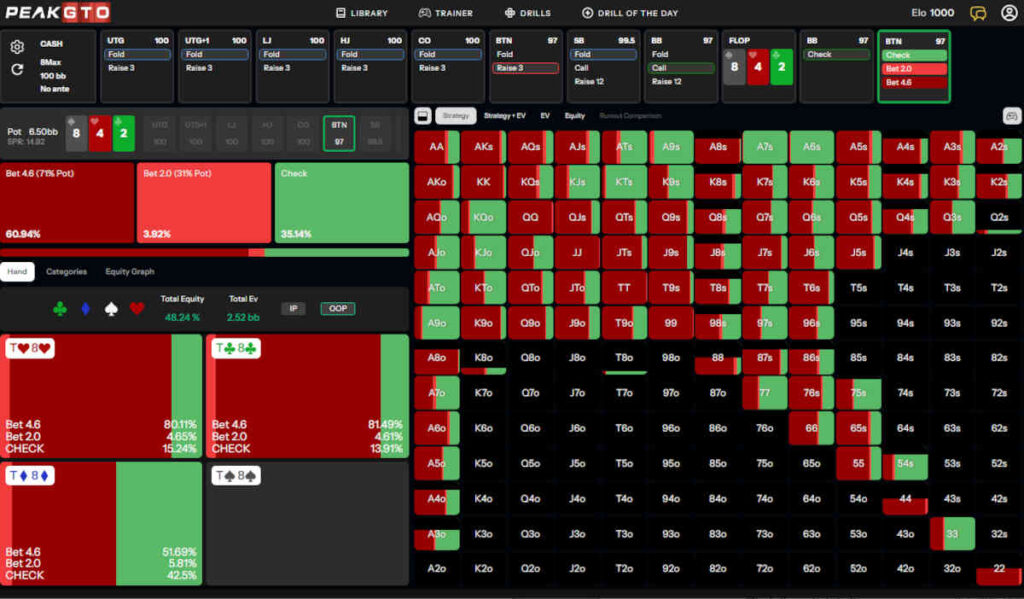
We usually c-bet around 65% on low-card boards when we have a position and stick to a bigger bet sizing of two-thirds of the pot.
In these situations, we have a clear range advantage since we have all of the overpairs, while the BB player would have 3-bet his strongest hand. Therefore, our opponent will have a hard time continuing with a big part of his range versus a bigger bet sizing, so we can use it to our advantage and put him in a tough spot.
That said, things change significantly when we analyze connected flops, such as 8h7h5d.
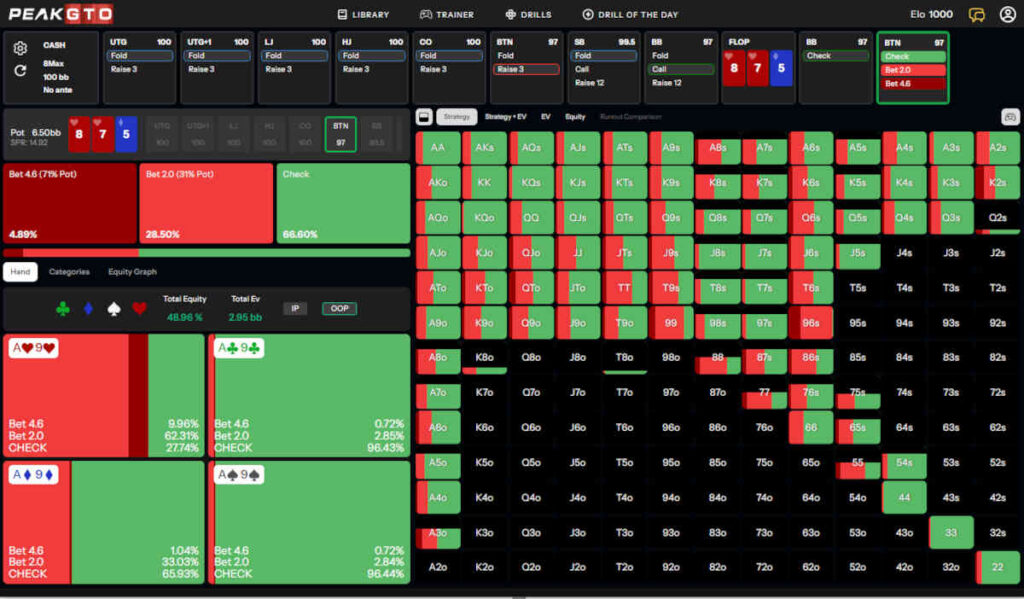
In this spot, our c-betting frequency drops to just 33% and we move to using small bet sizing in the vast majority of cases. We still use larger bet sizes around 5% of the time, but 28% of our range bets are one-third of the pot.
Since connected boards favor the BB player who can have all sorts of draws and equity, sticking to a smaller size when betting helps us to control the size of the pot and puts us in a better spot when facing a check-raise.
Key takeaways
- C-bet around 65% of the time on low-card boards in position
- Stick to a bigger bet sizing of two-thirds of the pot on dry boards
- Continue betting less often on connected boards and stick to a one-third pot size bet
C-Betting On Low-Card Boards OOP – 8s5d2c vs. 8h7h5d
Let’s examine situations where we’re out of position to determine how we should adjust our strategy in those spots.
Assumptions:
- We are playing 100bb deep
- We are opening from the CO
- BTN calls and the blinds fold
Let’s start with 8s5d2c.
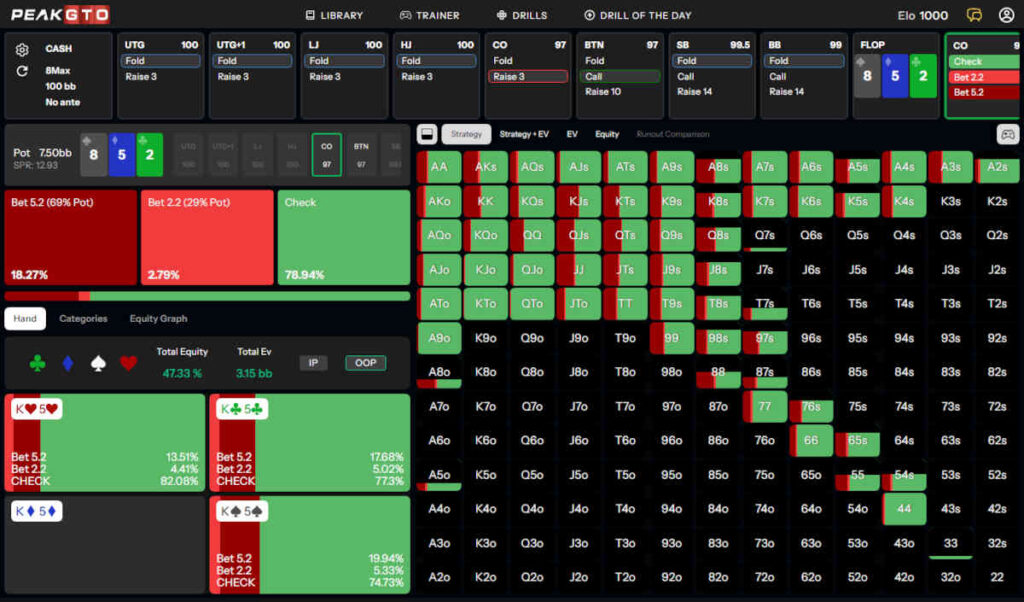
Even on dry board textures, we won’t be betting often OOP. In fact, in this exact situation, we are betting only 21% of the time and sticking to a larger bet size of two-thirds of the pot in most cases.
Our bets are spread evenly throughout the entire poker range, so you will need to mix bets and checks between most of your hands, with some off-suite broadways being one exception to the hands that check most of the time.
When it comes to connected board textures, our strategy is straightforward. Let’s look at an example of 8h7h5d.
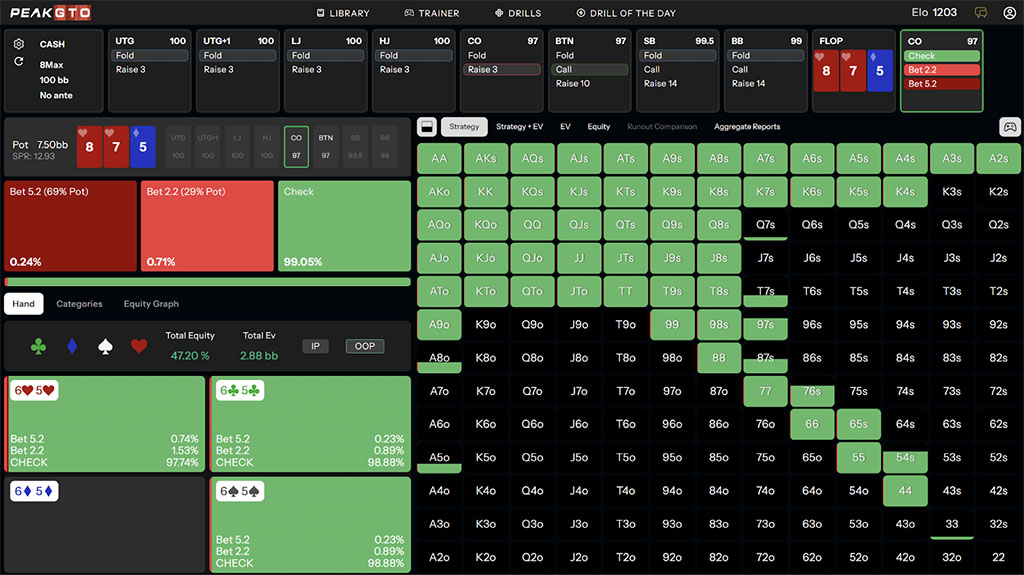
As you can see, we should be checking over 99% of the time, so it is safe to assume that you can check with your entire range when you are out of position and do not worry about picking a proper bet sizing.
Key takeaways
- Bet around 20% of the time out of position on dry boards
- Pick a larger bet sizing of two-thirds of the pot when betting
- Always check OOP on connected flops