Overbets used to be rare enough to look like wild plays, but they actually are a natural product of sound theory, and the players who understand where these bets come from win bigger pots with their strong hands and get far more folds with their bluffs.
This matters most with deep stacks, where a 200 or 300 big blind cash game gives you room to apply pressure that simply does not exist at shallower depths.
This guide covers the theory first, why overbets emerge from polarized ranges in Texas Hold’em, and then the application, how to choose your bluffs, when to fire on later streets, and how to respond when opponents overbet you.
Key Takeaways 45-second read
- Overbets are not exploitative gimmicks but the natural sizing of a polarized range, because when medium hands check, whatever still bets is nutted or bluffing and wants maximum pressure.
- Stop stabbing moderate aces on ace-high boards, because they neither need protection nor bet three streets, and checking them is what creates your polarized overbetting range.
- Choose bluffs by equity, backdoors, and blockers, because the best bluffs block the hands that call, unblock the hands that fold, and can improve when called.
Show all 6 takeaways
- Mix high and low equity bluffs on draw-heavy turns, because flush-blocker bluffs shine when the draw completes while plain bluffs perform better on brick rivers.
- Look for delayed overbets after checked flops, because capped opponents cannot fight back and your checking line arrives with both monsters and endless bluff candidates.
- Overfold against most overbettors, because typical players fire big with too much value and only the obvious draws, making their bluffs far rarer than theory assumes.

Why Overbets Exist in the First Place
An overbet is not a random act of aggression. It appears whenever your betting range becomes polarized, meaning it contains your strongest hands and your bluffs with almost nothing in between.
Solid GTO poker consistently produces these spots. When the medium-strength part of your range prefers to check, whatever continues to bet is either very strong or bluffing, and a range built that way wants to bet big.
A half pot bet with the nuts leaves money behind, and a half pot bluff fails to put real pressure on the hands you are targeting.
So the skill is not learning to overbet. The skill is recognizing when your range is polarized, because that recognition tells you the big sizing is available.
The Theory Behind Polarized Spots
Picture a deep stacked hand where an early position raiser checks to you on an ace-high flop like ace-nine-three. Most players stab any ace here, and that instinct is wrong.
A moderate ace does not need protection, because when it is ahead the opponent is drawing to a few outs at most, and it cannot bet three streets for value either.
Betting it accomplishes very little. Once those moderate aces join the checking range, the hands still betting are a tight group of two pairs, sets, and the best aces.
That is a polarized range, and it changes everything about your sizing. With so few value combos, you also cannot bluff every hand with a little equity, or your bluffs would drown your value. You bet big with a carefully chosen range, or you check. The middle sizing that feels safe is the one option the spot does not want.
The exception is a weak opponent who bets every ace and checks only mediocre hands. Against that player, their check caps their range, your moderate hands become value bets again, and the need to polarize disappears. Adjust your poker ranges to the player, not to the chart.
How to Choose Your Overbet Bluffs
With a tight value range, bluff selection carries the whole strategy. Three properties matter.
Equity
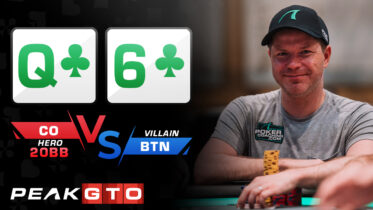
The best bluffs can improve to a hand that beats the calling range. On ace-nine-three, a hand like six-five suited holds the only real straight draw, and low pairs with wheel draws are close behind. When your bluff picks up equity on the turn, you get to keep the pressure on.
Backdoors
When direct draws are scarce, backdoor draws fill the range. A hand that can pick up a flush draw or runner-runner straight gives you profitable turn barrels on many cards instead of forcing an immediate give-up.
Blockers
This is the property most players get wrong. Good blockers do not block the opponent’s strong hands, they block the hands you do not want them to hold, which here means the aces that never fold. Holding low cards that pair with the checked weak aces cuts into exactly those combos.
Compare that with stabbing king-queen, a bluff I see players fire in this spot constantly, and one of the worst available. It technically blocks ace-king and ace-queen, but those hands often bet rather than check, and the king and queen also block king-jack, queen-jack, and all the poker hands you want your opponent to fold.
The best bluffs block calls and unblock folds, never the reverse.
Mix High and Low Equity Bluffs
Deep stacked overbetting also demands variety in your bluffs, because different bluffs want different rivers.
Take an overbet on a queen-high two-heart turn. The flashy bluffs hold the king of hearts with no pair, and they are excellent, because when the flush arrives your value and your bluffs work in harmony. But if you only bluff hearts, you have nothing sensible to bluff when the river bricks, and your one-heart hands are blocking the missed draws you want your opponent to fold.
A few low equity bluffs with no heart perform far better on those brick rivers precisely because they block nothing and free the opponent to have all the missed draws that fold instantly.
One more consequence of turn aggression deserves its own sentence. The more aggressively you barrel one street, the more you must give up on the next, because an aggressive turn range arrives at the river stuffed with bluffs, and firing all of them would make you wildly imbalanced.
Delayed Overbets on the Turn and River
Some of the most profitable deep-stack overbets come one street later than most players look for.
When a flop checks through, ranges get capped fast. Say you raise pocket fours, the flop comes queen-seven-two and checks through, and you spike a four on the turn.
Your opponent almost never has a monster after checking, you have a set, and your checking line means you also have countless natural bluffs. This is a pure blast-off spot, and the overbet is what makes your whole range frightening.
The same logic produces river overbets. When a board pairs on the end after passive action, or you hold top pair on a river where both opponents are visibly capped, the big sizing extracts value that a two-thirds pot bet leaves behind, and it funds the bluffs you run in the same spot with your ten and jack blocker hands.
Multiway pots deserve caution, but even there the overbet exists on static, paired boards where every player has shown weakness. Your bluffs in those spots lean almost entirely on blockers, because removing the few nutted combos anyone can hold matters more than your own equity.
Facing Overbets Without Panicking
Understanding where overbets come from is also your defense against them.
Most opponents who overbet only find a portion of the correct bluffs, usually the obvious flush draws and open-enders, and none of the creative low equity hands.
Against that player, the overbetting range is far too value-heavy, and you can fold more than the minimum defense frequency suggests without losing a thing.
Watch what your opponents show down after big bets. A player whose overbets are all value and high equity draws has told you how to play against them, and a player who instantly stabs at checked pots has told you their checks are weak. Deep stacked poker punishes people who reveal their patterns, and overbet spots are where those patterns show up first.
Conclusion
The real skill behind overbetting is recognizing polarization. When your medium hands stop betting, the hands that continue want the biggest sizing available, and a middling bet becomes the worst of both worlds.
Build your overbet bluffs deliberately. Favor hands with equity or backdoors, choose blockers that remove your opponent’s calls rather than their folds, and keep a mix that covers every river instead of only the pretty ones.
Master this deep stacked and you gain both sides of the coin, bigger pots when you hold the goods and confident, correct folds when the big bets come flying back at you.
FAQ About Overbetting in Poker
What is an overbet in poker?
An overbet is any bet larger than the size of the pot. It is used by polarized ranges, meaning the bettor holds either a very strong hand or a bluff, and rarely anything in between.
When should you overbet?
Overbet when your range is polarized, and your opponent’s range is capped. Common spots include turns and rivers after passive action, boards where medium hands prefer to check, and deep stacked pots where big sizings create maximum pressure.
What hands make the best overbet bluffs?
Hands with live equity or backdoor draws, plus blockers that remove the opponent’s calling hands rather than their folding hands. A diverse mix of high and low equity bluffs keeps you covered on every river.
How do you play against overbets?
Consider whether the opponent understands polarization. Most players overbet with too much value and only the obvious draws as bluffs, so folding more than theory suggests is usually correct until you see evidence of creative bluffing.