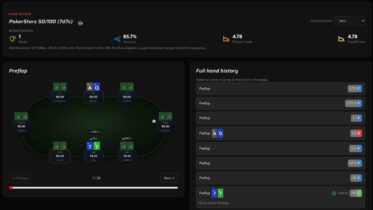
The standard advice for multiway pots is to bet small, something around 30 percent of the pot, and most of the time that advice is right.
But there are spots where small betting leaves real money behind, and they follow one rule. When you have a big nut advantage, big bets come back, even against multiple opponents. These spots are rare on flops and surprisingly common on turns and rivers that hit your range hard.
This guide shows you how to spot those situations in Texas Hold’em, which hands should size up, and why a board that gives you only 39 percent equity can still demand a 70 percent pot bet.

Nut Advantage, Not Range Advantage, Drives Big Bets
First, keep two ideas separate. Range advantage means your whole range has more equity than your opponents’ ranges. Nut advantage means you hold far more of the strongest hands, even if your overall equity is unimpressive.
Multiway big bets run on the second one. In the spots we are about to look at, your equity sits around 37 to 39 percent, nothing special. But look at an equity distribution graph from poker solvers and the top half of your range towers over both opponents, because you hold all the combinations of sets, big top pairs, and overpairs that their calling ranges cannot have.
One calibration note before the examples. Big in a multiway pot does not mean overbetting or even potting it. It means 50 to 70 percent pot instead of 30, still modest by heads-up standards, but a meaningful EV gain in the right spots.
Example One. Ace-Ten-Five Against the Blinds
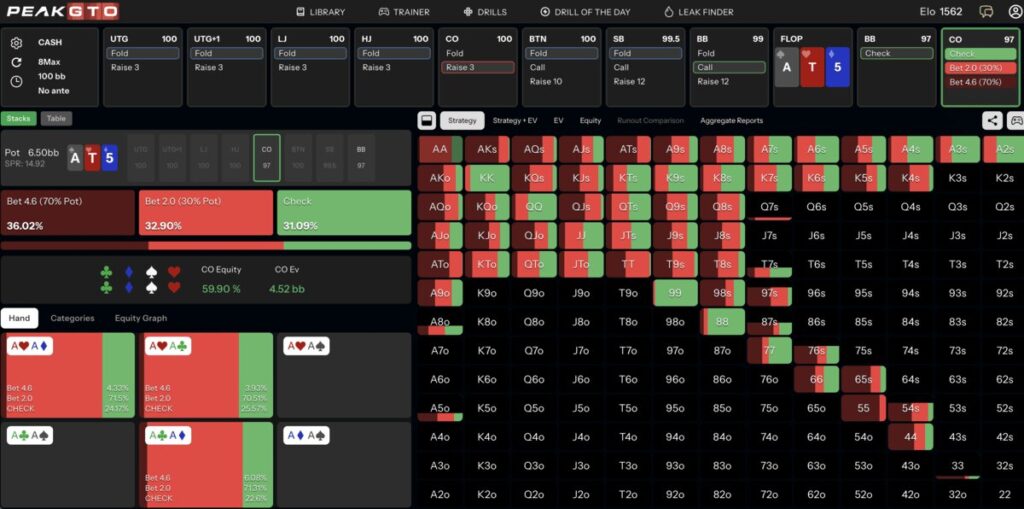
You raise the cutoff, both blinds call, and the flop comes ace-ten-five. This board belongs to you. You hold all the sets, ace-ten, ace-five suited, and every strong ace, while the blinds’ calling ranges hold almost none of that.
The solver bets here about 70 percent of the time, and the big sizing goes exactly where heads-up logic says it should, on poker hands that are almost always good but vulnerable. Ace-king, ace-queen, and ace-jack lead the way, with tens, fives, and even hands like six-five going big for value and protection.
The bluffs betting big are the gutshots to the nuts, king-queen, king-jack, and queen-jack.
The small size goes to medium strength hands like weak aces and some middle pairs, and plenty of hands just give up, the king-highs, underpairs, and junk without backdoor draws. Even after years of studying these spots, I would never naturally bet a hand like king-ten here, and the solver does it anyway with a small size, because the hand is driven purely by its equity. The lesson is not to memorize the chart but to see the shape, big bets from the nutted-and-vulnerable region, small bets from the middle, and a lot of honest checking.
Example Two. Low and Dry From Early Position
Now raise from early position, get called by both blinds, and watch the flop come eight-three-deuce. It looks like a nothing board, and it is one of the best boards your range will ever see.
The reason is what your opponents cannot have. Competent players are not calling raises with eight-three suited or eight-deuce offsuit, so the board misses their ranges almost completely, while you hold every overpair from aces through nines. Your equity is only 37 percent against their 32 and 30, but the entire strong region of the graph belongs to you.
Here the solver bets 70 percent pot with its whole betting range, again around 60 percent of the time. The bets are overpairs and top pairs that are almost always good but vulnerable, underpairs like fives and sixes that welcome protection, and the draws, gutshots, open-enders, and overcards with backdoor flush draws.
Think about what that big bet does to the opponents’ best hands. An eight-seven, which is near the top of their range, is crushed by essentially your entire value range, and there is nothing they can do about it. When one bet puts your opponents’ best hands in a miserable spot, that is the signal to size up.
Keep the Pressure On Good Turn Cards

These flop bets set up even better turns. Say you bet the eight-three-deuce board and the big blind calls. Any ace, king, or queen on the turn slams into your range and misses theirs, so a queen turn makes your queens effectively the nuts and lets your kings and aces keep bluffing with real equity.
So when the turn brings a big card, keep betting big. You will run into a slow-played set now and then, and such is life. The rest of the time your opponent is stuck playing a capped, mediocre range against a bettor whose range just got stronger, and that is how multiway pots turn into big wins instead of small ones.
The mirror image matters too. On turns that help their range instead of yours, the nut advantage evaporates and the default small-and-careful multiway approach comes right back.
Multiway Discipline Still Applies
None of this repeals the basic rules of multiway pots. The hands that like checking heads-up like checking even more with extra players around.
Compare the same ace-ten-five spot heads-up against just the big blind. Ace-three suited bets about half the time heads-up and never multiway. Ten-seven suited bets small sometimes heads-up and never multiway.
Pocket kings on the ace-high board almost never bets heads-up and literally never multiway. More opponents means more ways to be beaten, so the marginal bets disappear and your betting range condenses around strength and nut draws.
That is why these big-bet spots are worth studying deliberately rather than improvising. Drill a few multiway textures in a training tool like PeakGTO, and the pattern starts jumping out at you in game, this board smashes my range and misses theirs, so today the small-bet default takes the day off.
Conclusion
The multiway sizing rule fits in one sentence. Bet small by default, and bet 50 to 70 percent pot when the board gives you a big nut advantage, no matter what your raw equity says.
Look for the two board types that create it, high-card flops that favor the raiser like ace-ten-five, and dry low boards that only an early position range connects with, like eight-three-deuce.
Size up with your strong-but-vulnerable hands and nut draws, keep the middle of your range small or checking, and press the advantage on big-card turns.
Most players bet small multiway forever because it feels safe. The ones who recognize when the board hands them the nuts advantage win the same pots and dramatically bigger ones.