Continuation betting changes completely the moment a second caller joins the pot. C-betting in multiway pots means checking far more often than feels natural, sizing smaller when you do fire, and saving the real aggression for turns and rivers after your opponents have shown weakness.
Most players do the opposite. They auto-bet their strong hands into multiple opponents, build pots on boards that favor the callers, and wonder why their overpairs keep getting cracked.
This guide covers when to c-bet and when to check in multiway Texas Hold’em pots, a simple test that separates betting boards from checking boards, and two example hands that show the whole approach street by street.

Why Multiway C-Betting Is Different
Two things change the moment a second caller joins the pot. You check far more often, and when you do bet, you bet smaller.
The reason is that the advantages that fund aggressive heads-up c-betting usually disappear. With two callers, someone always has a piece often enough that your range and nut advantages shrink, and an extra player can simply wake up with a monster.
The good news is that multiway pots evolve fast. When the flop checks through, everyone’s checking range gets weaker while yours might not. When you bet and one player folds, you are suddenly heads-up against a known range.
So the multiway caution is mostly a flop phenomenon, and the later streets often hand the pot right back to you.
Example One. Kings Check on Queen-Three-Deuce
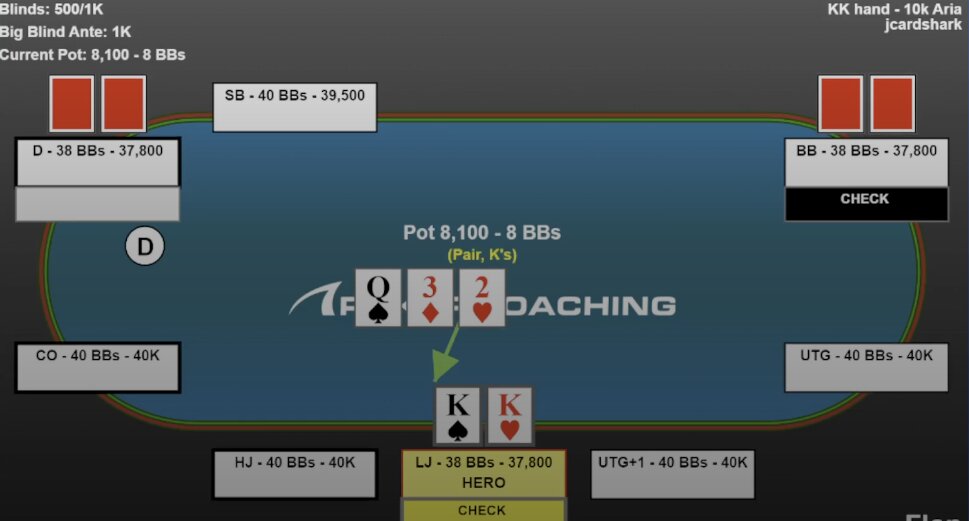
Start with the hand that trips almost everyone up. You raise, the button and big blind call, and the flop comes queen-three-deuce. I watch players snap-bet this flop every single time, convinced they must have the best hand, and the solver checks its entire range.
Look at who this board actually helps. The button’s calling range is stuffed with queens, ace-queen, king-queen, queen-jack, queen-ten, so their range connects at least as well as yours.
Your overall equity edge is nothing, and the part of your range that missed is mostly ace-high and king-high with no draw, hands with almost no way to improve. No range advantage, no nut advantage, no bet. Even with an overpair, you check and let the hand develop.
This is not slow playing. It is recognizing that betting into two live ranges on a board that misses your bluffs and hits their calls is lighting money on fire, no matter what your two cards are.
The Delayed Attack
Here is where the discipline pays off. The button checks back, the turn brings a jack, and the big blind checks again.
Now everything has flipped. Their checks drained the strength out of their ranges, while your check-everything strategy means you still hold every set, two pair, and overpair. So the solver starts betting big, around 80 percent of the pot, with its strong-but-vulnerable hands, the queens, sets, overpairs, and even some jacks that welcome protection, plus draws like gutshots and spade combos as bluffs.
On the river, forget the fancy small bets. The practical strategy out of position is check or jam. With one and a half times the pot behind, the solver rips it in with a queen or better for value, and its bluffs are the hands that were drawing to outs on the turn and bricked, the ten-nines, ten-eights, and busted gutshot ace-highs.
Check the flop with kings, pot the turn, jam the river, and you stack the queen-ten that would have folded to three streets of panic betting. The player who auto-bets the flop often wins a much smaller pot or blows their opponent off the hand entirely.
Example Two. Nines Bet Small on Jack-Eight-Six
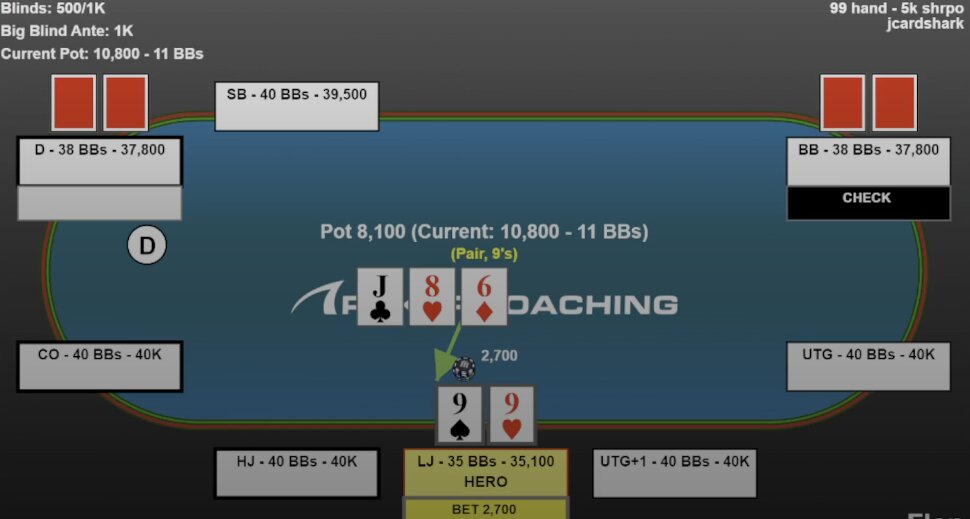
Now change the board and the answer changes. You raise pocket nines from early position, the same two players call, and the flop comes jack-eight-six.
The solver bets here about a third of the time, always small. Still mostly checking, but this board earns a real betting range where queen-three-deuce earned none. The difference is how your range connects. You hold all the overpairs, plenty of strong jacks, and critically, your misses are not hopeless here. The hands that whiffed hold gutshots, straight draws, and backdoor flush draws instead of naked king-high.
Your nines are a fine small bet, likely best and happy to deny equity. But respect what happens next. When your flop bet gets called and the turn goes check-check, your nines have become a marginal made hand against a tightened range, so they check back.
And when the river brings a small bet from your opponent, you call. You hold some blockers to their busted draws, which argues for folding, but the pot odds on a small bet in position make the call the practical answer. Sometimes they show up with thin value, and you shrug.
The Junk Test
If you take one tool from this article, take this one. Before c-betting a multiway flop, look at the worst hands in your range and ask what they are holding.
On jack-eight-six, your junk is gutshots and backdoor draws, poker hands with something to fight for. That supports a betting range, because your bluffs have real equity when called. On queen-three-deuce, your junk is jack-high with no draw, and a betting range built on hopeless bluffs is no betting range at all.
The same board also shows how much the extra player costs you. Heads-up against the big blind on jack-eight-six, you bet frequently and big, holding both the range and nut advantage.
Add one caller and the identical hand on the identical board drops to occasional small bets. Multiway pots do not change what a good betting range looks like. They just raise the bar for having one.
Conclusion
The multiway c-betting rules compress into three lines. Check far more than feels natural on the flop, especially when the board hits the callers, and your misses have no equity. Bet small when your range connects, and your junk holds draws. Then attack turns and rivers hard once the checks have told you everyone else is weak.
Run the junk test on every multiway flop and the bet-or-check decision mostly makes itself.
And remember the kings. The hand that feels like an automatic bet is often the clearest check on the board, and the pot you win on the river will be bigger for it.