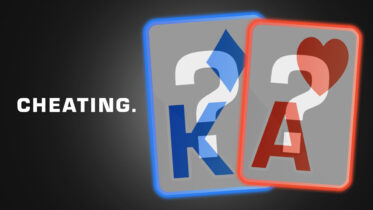

Cheating in poker is less common than the movies suggest, but it is real enough that every serious player should know what to watch for and how to respond when they see it.
Poker today is a far cleaner game than it was a few decades ago, but angle shooting, collusion, and online cheating still occur across all formats and stakes.
I have played in high-stakes live events and studied online poker security extensively, and what I find is that most players who get cheated do so because they did not recognize what was happening until it was too late.
This guide covers the main methods cheaters use, both live and online, and the specific steps you can take to protect yourself.
Live Poker Cheating Methods
Poker cheating was invented in brick-and-mortar games and remains most prevalent in this arena, although online poker games have become susceptible to cheating as well.
In live poker, there are many different ways players can cheat, ranging from relatively innocent angle shooting to flat-out cheating that borders criminal behavior.
If you play poker in casinos and official poker rooms, you will encounter fewer poker cheaters, especially because many of them get banned for trying to pull off their tricks.
In private games, on the other hand, you will encounter poker cheating more often, and you will have to be aware of all the possible cheating methods that are commonly used.
So, let’s get into the common live poker cheating methods and how to protect yourself against them.
Card Marking
Perhaps the most common cheating method cheaters use in live poker games is card marking.
This method allows a cheater to mark certain cards and be able to recognize them in hands to follow so they might know your exact holdings instead of relying on trying to understand your entire poker range.
In my experience playing live tournaments and cash games, card marking is most likely to surface in private home games and underground clubs rather than regulated casinos, where decks are inspected and replaced far more frequently.
The tell I look for first is unusual betting patterns that correlate too cleanly with the actual strength of the cards in play. If a player seems to navigate perfectly around dangerous board textures in ways that feel improbable over dozens of hands, that is worth noting even if you cannot see any physical marks on the cards.
Card marking techniques range from old-fashioned card twisting and breaking to modern methods that involve invisible ink and special sunglasses to see the ink on the cards.
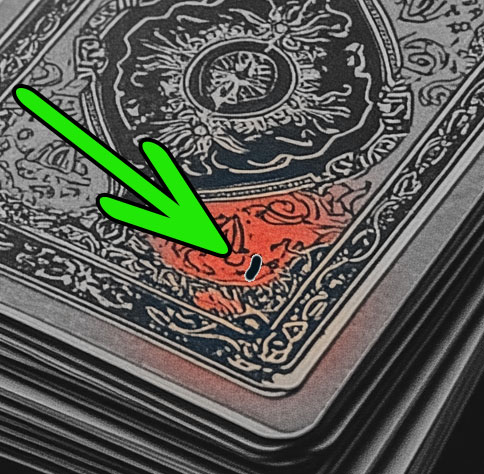
Recognizing players marking cards can be difficult, especially if you are not actively looking out for it, but there are some signs to look out for.
For starters, if you notice some of the cards are bent on their edges or across the middle, simply ask for a new deck of cards right away.
While these things can happen even if no one is cheating, being safe is always better than being sorry.
Secondly, if there are players in the game playing with sunglasses, pay special attention to how they play, where they look during hands, and look for any unusual betting patterns.
If you spot something, don’t be afraid to alert the game organizer discreetly or even confront the player straight up if things go too far.
At the end of the day, a player who is not cheating won’t have a problem proving it by allowing another player to look through the glasses.
Collusion
The most typical way poker players cheat in live poker games is by colluding. While collusion is not flat-out cheating, it is against the rules of the game.
Collusion tends to become most dangerous at final tables and in bubble situations where the financial incentive to protect a partner is at its highest.
I have seen soft-play collusion in live tournaments where two players repeatedly checked down large pots in three-bet scenarios when a third player was at risk. The tell is rarely the individual hand in isolation — it is the pattern over multiple hands where two players never seem to put pressure on each other, regardless of stack dynamics.
If you notice that two players seem to “forget” they have chips every time they are in a pot against each other, that pattern is worth reporting to the tournament director.
The term collusion refers to two or more players playing in ways that benefit them at the expense of other players and is usually encountered in poker tournaments.
For instance, players could “soft play” each other, which means they don’t try to take each other’s chips and simply check down most of their hands.
When players do this in a poker tournament, especially in the late stages, they reduce the chances of either of them being eliminated, thus increasing their overall EV.
Furthermore, players can play aggressively while other players are involved in the hand, but then soft play or even allow the other player to take a pot that lets them survive in a tournament despite not having the best hand.
If you notice players colluding, don’t be too fast to start trouble. However, if you see it happening again and again, alert the tournament staff or confront the players flat-out and let everyone at the table know what’s going on.
Angle Shooting
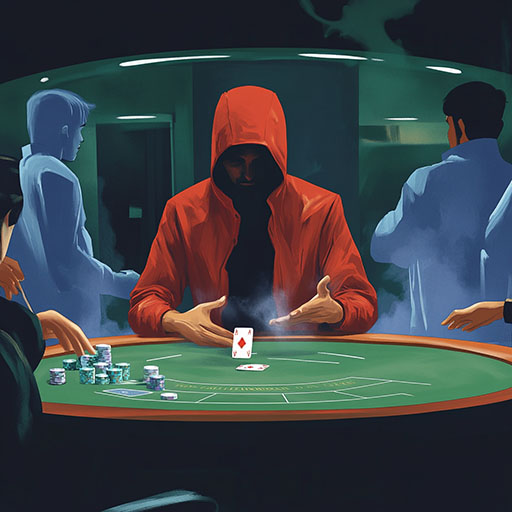
Unlike outright cheating, angle shooting refers to tactics that bend the rules of poker without technically breaking them — the goal is to extract information or induce a mistake from an opponent by exploiting ambiguity.
I have seen angle shooting at every level from local home games to televised high-stakes cash games, and the common thread is always the same: the angle shooter is counting on your reaction before you realize what is happening. Understanding the most common angles is the best defense.
The Phantom Check
A player makes a motion that could reasonably be interpreted as a check — a tap, a wave, a nod — and then claims they never checked when you react by checking back. Counter: always wait for clear verbal confirmation or an unambiguous physical action before acting. If it is unclear, ask the dealer to confirm before you do anything.
The Ambiguous Chip Toss
A player tosses a single chip forward in a way that could mean a call or a raise. If you fold, they call. If you re-raise, they raise. The chip placement gives them information before committing. Counter: ask the dealer to rule on whether the chip constitutes a call or a raise before reacting.
Acting Out of Turn
A player announces a bet or fold before the action reaches them to gauge your reaction, then claims it was an accident. This is most common on the river when the angle shooter wants to know if you plan to bet before deciding to call or fold. Counter: give no visible reaction when a player acts out of turn. Stay still, look forward, and let the dealer handle the ruling.
Announcing the Wrong Hand at Showdown
A player announces a better hand than they hold — for example, announcing a flush when they hold a straight — hoping you will muck a winning hand before the cards are turned over. Counter: never muck your hand at showdown until you have physically seen the opponent’s cards. Cards speak at showdown; make the cards do the talking.
Miscounting Chip Stacks
In tournament play, a player misrepresents how many chips they have going all-in, hoping you over- or under-commit. Counter: always count the all-in stack yourself before making a decision. You are entitled to an accurate count; ask the dealer if necessary.
When you encounter an angle shooter, do not let irritation push you into a mistake. Report the behavior to the floor and focus on your game. The angle shooter is almost always a weaker player compensating with dishonesty.
Online Poker Cheating Methods
As early as the first online poker games started running, some players started looking for ways to exploit the games and get an unfair edge in them.
Over the years, cheating in online poker has evolved, and new methods, such as ghosting, have been invented. Many of them are very sophisticated and hard to detect.
My general view is that the major regulated online poker sites are far safer than they were in the early 2000s, when several significant scandals exposed just how vulnerable unregulated platforms could be.
The sites with the worst cheating records have largely been removed from the market or heavily regulated. That said, complacency is a mistake. Knowing what the current threats look like is still essential, particularly if you play on smaller or unregulated platforms.
If you are an online poker player, you should be very careful when playing online poker, both of the classic cheating methods that exist in live and online games and the more sophisticated cheating methods that only apply to online poker.
Here are some of the most common ways people might try to cheat you at the online poker tables.
Card Sharing and Collusion
Collusion is one of the most dangerous things in online poker, as players might sit at the same table but work together to beat the other players in the game.
For example, imagine sitting in a Pot Limit Omaha game in which four of the six players are sharing their cards and splitting any profit they make.

These players now have a massive edge against any other players who sit down in the empty seats, as they know which cards are already out of the deck, which cards are more likely to hit the turn and river, etc.
Sharing cards can help a group of cheaters create an unbeatable edge in some games. While online poker sites don’t allow players to collude in this way, it can sometimes be difficult to detect these groups if they play it smart.
At bigger online poker sites, players playing together too often and potentially sharing cards will get detected after some time, but on some of the smaller sites, it is possible for them to never get caught.
If you spot a group of cheaters you believe are working together, your best bet is to stop playing at the tables with these players and contact the operator, informing them of your suspicion.
Hacking and Super Users
More technologically advanced poker cheaters have found ways to exploit online poker in ways that go way beyond simple collusion.
For example, some high-stakes players have had their computers hacked by cheaters who would then sit down and play against them while having full access to their screen and hole cards.
In other instances, players were able to exploit weaknesses in the poker platforms themselves, which happened with sites like UltimateBet back in the day but also GGPoker relatively recently.
These players, known as super users, had access to either all the hole cards in play or the odds of each player’s hand winning at showdown while the hands were happening.
The most prominent live example in recent history is the Mike Postle case at Stones Gambling Hall in 2019, where a player allegedly accessed real-time card data via a device at the table during a livestreamed game.
What made the case statistically compelling was not any single hand but the cumulative win rate across approximately 80 livestreamed sessions — far beyond what any player, even the best in the world, could sustain over that volume.
The lesson is not that you should fear every winning player, but that sustained results at impossible win rates across a large sample are the community’s most reliable signal that something is wrong.
Detecting hackers and super users is nearly impossible in live play. Instead, the poker community has had some success in detecting these players by looking at their stats and realizing they were winning at win rates unachievable by any other real players in the games.
Online Poker Bots
A recent scandal at a big unregulated poker site facing the US market demonstrated just how dangerous bots have become in modern online poker games.
While bots used to be very bad at No Limit Hold’em, they have gotten a lot better recently, and they are now actually capable of beating the games for a solid win rate.
Playing against bots is extremely hard, as these computer-powered opponents don’t tilt and don’t deviate from the strategy that they play.
Since this strategy is now based on GTO poker solutions, their play is mostly strategically sound, and beating bots can be a very difficult task.
When you encounter players that seem like they may be bots, make sure to raise some flags, but also be careful not to go too far and accuse every winner in the game of being a bot.
The specific patterns worth flagging are: playing at superhuman speed with no variation in decision time, playing identical session lengths every day at the same times, never chatting in the chat box, and showing near-perfect statistics over thousands of hands with no deviation from GTO frequencies.
Any one of these alone means little. A cluster of them across many sessions is worth reporting to the operator. When you report a suspected bot, include hand histories and session timestamps if possible — that data is what site security teams can actually investigate.
Real-Time Assistance
Another method of online poker cheating that has become fairly popular in recent years is called real-time assistance (RTA).
The reason RTA is treated as cheating of the highest degree, even more so than many other methods, is that it is nearly undetectable from the outside in any single session.
What it produces is an opponent who plays essentially perfect GTO poker against you in real time, with no learning curve and no tilt. I spend a significant amount of time studying with PokerCoaching’s solver tool, PeakGTO, and the difference between a player who has internalized solver output through study versus a player using RTA live is difficult to detect — but the stats over tens of thousands of hands are a different story.
Trust the platforms to catch it over volume; your job is to report suspicions and let them run the analysis.
This type of cheating refers to players using computer software to help them “solve” poker hands in real time and produce GTO poker solutions while hands are being played.
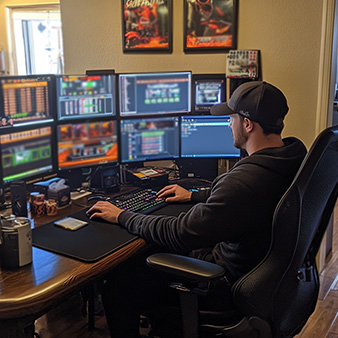
When this happens, you are effectively playing a hand against a poker bot instead of a living opponent, which means they can have a big advantage that they normally would not.
RTA is banned on all major poker platforms, so if you have suspicions of players using it, inform the operators, and they will have ways of finding out if the players use RTA on a regular basis.
If so, the player will get banned from the platform, and you may even be refunded some money from the games you played against them.
Be Careful of Poker Cheaters
The vast majority of players you encounter are not cheating. I have played at all stakes for many years, and my honest assessment is that the overwhelming majority of losses come from making mistakes, running into variance, and paying rake — not from being cheated.
That context matters because paranoia is its own leak. Players who suspect cheating in every bad beat they take become unfocused, tilted, and unable to see the real leaks in their game.
That said, you should stay observant. Know what the patterns look like. Play on reputable platforms and in regulated rooms when you can. Report suspicious behavior through the proper channels rather than making accusations at the table.
And if you genuinely believe you are in a compromised game, leave it — the expected value of that game is negative regardless of the cards you are dealt.