A poker tell is any involuntary behavior, physical cue, or timing pattern that gives you information about an opponent’s hand strength. In live poker, these signals are everywhere if you know what to look for, and learning to read them correctly is one of the most underrated edges available to players who have already built a solid strategic foundation.
I have spent decades studying poker tells both at the table and through reviewing thousands of hand histories with students. The single biggest mistake I see is players trying to act on a tell before they have established a baseline for that specific opponent.
A tell only means something in contrast to how a player normally behaves. In this article, I walk through seven of the most reliable live poker tells and explain exactly how to exploit each one.
Mathematical analysis of the game of poker tells us that the new school of thinking about poker is absolutely the most important part of the game, but that does not mean that poker tells and reads have to go completely out the window.
In fact, being a master of both is the best way to do well in today’s tough poker games, as each can give you an edge in its own way.
Playing fundamentally good poker is the most important part, but being able to make that extra read based on a poker tell you pick up can be the difference between being a winner and being a crusher.
We have compiled a list of the top ten live poker tells to look out for when playing the game in a live casino setting, with short explanations of their possible meanings and use.
Keep in mind that not all players exhibit the same live poker tells, and some tells can have a different meaning for different players, making poker reading an art more than a science.
Yet, understanding what the most common live poker tells are and what they could mean in different situations is the first step to becoming a master reader of poker faces.
Are Live Poker Tells Worth it?

My answer is yes, but with a specific condition: tells are worth it as a supplement to a solid strategy, not as a replacement for it. I have played against world-class players who use tells constantly and against strong players who almost never focus on them, and both approaches can work. What does not work is relying on tells when your fundamentals are weak.
There is a big debate between proponents of GTO poker and proponents of exploitative play as to whether poker tells and reads should even be utilized in the game.
Many players who base their game entirely in GTO poker and solver simulations believe that we should not care too much about our opponents’ actions, but instead focus on our own frequencies, sizes, and range-building skills.
And while this skillset is definitely the fastest path to poker greatness, adding some poker reading skills into it and the ability to adapt in order to exploit our opponents can make you a truly formidable force at the poker tables.
Players like Daniel Negreanu continue to use poker tells as an integral part of their game despite also integrating elements of GTO poker as well, and their results simply don’t lie.
So, with all that said, let’s take a look at some of the most common live poker tells you will encounter when playing the game and the ways you might be able to exploit them.
Poker Tell #1 – Direct Eye Contact
This is the tell I find most players notice first, but interpret incorrectly. Most training resources tell you that a player who looks away is bluffing. In my experience at the table, the reality is more nuanced, and the specific pattern matters more than the direction of the gaze.
Playing against a player like Phil Ivey or Patrik Antonius, you should not try to get a read from the way they look at you, as these guys simply don’t give anything up in such a way.
However, most casual poker players are not nearly as experienced or as aware of their body language, and they do things that tell a lot about their hand strength all the time.
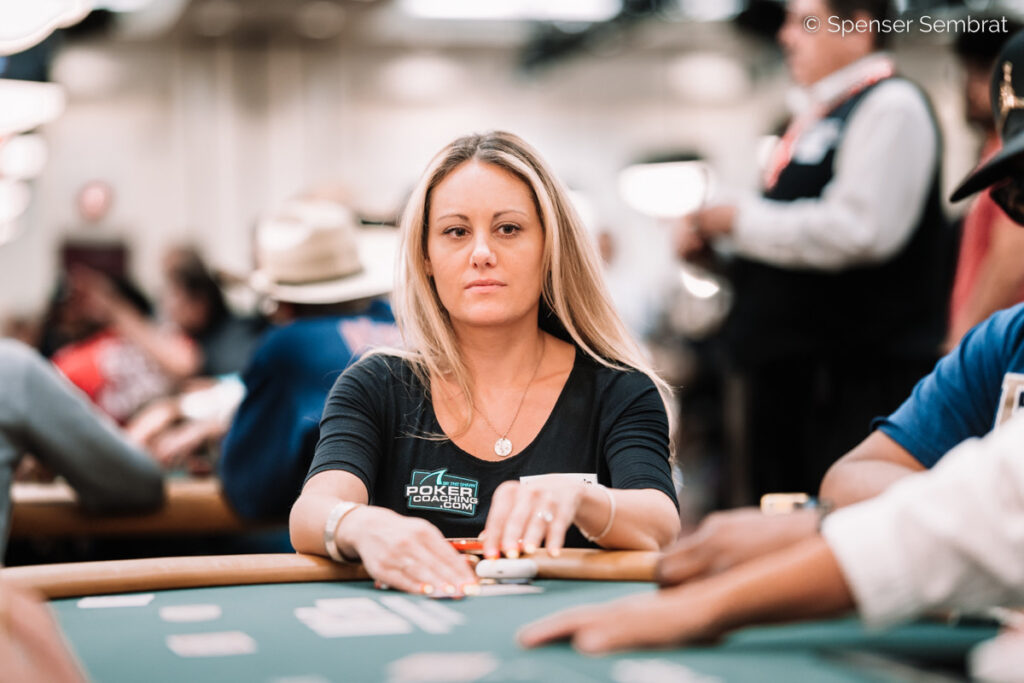
Typically speaking, most players will not look straight at their opponent while in a hand with them out of fear of giving something up.
A recreational player who makes a big bet on the river holding a strong hand will often look away from you, usually gazing at the pot, the board, or anywhere else but your eyes.
The reason, of course, is that they don’t want to make you uncomfortable and accidentally make you fold your cards.
Instead, a strong opponent wants to make you feel comfortable and give you all the time in the world to make a call and transfer your chips over to their stack.
On the other hand, weak opponents can often try to make you feel uncomfortable by looking you straight in the eyes while bluffing, and this is a very common live tell you can use with some confidence.
A player staring at you after making a big bet can often mean they are bluffing, and there are some players who exhibit this exact poker tell every time they pull a big bluff, making them very easy to read and very advantageous to play against.
If you do spot a player staring straight into their opponents every time they make a bluff, make sure you never tell them, and keep this read to yourself, as it can help you print money against their big river bets.
Poker Tell #2 – Prolonged Look at the Hole Cards
In my hand review sessions, I have caught this tell on video more times than I can count. Players holding strong hands genuinely look at their cards less, not as a deceptive strategy, but because they already know what they have and there is nothing left to think about.
Typically speaking, players will not look too long at their cards if they spot they have a monster, while they will tend to spend more time examining their weaker holdings.
For instance, a player peeling their cards and seeing AA in the hole is likely to stop looking at them almost immediately, out of innate fear of being “spotted” doing so. On the other hand, a player holding 8s6c is likely to spend more time studying the hand and considering ways in which they might play it.
While this read definitely does not work 100% of the time, there are some players who do this literally every single time, giving you quite a few ways to exploit them.
For instance, if you see them only give their cards a short glance and then instantly raise, you can expect them to have a big starting hand. Conversely, if they examine their hole cards longer, you can expect them to have a weak hand you can attack.
Poker Tell #3 – The Instant Call
The instant call is one of the most exploitable tells I know, because it clearly defines the range of what an opponent is willing to play but not willing to raise. When I see an instant call, I immediately start planning to attack high card boards on the turn.
For one, you know they have a hand that is not absolute garbage, as they instantly called your raise or bet, indicating they believe the hand has some value.
However, you can also tell that they don’t have a very strong hand, as it is likely they would take some time to consider raising with such a hand.
So, anytime a player makes an instant call, you can expect them to have a weak to medium strength hand, such as a bottom pair or gutshot straight draw on the flop or a hand like 86 or 33 before the flop.
The best ways to exploit this kind of a live poker tell include attacking them on high card boards and continuing to barrel when big cards that improve our range as the original raiser/bettor hit the turn.
Poker Tell #4 – Strong/Weak Chip Movement
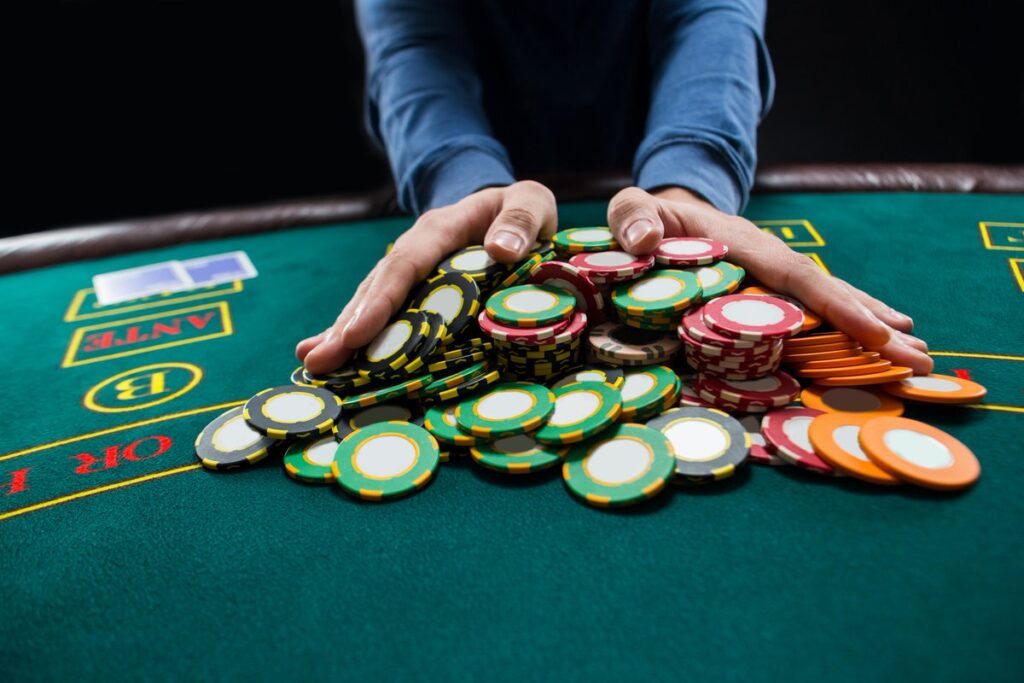
This betting motion tell is almost entirely an unconscious behavior, which makes it one of the most reliable signals you will find. I have watched recreational players slam their chips into the pot on a bluff and quietly slide them in on a monster so consistently that I started making notes on specific players early in sessions.
More often than not, a player who is bluffing will tend to throw their chips with some strength, almost as if they are trying to scare you into a fold and tell you they are strong.
On the other hand, a player making a value bet will often do so in the most humble of ways, often putting the chips in with a single mild motion of their hand.
While professional players almost always make their bets the same way, recreational players are full of betting tells like this that can help you deduce exactly what they are trying to achieve with their bets.
Next time you play, focus on a few players at the table and try to monitor the way they make their bets when they are strong and when they are weak. You may be surprised with how much information you can get from this single poker tell alone.
Poker Tell #5 – A Look at Your Stack
Stack-glancing is the tell that gives away recreational players most clearly in my experience, because most of them do it completely automatically. A recreational player holding a weak hand simply does not care how many chips you have. When they suddenly do care, the reason is almost always that they have connected with the board in a meaningful way.
For a recreational player, stack depth usually doesn’t mean too much until they have a hand strong enough to possibly play for all their chips.
When they do have such a hand, they will get very interested in how many chips you have all of a sudden, and this is another live poker tell that you can use to your advantage.
Be observant of your opponent’s actions when the flop, turn, or river are dealt, and try to figure out if they are eyeing your stack.
Typically speaking, a player looking straight at your chip stack immediately after seeing the new card will mean the card has helped their hand, and they are trying to figure out how much they need to bet to win it all or how much they stand to lose if their hand loses in the end.
In either case, a glance at your chips from a recreational poker player will usually mean they have a hand they are not about to fold anytime soon, so at the very least you can consider not bluffing them as often as you might normally do.
Poker Tell #6 – Engaging in Conversation

Speech play is a tell category that experienced players can fake, which is why I am careful about applying it against thinking opponents. Against recreational players, however, a sudden change in conversational behavior is one of the most consistent signals I encounter. The player who talks constantly about everything suddenly goes very quiet on the river when they have the nuts.
In most cases, players who are usually very chatty will continue to be chatty until their hand is big enough to require their immediate attention.
Of course, some players will simply talk for the sake of talking, while others may actually be good at “speech play,” making them poor targets for this kind of reading.
On the other hand, players who are typically very silent may try to engage in some conversation when they are bluffing you, trying to get you to fold your hand by exhibiting confidence.
This live poker tell goes to extremes in some cases, as some players will literally only ever shut up when they have a very strong hand, making them extremely easy to read.
Yet, the next time you are up against a casual poker player, try to detect some patterns in the way they talk to you and other players while they have a big hand and when they are bluffing, and you may be able to pick up very useful tells.
Poker Tell #7 – Posture at the Table
Posture changes are particularly useful because they can signal strength even before any action has taken place on the current street. I have picked up on opponents sitting up straighter or leaning forward on the flop before a single bet has been made, and used that information to check a hand I would otherwise have bet for value.
Being attentive to the way other players at the table are sitting and engaging with their surroundings is another way you can get an edge through live poker tells.
For instance, players will often get bored at the poker table and sit back in their chair, sip on drinks, order new drinks, or talk to other players or railbirds between hands.
Then, out of the blue, the player will become focused on the action and completely engaged in a poker hand, often meaning they have a big hand.
At the very least, this type of change in posture and demeanor means they have connected with the board or have hole cards worth considering.
What you can get from this read in almost every case is that a bluff won’t really work, as our opponent’s hand is simply too good for them to fold right now.
Instead, try to wait for those moments when you see the opponent is uninterested in the pot and not very concerned with what is happening in the hand, as this is the time to attack with small bets and win easy chips.
How to Avoid Giving Off Your Own Tells
Understanding what gives your opponents away is only half the value of studying poker tells. The other half is protecting yourself from giving the same information to observant opponents sitting across from you.
- Make your betting motions consistent. The most common tell I see in student hands is inconsistent chip placement. Players who slam chips in on a bluff and quietly slide them in with a strong hand are broadcasting their range to anyone paying attention. The fix is simple: commit to one smooth, consistent motion every single time you put chips in the pot, regardless of the strength of your hand.
- Control your timing. Timing tells are the hardest to fake and the easiest to give away. If you always think for 15 seconds before a big river bluff but snap-call every time you have a strong hand, you are effectively showing your cards. Develop the habit of taking a consistent amount of time on significant decisions, whether you are bluffing or value betting.
- Manage your attention. Where you look immediately after a card is dealt says a great deal about whether that card helped you. If you glance at your chips every time you hit a set on the flop, experienced players will notice within a few orbits. Instead, pick a neutral focal point and return to it after every new card, regardless of what the card does for your hand.
- Control involuntary physical reactions. Breathing changes, posture shifts, and micro-expressions are much harder to control than deliberate behaviors, but awareness helps. Some players use a physical anchor, such as placing their hands on the table in the same position every decision, to reduce the variance in their body language between strong and weak holdings.
- Be especially careful at showdown. How you react when you flip over a strong hand tells your opponents exactly how you behave when you are not bluffing. Keep your reaction neutral at showdown, and you remove one of the clearest baseline signals your opponents are watching for.
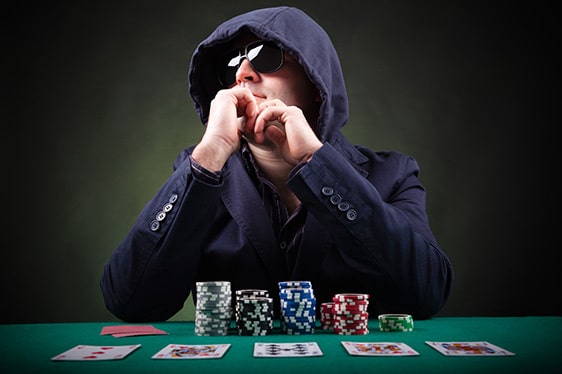
How to Build a Baseline for Reading Opponents
Every tell in this article is only meaningful when measured against a specific player’s normal behavior. A player who is always chatty, going silent tells you nothing. A player who suddenly goes silent when they have always been chatty tells you everything. The baseline is the foundation of every useful read.
Here is the process I use:
Observe after you make the fold
The easiest time to study an opponent is when you are not emotionally invested in the outcome. Watch how they behave when they fold, when they call, when they raise, and when they muck at showdown. What does their face look like when they are relaxed? How quickly do they bet when they have a medium-strength hand? These observations build your baseline.
Watch the showdown closely
Whenever a player goes to showdown, you have a rare opportunity to connect a physical behavior to a known hand strength. If you saw them reach for their chips during the hand, and they flip over a set at showdown, you now have a confirmed tell. Keep a mental note of these moments throughout the session.
Focus your attention on one player at a time
Trying to read eight players simultaneously produces no usable information. Pick the player who is giving you the most trouble or the one you expect to face the most critical decisions against, and direct your observational energy at them specifically.
Test your reads at low stakes
The ideal way to verify a read is to make a decision based on it in a spot where you could make a reasonable argument for either action anyway. If your read turns out to be correct, you gain confidence in it. If it is wrong, you have not paid an excessive price to learn that.
Putting It All Together
Live poker tells are a supplement to good strategy, not a substitute for it. I want to be direct about this: a player who understands tell-reading but makes frequent strategic errors will lose to a player who plays solid fundamentals and never looks at anyone. Build your strategy first. Then add tell-reading on top of it, and you will find opportunities that simply do not exist in a purely mathematical game.
In my experience, the tells that produce the most profit are not the dramatic ones but the consistent ones. A player who always glances at the pot when they hit a strong hand, a player who always pushes chips in forcefully when bluffing, a player who goes silent the moment they have the nuts. These patterns repeat every session, and once you have identified one, it can be worth thousands of hands of solver study.
Start by building your baseline for one or two players per session. Confirm your reads at showdown whenever possible. And use your reads to inform decisions in spots where you would otherwise be guessing, not to override clear strategic signals.
Don’t try to apply live poker tells in your games without doing some research first and make sure that the particular opponent you are playing against is exhibiting a particular tell before you put it to use.
Once you spot a live poker tell that a player continually makes, you may be able to print money off that opponent for a long time and make adjustments to your game that would otherwise be completely impossible.