One of the most common and most expensive mistakes in small stakes poker happens with top pair on the river. A player bets the turn correctly, the opponent calls, and then on a blank river they freeze. They think, “I might be beat, let me just check it back,” roll their hand over, and quietly win a smaller pot than they should have. That instinct slowly bleeds away a huge amount of value over time, because the player who check-called the turn almost always arrives at the river with a range full of marginal hands that would have paid off one more bet. At PokerCoaching, this thin value spot is one of the most common leaks we see in small stakes play.
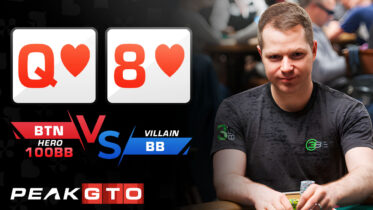
Today we will analyze a 100bb 8-handed cash game hand where the button opens Q♥8♥, the big blind calls, and the board runs out Q♣6♦4♥9♠J♠. Hero checks back the flop, value bets the turn when the big blind checks, and then has to decide whether top pair with a weak kicker is good enough to fire a third time when the jack arrives and the big blind checks again.
Assumptions
- Stacks: 100bb effective
- Format: 8-handed cash game, no ante
- Positions: BTN (Hero) vs BB (Villain)
- Action: BTN opens, BB calls
- Flop: Q♣6♦4♥ (Pot: 6.5bb), checks through
- Turn: 9♠ (Pot: 6.5bb), Hero bets 6.5bb, BB calls
- River: J♠ (Pot: 19.5bb), BB checks
Preflop
Q8s is a routine button open, sitting comfortably inside the wide range you raise from the button. The big blind calls to defend, and we take a heads-up flop in position with 100bb behind. Position plus a deep stack is exactly the setup that lets Hero play a small-then-medium-then-thin-value line later in the hand.
Flop: Q♣6♦4♥
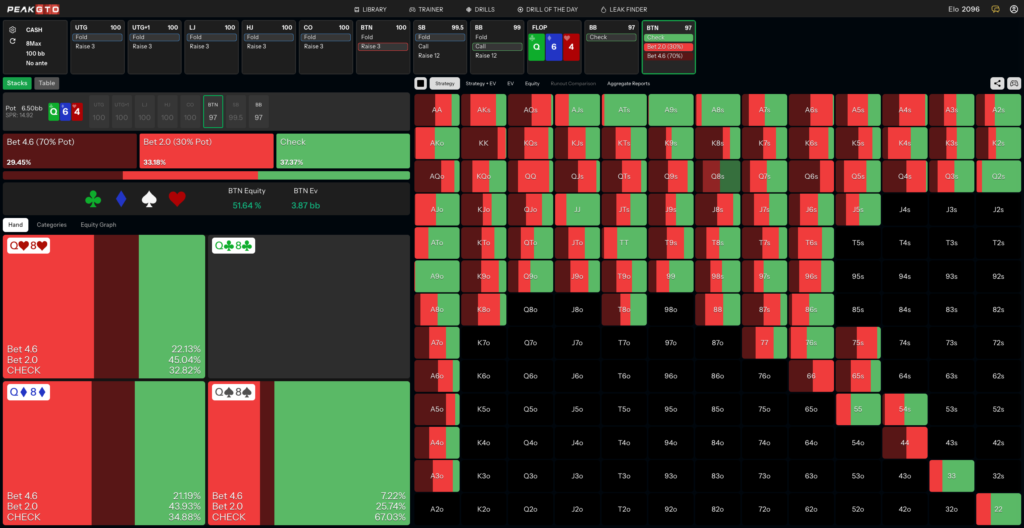
Hero flops top pair with a backdoor heart flush draw. The big blind checks, and Hero can take a small continuation bet or check back. The solver actually bets Q8 about two-thirds of the time, usually a small stab around 30% of the pot, but checking back is a perfectly reasonable simplification and the line we take here. Top pair with a marginal kicker is happy to keep the pot manageable and avoid being check-raised off its equity, and checking realizes that equity cheaply while keeping the big blind’s weaker hands in the pot. The flop checks through and we go to the turn with 6.5bb in the middle.
It is worth understanding why the check-back is not just acceptable but strategically valuable. On a queen-high board, the big blind has a meaningful share of the queens and the connected hands that want to play a big pot, and a small flop bet would let those hands raise and put Hero in a guessing game with a one-pair hand. By checking, Hero takes the betting initiative away from a board where it does not need it, disguises the strength of top pair, and invites the big blind to bet their weaker holdings on later streets. The whole multi-street plan, value betting the turn and river, depends on letting the big blind catch up just enough to pay off thin value at the end.
Turn: 9♠
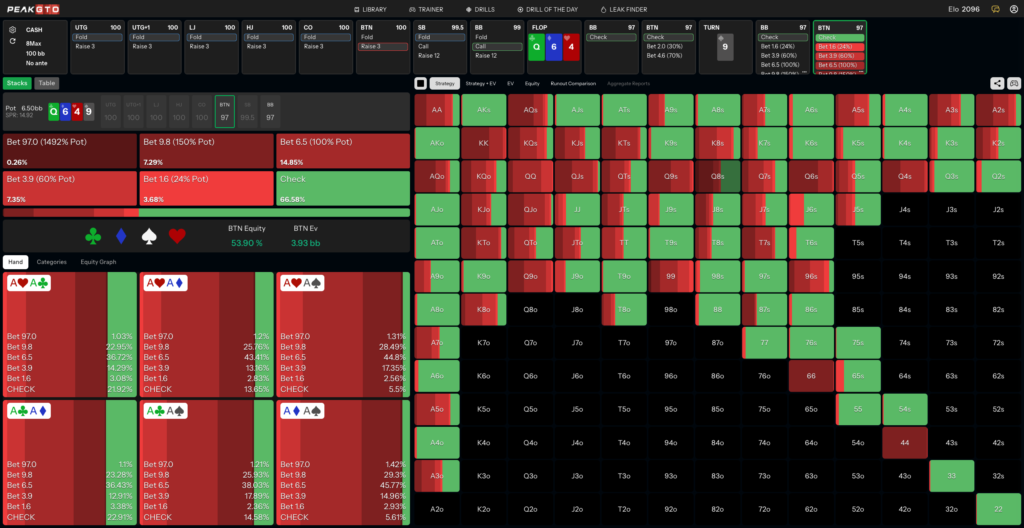
The 9♠ arrives and the big blind checks again. The pure solver actually checks Q8 here a meaningful share of the time, about 40%, so it bets roughly 60%, but the real-world adjustment pushes toward betting even more. When you check back the flop, most human opponents will bet basically all of their better hands on the turn rather than check them. That means the big blind’s turn-check range is not protected enough, and it lets you value bet a little wider than the solver suggests. If hands like Q10 and QJ are betting every time, Q8 can comfortably bet too.
Against this under-protected check, Hero bets 6.5bb, a pot-sized bet, for value and protection on a turn that gives Hero a clear lead over the marginal hands the big blind floats. When the big blind check-calls, their range becomes a collection of marginal made hands worse than top pair, plus some draws. Hero should feel good about where the hand stands. The big blind calls, and the pot grows to 19.5bb heading to the river.
River: J♠
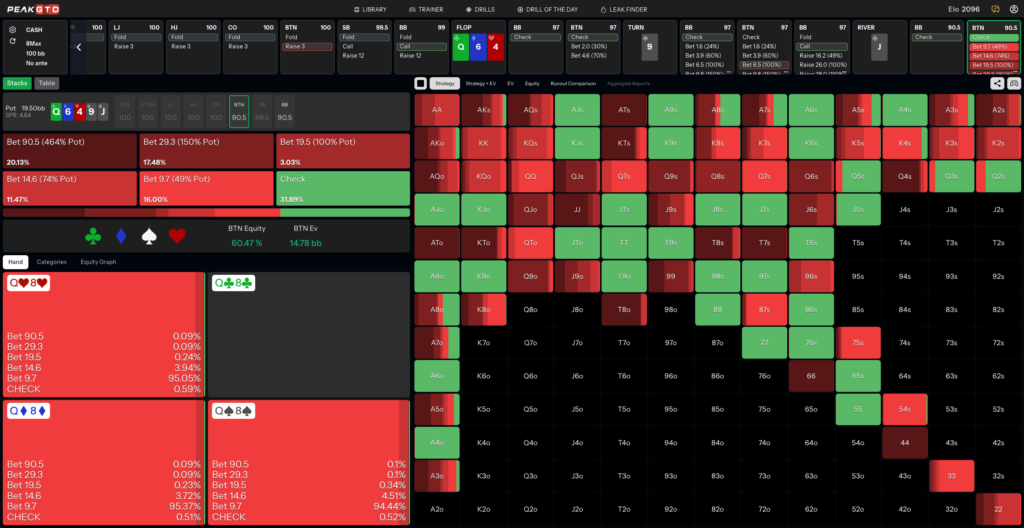
The J♠ completes the board and the big blind checks for the third time. This is the moment where the value gets left on the table by players who talk themselves out of a bet. After check-calling the turn, the big blind’s range is very marginal. Yes, the jack completes a few two pair combinations and the rare rivered straight, and the big blind also shows up with busted draws, but Hero still has the best hand a large majority of the time. The big blind will call with all sorts of Jx if they have it, and even some 9x. When you have top pair on the river against a marginal, check-calling range, the correct play is to bet for value, not to check and hope to win at showdown.
The key is sizing. PeakGTO bets this river the large majority of the time across a spread of sizes, from a smaller bet up through an overbet jam. The size you choose depends on how strong your hand is within your value range. The smallest value sizing, here a roughly half-pot bet of about 9.7bb into the 19.5bb pot, is reserved for the weakest portion of your value betting range, and Q8 sits right at the bottom of it. The rule of thumb is clean: Q8 and Q7 still go for value, but KJ does not. The hands at the very bottom of value take the smallest size, because they want to get called by worse and do not want to charge themselves a fortune when they run into the occasional two pair.
This is also where reading the river card matters. The jack falls below the queen and pairs nothing on the board, so it is largely a safe card for Hero, since it does not give the big blind a higher pair or pair the low cards they would have floated. On most low, blank rivers, Q8 gets to value bet. On the genuinely scary cards, the math changes: a king or an ace river gives the big blind a higher pair than our queens, so Q8 should check back rather than bet into a now-stronger range. Cards that pair the board, like a six, four, or nine, also push Q8 toward a check because they improve many of the pairs the big blind floated to trips or two pair, turning would-be callers into hands that now beat Q8. Understanding which rivers are safe and which are not is the difference between a thin value bet and a spew.
Against the roughly half-pot bet, the small size keeps the price attractive enough that the big blind calls a large share of their pairs and folds the rest. Hero bets, the big blind calls with a pair of nines, and the thin value bet collects an extra pot-building bet that a check would have surrendered. The pot odds the big blind is offered are good enough to keep all of their marginal pairs in, which is exactly why the bet prints.
Key Takeaways
- Flop: Checking back top pair with a weak kicker keeps the pot manageable and avoids the check-raise. The line is about pot control, and it sets up a clean value-betting plan on later streets.
- Turn: When the big blind checks a second time, their range is under-protected because humans bet their good hands after a checked-back flop. That lets Q8 value bet wider than the pure solver line, so Hero fires a pot-sized bet.
- River: Against a marginal check-calling range on a safe river, top pair on the river is a value bet, not a check-back. Q8 is the bottom of the value range, so it uses the smallest sizing. Counterintuitively, KJ (only a pair of jacks) checks back for showdown value while Q8 (top pair) bets for thin value, because Q8 beats more of the opponent’s calling range.
- Overall: Check-check on a safe flop, value bet a safe turn, value bet a safe river. When both later streets stay clean, even a junky-kicker top pair is strong enough to bet all three relevant decisions for thin value. The most expensive river mistake in small stakes is checking back a hand that beats the opponent’s calling range. Use the GTO sizing logic to bet small with the weakest value, and take the money.