
We already covered how to pick the proper c-bet sizing for ace-high flops, so today we will continue the series analyzing c-bet sizing on high-card board textures.
In this article, we will cover different flops and see what sizing we should be using when c-betting both in and out of position.
C-Betting On High-Card Boards In Position – Ks8c2d vs. Kh9d8d
Let’s look at an in-position example where we open from the BTN and get called by the BB.
Key assumptions:
- The hand is played 100 bb deep
- We are opening from the button
- Big blind calls and checks to us
If we look at Ks8c2d, you will see that our strategy is fairly straightforward.
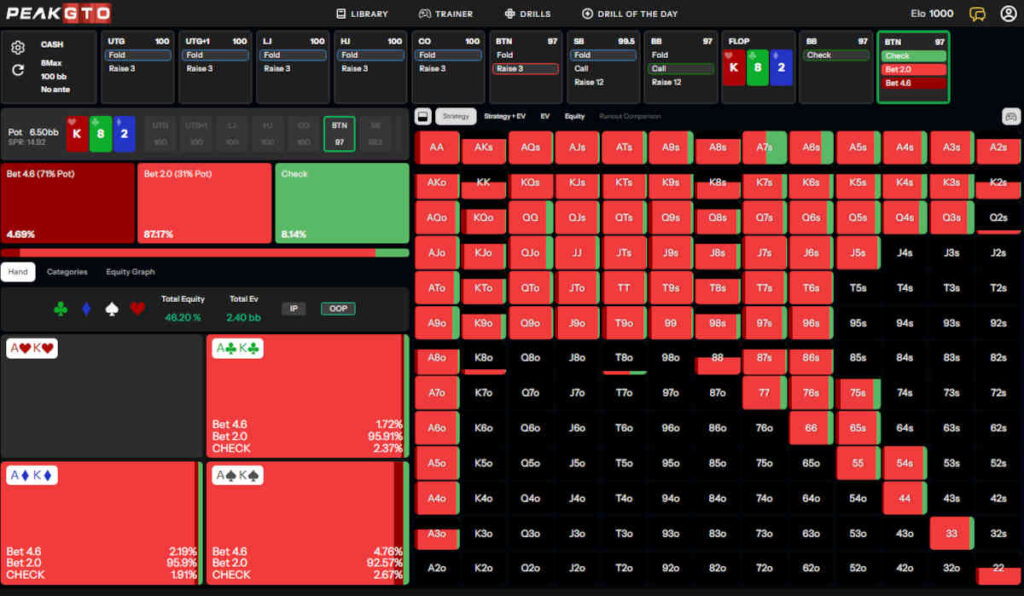
Since this board is great for our poker range, we will bet almost 92% of the time and will stick with a small bet sizing of one-third of the pot in almost all instances.
That being said, the PeakGTO solver suggests mixing in some big bets and using them around 5% of the time.
We will see an entirely different strategy if we examine a connected board, such as Kh9d8d.
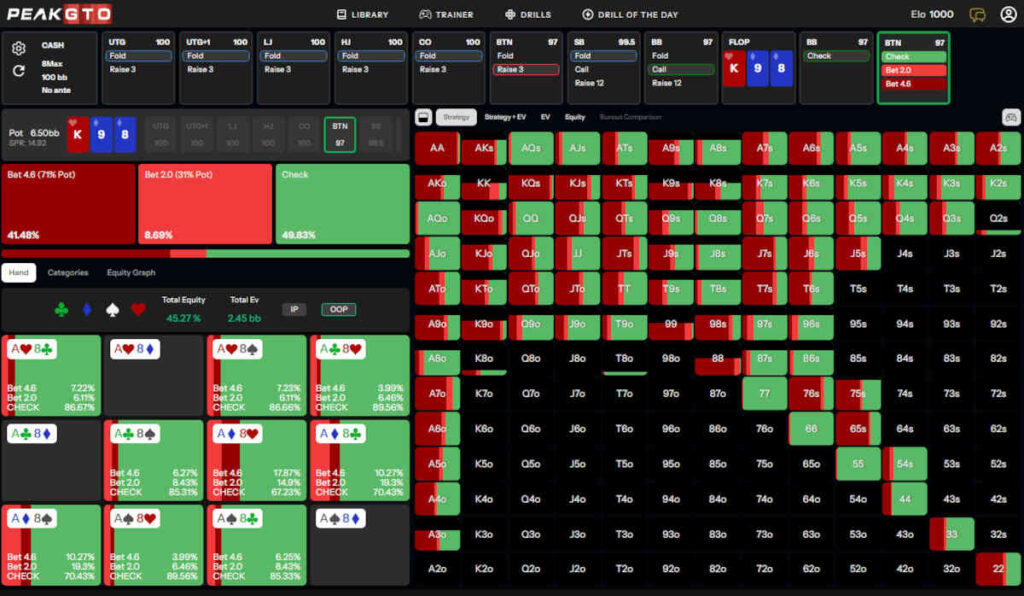
First and foremost, it is worth noting that we are betting significantly less often, and on this board we do so around 50% of the time.
Unlike dry boards, we will pick a big bet sizing of two-thirds of the pot in most instances. We should bet around 41% of the time and pick smaller bet sizes in 9% of our hands.
Since BB calling range coordinates better with these board textures, we do much more checking and select larger sizes to protect our equity.
Key takeaways
- Bet very aggressively on dry high-card boards in position
- Stick to small bet sizing on dry boards
- Use big bets as a default when you are betting on connected flops
C-Betting On High-Card Boards OOP – Ks8h3c vs. Kh9s8s
Let’s examine similar textures when we’re out of position to determine how we should adjust our strategy and choose the most profitable approach.
Assumptions:
- We are playing 100bb deep
- We are opening from the CO
- BTN calls and the blinds fold
Let’s see how we should play on Ks8h3c.
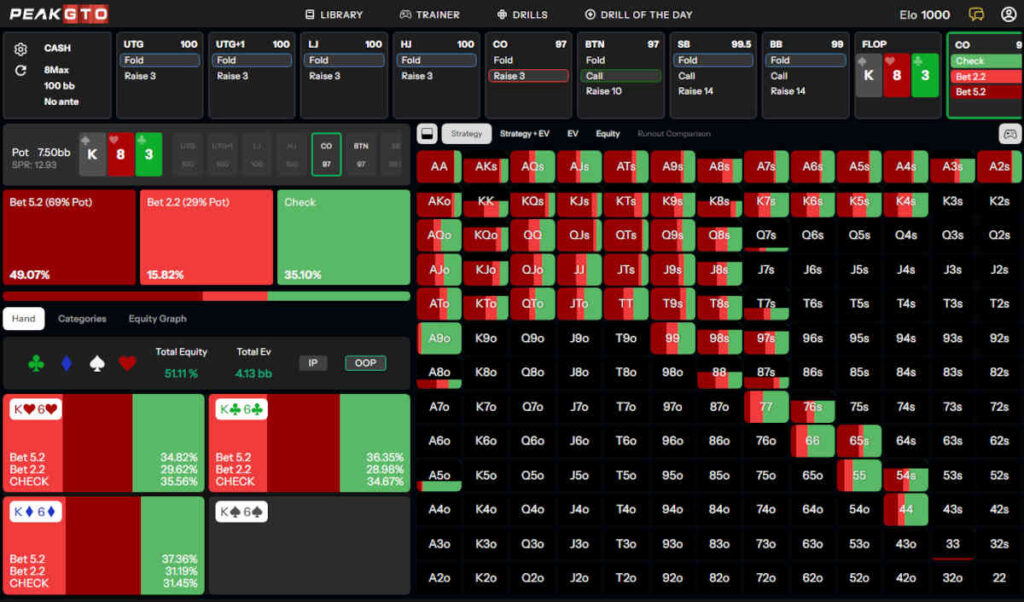
In this spot, we are c-betting around 65% of our hands and mixing small and big bets across the board.
We will use two-thirds pot-size bets 49% of the time, and pick a smaller size of one-third around 16% of the time.
When it comes to connected boards like Kh9s8s, we will be doing significantly less betting.
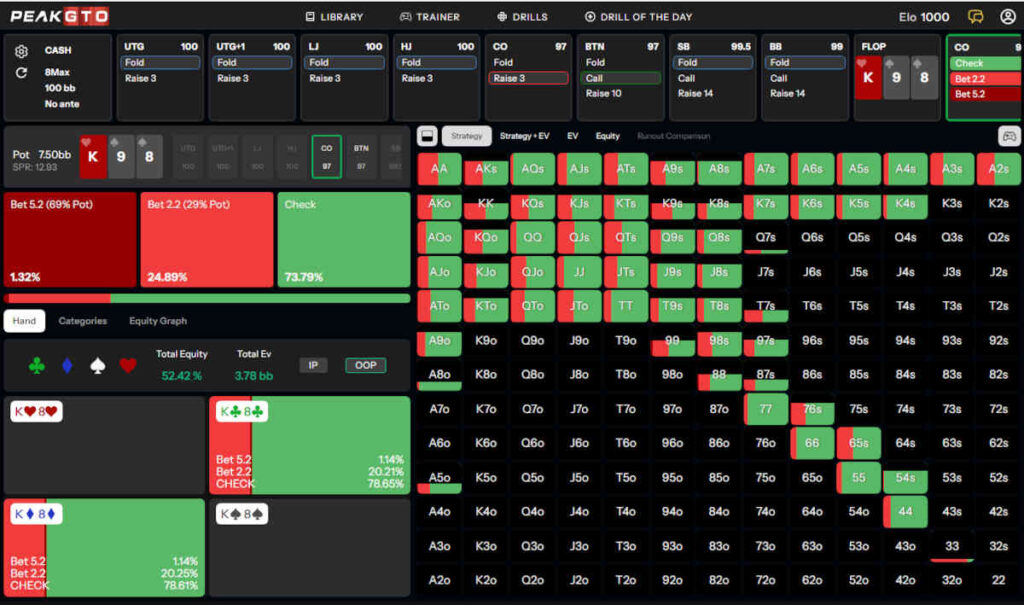
We will be betting 26% of our range and almost universally sticking to it small sizing of one-third pot size bet, making this a very easy strategy to follow.
Key takeaways
- Bet around 65% of the time OOP on dry boards and vary between small and big bets
- Use big bet sizing on dry boards as a default option, but also mix in small bets across the board
- C-bet less frequently and almost always pick small bets out of position on dry boards