
The odds of flopping different poker hands vary far more than most players realize: unpaired hands make one pair on the flop about 29% of the time, while flopping a flush with suited cards happens less than 1% of the time, and a set with a pocket pair comes in at just 11.8%. These numbers define how patient you need to be and how often you should expect to miss.
I have spent years coaching students who consistently overestimate how often they will connect with the flop, and the pattern is always the same: they pay too much to see cards that were never likely to help them.
Once you internalize these probabilities, your decisions get cleaner. You fold marginal poker hands faster, you do not chase flushes that cost more than they return, and you stop expecting the board to bail you out.
Odds of Being Dealt a Starting Hand
The first thing that many poker players overestimate is the odds of getting dealt specific hands, whether it’s a premium hand like AA or KK, a premium pair in general, suited connectors, or anything else.

While starting hand frequencies may seem less urgent than the flop odds covered later in this article, they matter more than most players realize.
Add the following paragraph at the end of the “Odds of Being Dealt a Starting Hand” section (after “don’t focus too much on what kinds of cards you are getting dealt in any particular session”):
In my hand reviews with students, I see this all the time: a player picks up four junk hands in a row and starts playing them out of frustration. That impulse is understandable, but the math says those junk hands were coming.
Roughly 53% of all starting hands are unconnected, unsuited, and contain at least one card lower than a 9. Folding them is not bad luck. It is correct poker.
Most importantly, understanding the odds of being dealt certain starting hands within your poker range will help you practice patience and discipline at the table, as you’ll develop a clearer sense of what’s standard and what’s out of the ordinary.
Note that these odds are only the averages, and you may still get more or fewer hands of a certain type in any given session you play.
So, here is a look at some of the most popular starting hands in poker and the odds of getting dealt such hands:
| Starting Hand | Probability | Odds |
| AK Suited | 0.3% | 331:1 |
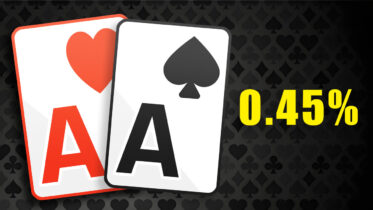
| AA | 0.45% | 220:1 |
| KK | 0.45% | 220:1 |
| Any Particular Pair | 0.45% | 220:1 |
| AK | 1.21% | 82:1 |
| Big Pair (JJ – AA) | 1.81% | 54:1 |
| Suited Connectors | 3.92% | 24.5:1 |
| Connected High Cards | 4.83% | 19.7:1 |
| Any Pocket Pair | 5.88% | 16:1 |
| Connected Cards | 11.57% | 5.4:1 |
| Unconnected Cards with a Card Under 9 | 53.4% | 0.87:1 |
As you can see in the table above, the odds of getting dealt a big poker hand such as AA, KK, AK, or even just a pocket pair of any kind are quite low.
On the other hand, 53.4% of all poker hands you will get dealt will be disjointed, unsuited, and will contain at least one card 9 or lower, making them complete trash.
So, the next time you play and get a few trashy hands in a row, don’t go on tilt and start playing these hands, but rather keep your composure and stay calm, as the big hands will also come at an appropriate frequency.
It is also very important to remember that just because there is a 3% chance of getting a hand, it does not mean you will get it exactly once every 33 hands, but rather you could get it 5 times in 50 hands and then not see it again for a while.
Keep in mind that poker is all about the long run and getting the best results over time and don’t focus too much on what kinds of cards you are getting dealt in any particular session.
Odds of Flopping Different Poker Hands

Now for the flop odds themselves, and these numbers are worth studying carefully. If you are new to the game, some of them will surprise you. If you have been playing for years, they may explain why certain sessions feel harder than they should.
The table below shows every major hand type, the starting cards required, and the probability of flopping it. After the table, each hand type gets its own breakdown with strategic context. I have grouped these by how often each hand comes up at the table, because the rarest outcomes are also the ones players most often chase at the wrong price.
Before we go over different hands, here is a look at a table with the odds of flopping different poker hands displayed in one place:
| Starting Cards | Poker Hand | Odds of Making | Probability |
| Unpaired Cards | One Pair | 2.45:1 | 29% |
| Unpaired Cards | Two Pair | 50:1 | 2% |
| Unpaired Cards | Three of a Kind (trips) | 74:1 | 1.35% |
| Pocket Pair | Three of a Kind (set) | 7.5:1 | 11.8% |
| Connected Cards | Straight | 75:1 | 1.3% |
| One Gappers | Straight | 101:1 | 0.98% |
| Two Gappers | Straight | 152:1 | 0.65% |
| Three Gappers | Straight | 302:1 | 0.33% |
| Suited Cards | Flush | 101:1 | 0.98% |
| Unpaired Cards | Full House | 1110:1 | 0.09% |
| Pocket Pair | Full House | 101:1 | 0.98% |
| Suited Connectors | Straight Flush | 4999:1 | 0.02% |
| Suited One Gappers | Straight Flush | 6665:1 | 0.015% |
| Suited Two Gappers | Straight Flush | 9999:1 | 0.01% |
| Suited Three Gappers | Stratight Flush | 19999:1 | 0.005% |
| Suited Broadways | Royal Flush | 19999:1 | 0.005% |
Odds of Flopping a Pair
The table above showed us how hard it is to get a pair to start with, so the vast majority of starting hands in poker are unpaired.
When you start a hand with unpaired cards, the odds of making one pair on the flop are 29% or 2.45 to 1 overall.
Whether you are holding a hand like AK or 87, you will only hit one of the two cards you are holding on the flop about 30% of the time, which means being in the right poker position and being able to win some pots without hitting a pair will be essential with these types of hands.
In my experience, this is the spot where position and aggression matter most. When you do not pair up on the flop, which happens about 70% of the time, having position and the option to take a continuation bet gives you a way to win the pot without needing the board to cooperate. The players who do best with unpaired hole cards are the ones who have a plan before the flop is dealt.
Odds of Flopping Two Pair
Every player’s dream is that when the flop comes both of their hole cards will show up, giving them two pair and a chance to win a big one.
The odds of that are quite slim, though, as only 2% of all flops will give you two pairs when you start a hand with two unpaired cards.
50 to 1 does not sound too good when taking a bet, so the next time you play a hand hoping to hit two pairs, you may want to reconsider and toss your cards into the muck instead.
When I review hands where a student does flop two pair, the most common mistake I see is overvaluing it in multiway pots. At 2%, two pair is rare enough to feel premium when it arrives, but on wet boards with multiple players in the hand, flopped two pair can be a vulnerable holding. Always ask yourself whether the same flop that gave you two pair also connected well with an opponent’s likely range.
Odds of Flopping Three of a Kind
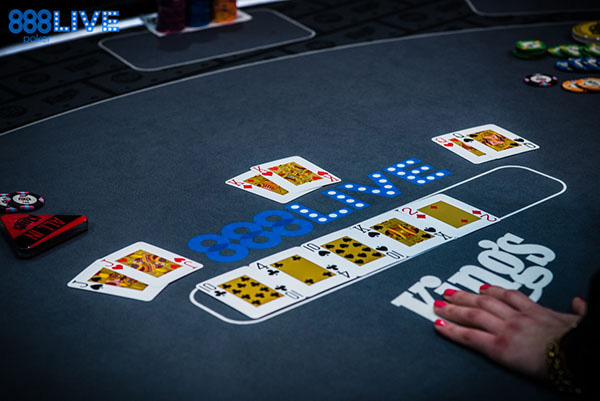
There are two you can make it. One is by holding a pair in your hand and hitting a single card on the board (a set), and the other is by holding unpaired cards and hitting two cards on the board (trips).
Naturally, the odds of these two outcomes are quite different and it is much easier to flop a set than it is to flop trips.
If you start a hand with a pocket pair, you have about an 11.8% chance of flopping a set, which translates to about 7.5 to 1. These are quite reasonable odds, and given the right pot odds, chasing a set can be quite profitable.
The odds of flopping trips with an unpaired hand are quite a bit lower at 1.35%, which translates to about 74:1, a long shot, to say the least.
While you will see people make trips on the flop every now and then, keep in mind that this is not a likely scenario and not one you should bank on.
In my experience, trips with an unpaired starting hand often come as a surprise and can actually be harder to play correctly than a set. When you hold one card to a three-of-a-kind board, your hand is less hidden. Opponents holding an overpair or top pair may continue, but experienced players will sometimes sense a trap. A set, on the other hand, is much more disguised.
Odds of Flopping a Set
A set means you hold a pocket pair and one matching card hits the board. With any pocket pair, the odds of flopping a set are 11.8%, or about 7.5 to 1 against.
Set mining is the practice of calling a raise specifically to hit a set, and the math can support it when the implied odds are right. The rule I apply is a version of the 10-to-1 guideline: you want a realistic chance of winning at least 10 times the amount of your call in additional chips after hitting the set. At 7.5 to 1 against, the extra margin accounts for the times you flop the set but cannot get full value from your opponent.
I have used PeakGTO, PokerCoaching’s native solver, to run these spots extensively. Solver output shows that set mining with small and medium pocket pairs is a high-frequency call in most deep-stack scenarios, which is exactly what the implied odds math predicts.
Where set mining breaks down is in shallow-stack situations or against opponents who will not pay you off when the set arrives. In those spots, the 10-to-1 threshold is rarely met, and I fold the small pair instead.
Odds of Flopping a Straight
When it comes to making a straight on the flop, it is important to remember that different hands have different straight potential in Texas Hold’em poker.
For instance, a hand like 87 is much more likely to flop a straight than a hand like 84, as the former has four different ways it can make a straight while the latter only has one.
With that in mind, here is a look at the odds of making a straight on the flop with different starting hands:
- Four ways to make a straight: 1.3%
- Three ways to make a straight: 0.98%
- Two ways to make a straight: 0.65%
- One way to make a straight: 0.33%
As you can see, the odds of flopping a straight are quite low in either case, so don’t bank on this possibility too much, and make sure you have more going for you than just an opportunity to make a straight before you go into a hand.
In my hand reviews, I regularly see players justify calling raises with weak one-gappers and two-gappers because of the straight potential. The problem is that even the best connectors only flop a complete straight 1.3% of the time.
The stronger argument for playing these hands is the draw equity they provide on flop textures that give you open-ended or double-gutter draws, not the rare times you flop the straight outright.
Odds of Flopping a Flush
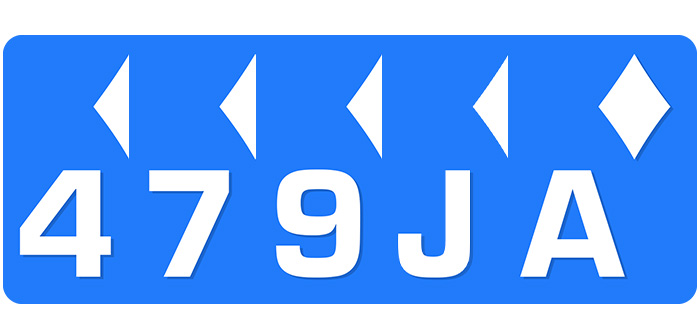
About 23.5% of all starting card combinations in poker are suited, and seeing two suited cards gives players an illusion that they have a good chance to make a flush.
The reality, however, is quite different, as the odds of flopping a flush with two suited cards is about 0.8%, meaning you will need to see about 118 flops with suited hands before you flop a flush.
Of course, you can also count on the turn and river card to help you make a flush, but the odds are still not in your favor by any means.
This is exactly the reason you will not see professional poker players play trashy low cards just because they are suited, as suitedness alone is not a big factor in hand strength in Texas Hold’em.
This is one of the most consistent mistakes I see from recreational players: treating suited hole cards as significantly stronger than their off-suit equivalents. Suitedness does add value, but the value comes primarily from the flush draw equity you gain on boards with two of your suit, not from flopping the flush outright.
At 0.8% to flop the complete flush, you should think of your suited cards as adding a small equity bonus to a hand that needs to stand on its own merits.
Odds of Flopping a Full House
Flopping a full house in Texas Hold’em poker means you will win the pot the vast majority of the time, but it is also a very hard thing to do.
If you start a hand with a pocket pair, you will flop a full house about 0.98% of the time, so you can count this as about one time out of a hundred.
On the other hand, if your starting cards are not paired, you will only flop a full house about 0.09%, about one in a thousand times.
If neither of those odds seems too appealing, it’s because they are not, but chasing full houses isn’t going to be your primary objective in the game of poker anyway.
When a student does flop a full house, the question I get most often is how much to bet and how fast. My general approach is to slow-play on boards where an opponent can pick up a big draw and continue, because a flopped full house is strong enough to give free cards.
On drier boards where the opponent has already connected, I often lead for value right away. Either way, this is a hand you will see maybe once every hundred pots, so make sure you have a plan before it lands.
Odds of Flopping a Straight Flush
A straight flush requires three consecutive suited cards on the board that also connect with both of your hole cards. The odds depend heavily on how connected your starting hand is:
- Suited connectors: 0.02% (4,999 to 1)
- Suited one-gappers: 0.015% (6,665 to 1)
- Suited two-gappers: 0.01% (9,999 to 1)
- Suited three-gappers: 0.005% (19,999 to 1)
In practice, these hands are so rare that the correct strategy is never to play a hand specifically for its straight flush potential. The value of suited connectors comes from flush draws, straight draws, and pair equity, not from a 0.02% jackpot scenario. I have flopped straight flushes a handful of times across hundreds of thousands of hands, and in most cases the surprise was the entire strategy.
Odds of Flopping a Royal Flush
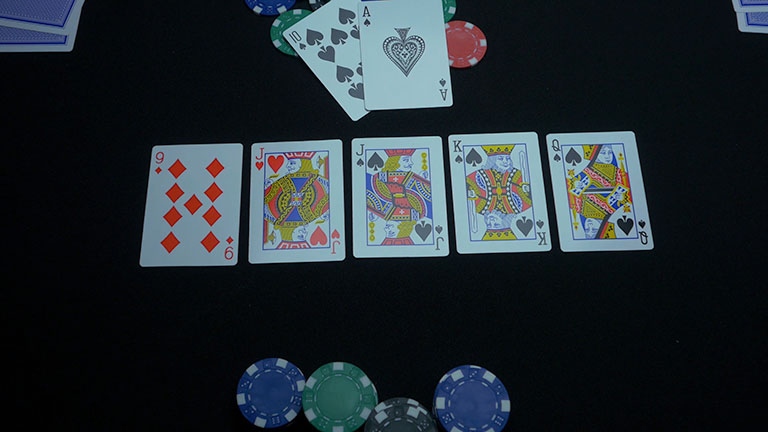
A royal flush requires exactly A-K, A-Q, A-J, or K-Q-J on the board using your two suited Broadway cards. The odds of flopping a royal flush are 0.005%, or exactly 19,999 to 1.
Most players encounter one in a live setting once every few years, if that. If you are dealt suited Broadway cards and a royal flush lands on the flop, slow down, verify the board, and then extract maximum value. It is one of the few situations in poker where the correct play is obvious.
Don’t Bank on Flopping Big Hands
After seeing these numbers, the takeaway is clear: big hands on the flop are the exception, not the rule. A pair with unpaired cards happens less than a third of the time. A set comes in at under 12%. Everything stronger than that is a rare event.
The players who do well in poker are not the ones who run hot and flop sets every session. They are the ones who play well when they miss, which is most of the time. I have built most of my tournament results not from flopping monsters but from applying pressure in the right spots when the board was unlikely to have helped anyone.
If you want to put these odds into practice with real hand analysis, PeakGTO, PokerCoaching’s own solver, lets you run any board texture and see exactly how often specific hands appear in a solved range. That kind of study reinforces the probability instincts faster than any table of numbers can and enhances your overall poker strategy.
Use position, aggression, and pot odds to win your fair share of pots without needing premium holdings. The odds say big hands are coming rarely. Your job is to play well between them.