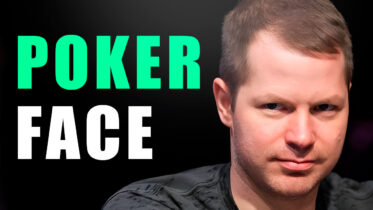

Maintaining a poker face in live poker means controlling your expressions, body language, and verbal cues so that opponents cannot read the strength of your hand. Whether you are bluffing or betting for value with the nuts, your behavior at the table should look exactly the same.
In my experience coaching thousands of live poker players through PokerCoaching, I have found that most people do not actually have a poker face problem. They have a self-awareness problem: they are giving away tells they do not know exist.
The seven tips below are designed to fix that, starting with how to identify the habits you already have and moving toward the mental and physical techniques that eliminate them.
- What Is a Poker Face?
- Tip #1. Identify Your Tendencies
- Tip #2. Explore the Art of Dissociation
- Tip #3. Observe Other Players
- Tip #4. Stay Consistent
- Tip #5. Consider Using Props
- Tip #6. Use Your Clothes to Your Advantage
- Tip #7. Be Careful What You Say
- Poker Face in Online Poker
- Putting it Together – How to Keep a Steady Poker Face
- Frequently Asked Questions
What Is a Poker Face?
A poker face is the ability to keep a calm, neutral expression and controlled body language during a poker hand, so that opponents cannot determine whether your cards are strong or weak.
It includes not just your facial expression but also your breathing, posture, timing, chip handling, and anything else an observant opponent might use to read your intentions.
The term is widely used outside of poker, but at the actual table it refers to a specific set of habits and techniques that experienced players practice deliberately.
I have seen players with naturally expressive faces develop very effective poker faces simply by building consistent routines. It is not a personality trait. It is a learnable skill.
Tip #1. Identify Your Tendencies
The first step to fixing a problem is recognizing a problem exists in the first place. When it comes to poker, being aware of your tendencies at the table can go a long way.
If you want to maintain a stoic demeanor that reveals nothing at the table, you have to identify the ways in which you give things away in the first place.
This can include the way you breathe, the way you shuffle your chips, the slight twitches you make with your face, and any other movement you make at the table.
The next time you are value betting and your opponent is thinking, try identifying the things you naturally do with your body in such situations.
Where do you keep your hands? Do you look at your opponent or stare at the table? Do you talk to other players or remain completely silent?
Do the same thing the next time you are bluffing, and try to identify anything you do differently between those two scenarios at this time.
By becoming aware of all the little subtle tells you may be giving away in different scenarios, you will give yourself a chance to manipulate and hide them in the future, making yourself a lot harder to read.
In my coaching sessions, the most surprising tells are never the dramatic ones. Players expect to be caught on big reactions.
The patterns that actually leak information are the quiet, repeated behaviors: a player who breathes differently when bluffing, who looks left before folding, or who always places chips a certain way when strong.
Recording yourself on video during a home game, if possible, is one of the fastest ways to identify what you are actually doing at the table compared to what you think you are doing.
Tip #2. Explore the Art of Dissociation
Poker is a very emotional game, and most of the tells we give away come from our body responding to the emotions we are experiencing.
For example, whenever you are bluffing, it is natural to experience fear and anxiety as you wait for your opponent to either fold his cards or put the chips into the pot.
If you allow your body to react to these emotions as it normally does, you will start giving away tells. Your heart will start pumping harder, making the veins in your neck move visible, and you may experience shaky hands, deeper breathing, and other related symptoms.
When playing against strong live poker players, they will recognize all of these little tells and may be able to determine if you are bluffing or not in such situations.
One technique many players use is mental dissociation. This technique leads to fewer physical manifestations of your emotions and can also help you manage tilt and perform better after winning or losing big hands.
For example, if you are able to dissociate from the results of a particular hand or a play you made, your body will not respond in the ways it usually does, and you will not exhibit tells that other players may recognize.
What’s even more, losing a big pot will not affect you as much and lead to tilt, which is one of the biggest problems most live poker players experience.
In order to dissociate from the results, you will need to start thinking about the game in a different way. The results of a particular hand or session don’t matter at all. You have the bankroll to keep playing and are playing a winning strategy in the long run. Everything is alright!
Whether you are winning or losing in a particular poker game, being able to dissociate from the money and the results will help you make better decisions and win more money in the long run while also being consistently happy with how things are going in your poker career.
I worked on dissociation deliberately early in my career after noticing that my hands would shake slightly after winning large pots. The reaction was not about the money. It was about the emotional peak of the outcome.
Once I started treating each hand as simply one decision in a long sequence of correct plays, the physical reactions faded. The goal is not to become emotionally numb. It is to disconnect the result from your body’s response quickly enough that opponents cannot read the timing.
Tip #3. Observe Other Players
A great way to learn about poker tells and tendencies are by observing other players and trying to spot their tells.
If you focus enough, there are many things you can pick up from the way players behave in different situations, whether you are in a pot or not.
Being observant at all times will allow you to identify live poker tells that you can use against players at a later point, but also gain knowledge that you can apply to your poker face and demeanor.
For example, the way players hold their hands and eyes, their body posture, and their facial expressions can all be a great gateway into the human psyche.
By understanding what others are doing wrong and how they give away tells, you can work on your own poker face and ensure you are not making those same mistakes.
On the other hand, if you keep playing without paying attention, these things will pass you by, and you may never fully master what it truly means to hold a poker face at a poker table.
When I sit down at a new live table, the first thirty minutes are almost entirely observational. I am watching for which players act consistently and which ones have visible swings in demeanor depending on what they are holding.
I want to know which opponents lean back when confident, talk more when bluffing, or reach for chips before the action is on them. Every tell I spot in an opponent also becomes a reminder to audit my own behavior in that situation.
Tip #4. Stay Consistent
Whether you prefer playing poker tournaments or old fashioned cash game poker, consistency is one of the key aspects in hiding the truth from your opponents and making sure you are not giving away any live tells.
When we say consistency, we mean consistency of motions, bet sizes, and timing, all of which are elements that can potentially give away valuable information to other players.
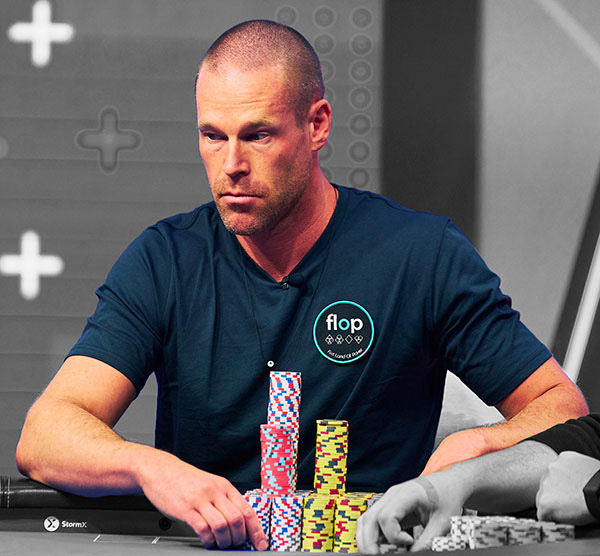
For instance, if you always bet very fast when you have the nuts but take your time to consider a bluff, savvy opponents might spot this tell and keep using it against you for months to come.
Similarly, if you always look your opponent dead in the eye when you have a good hand but look away when you are bluffing, this is a tell that can be easily used against you.
In order to avoid giving away any tells whether you have a strong hand or not, make sure to always remain consistent in your actions.
Always take a little bit of time before you act when the action is on you unless you have a hand that’s not worth considering and is an easy fold.
Make sure to size your bets similarly, whether you are bluffing or value betting, and keep a stoic demeanor that always looks the same.
If you want a real role model in consistency at the poker tables, consider watching some Patrik Antonius hands and try mimicking the way he acts at the tables on a consistent basis.
The routine I recommend to students is simple: before every action, pick up your chips the same way, pause the same brief moment, and then act. Whether you have pocket aces or seven-two offsuit, the sequence is identical.
When your routine is completely uniform, the only information opponents can extract from your behavior is what you choose to give them through deliberate reverse tells, not accidental ones.
Tip #5. Consider Using Props
Keeping a strong poker face at all times can be hard, especially for inexperienced live poker players. For that reason, many players use props like hoodies, sunglasses, and turtlenecks to conceal some parts of their faces and bodies.
Sunglasses have always been a popular prop among poker players, as they allow you to hide your eyes, which can often give away the most information to your opponents.
While wearing sunglasses indoors may not be acceptable in other scenarios, no one will look twice if you wear them at a poker table, so find a pair that suits you well and wear it to your next live game if you want to give away less information.
Hoodies and turtlenecks can be equally as useful, as hiding your neck can ensure your opponents can’t recognize your breathing patterns or spot any big gulps you may take when bluffing. On top of that, they will also keep you cozy and warm throughout the game.
Baseball hats and other props can also help you hide your facial expressions and tells from other players, so take some time to work on your poker outfit before you step into a poker room the next time.
I do not wear sunglasses at the table myself, but I have played against high-level opponents who absolutely require them. If your eyes naturally react to the board with increased interest or subtle widening, sunglasses are not a weakness.
They are a practical solution to a specific leak. What I do recommend is testing any prop at lower stakes first so you know it is comfortable and does not create new tells through constant adjustment.
Tip #6. Use Your Clothes to Your Advantage

Deception is an important part of how to win in poker. Making sure your opponents never know what you are actually thinking or why you are doing the things you are doing will help you win more and remain a mystery to everyone.
The way you dress at a poker table can be a big part of this, and many professional poker players make this mistake all too often.
If you walk up to a live poker table in a Las Vegas casino, you will probably be able to spot the pros at the table within seconds simply by looking at their outfits.
They like to wear sporty outfits that provide comfort and take a stoic demeanor, which can help them in one way but work against them in another.
If you want to not only hide your poker face but also trick your opponents into doing what you want them to do, dressing differently than other pros is a great trick.
For example, wearing a very dressy outfit that you might wear for a night out with your friends can be a good way to trick other players into thinking you are a tourist just looking to have a good time.
Similarly, dressing down can sometimes make everyone think you are a degenerate gambler who is ready to spew his money away.
These tricks work exceptionally well when you play in live games that you are not a regular in, as the players you are playing against won’t know what to expect from you and may completely misjudge you and your playing style.
I have used the casual tourist image deliberately in live casino settings, arriving at a table dressed in a way that suggests a recreational player looking for a good time. The psychology is that table image forms quickly and updates slowly.
What opponents conclude about you in the first twenty hands tends to stick for hours, even after you have shown down strong holdings. Dressing and behaving in a way that undercuts their initial read is a legitimate edge in a game built on incomplete information.
Tip #7. Be Careful What You Say
Facial expressions, gestures, and demeanor are all very important at the poker table, but so are the words that come out of your mouth.
Unless you are incredibly experienced and used to talking at the table while playing hands, you should keep quiet and keep information private from other players.
Everything you say at a poker table can be used against you, and the truth is “speech play” will more often get you in trouble than help you in any meaningful way.
The more you talk, the more you risk giving away information about your hand, while your opponent may choose not to talk back and not give anything away.
What’s even more, if you are the one doing the most talking at the table, it’s likely you are also the one telling everyone the most about the strength of your cards.
While watching the likes of Daniel Negreanu use speech play masterfully at the poker tables can be very fun, trying to mimic them will often lead to an absolute disaster.
My position on speech play is that the risk almost never matches the reward for most players. The exception is a very specific situation: when you already have a clear read on your opponent’s tendencies and a specific goal for what you want them to do.
Without that foundation, talking during a hand mostly gives information and gains very little. The players who do speech play well are also the ones who do it sparingly, because the value comes from the element of surprise, not from constant use.
Poker Face in Online Poker
In live poker, a poker face is about controlling what your opponents can see. In online poker, there is nothing to see, so the equivalent is behavioral consistency in a different form.
Online opponents read your timing tells (how long you take before acting), your bet sizing patterns (whether you bet differently with strong versus weak hands), and your overall action frequency.
If you consistently take four seconds to call a bet regardless of hand strength and keep your bet sizes consistent across different hand types, you are the online equivalent of someone with an unreadable face at the live table.
I often see players focus heavily on their live poker face and ignore the same concept online. At online stakes where regulars study timing patterns carefully, the habits that give away your range are the online version of a neck pulse or shaky hands.
Applying the same mindset of consistency and self-awareness to your online timing routine will produce the same results.
Putting it Together – How to Keep a Steady Poker Face
A poker face is not one skill. It is a combination of self-awareness, physical habit, emotional control, and deliberate routine.
The players who are most difficult to read are not those who were born stoic. They are the ones who put in the work to understand what they naturally give away and then systematically eliminate it.
My recommendation for developing this is the same advice I give students who want to improve any aspect of their live game: start at stakes where losing a pot does not affect your ability to observe yourself. In lower-stakes games, spend a portion of each session focused entirely on your own behavior rather than making optimal decisions.
That deliberate observation practice builds the self-awareness you need to apply all seven of these techniques automatically.
My position on speech play is that the risk almost never matches the reward for most players. The exception is a very specific situation: when you already have a clear read on your opponent’s tendencies and a specific goal for what you want them to do.
Without that foundation, talking during a hand mostly gives information and gains very little. The players who do speech play well are also the ones who do it sparingly, because the value comes from the element of surprise, not from constant use.