A poker freezeout tournament is a format where every player receives one buy-in and plays until their chips are gone, with no rebuys or re-entries allowed. I have played, studied, and coached thousands of hands in freezeout events, and what I find most revealing about this format is how quickly it exposes strategic weaknesses: there is no safety net to hide behind, which means every decision carries real tournament equity from hand one.
The WSOP Main Event remains the most prestigious example, but freezeout events run at every level of the game, and learning to play them well is one of the most transferable skills in tournament poker.
What Makes a Freezeout Poker Tournament?
As previously mentioned, freezeout poker tournaments do not allow rebuys or re-entries, meaning one player can play only once. In my experience, the players who genuinely understand this format treat every single chip as irreplaceable from the very first hand.
That mindset shift, from “I can always reload” to “this stack is all I have,” is the difference between surviving into the money and busting in the first two levels on a marginal spot you never should have been in.
The best example of a classic freezeout poker tournament is the WSOP Main Event, in which you can only buy one stack of chips across the four starting days. If you lose your chips, you are out for good!
These days, poker rooms and online poker operators have started to introduce the re-entry option to more and more freezeout poker tournaments to increase the prize pools and appeal to players, but the freezeout format remains quite attractive as well.
For many professionals, freezeout poker tournaments mean that they get to exert more pressure on other players, as the risk of busting out and going home actually exists.
This is exactly why many players consider freezeout poker the only pure form of the game, as it forces everyone to make difficult decisions that can end the tournament early on.
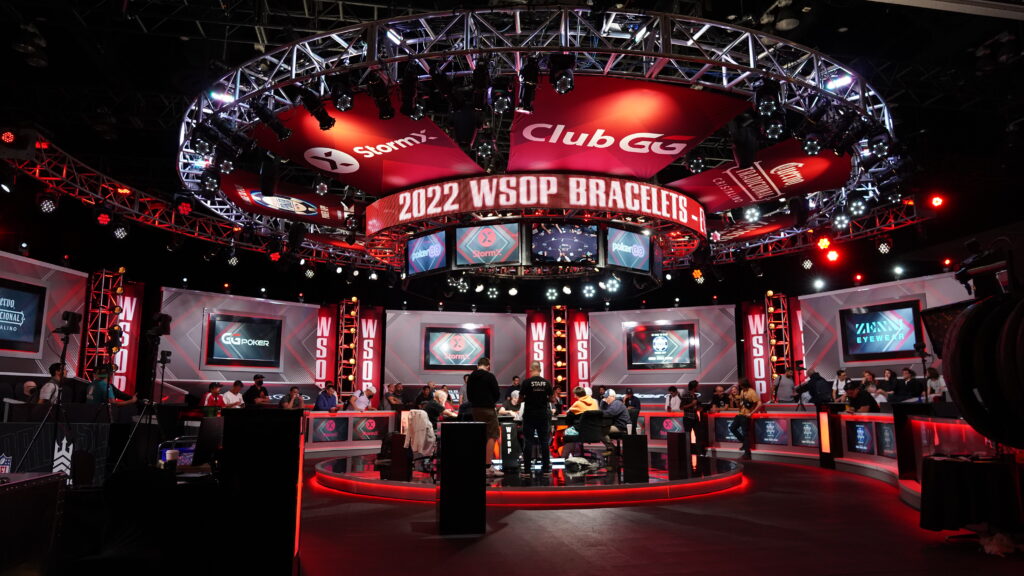
The WSOP Main Event is the largest freezeout tournament that occurs every year.
How Freezeout Differs from Other Formats
So what exactly are the big differences between freezeout poker tournaments and other formats such as re-entry and rebuy? I have played both freezeouts and re-entry events at the highest levels, and the strategic difference is larger than most players realize.
In re-entry events, I watch players commit chips recklessly in the first few levels because they know they can fire another bullet. In a freezeout, those same chips carry actual tournament equity from the moment you sit down. That changes everything about how you should approach the early game. There are a number of specific differences to consider:
- Smaller player and prize pools
- Shorter duration
- Competitive atmosphere
- No second chances
Let’s talk briefly about each of these main talking points.
Smaller Player and Prize Pools
Perhaps the most obvious difference between freezeout poker tournaments and rebuys and re-entries is that the overall number of entries in freezeouts tends to be smaller.
Since each player can only pay the buy-in once and receive one chip stack, the overall number of entries in freezeouts is naturally limited.
That said, the number of players in a freezeout will reflect the exact number of individuals who showed up for the event, and this number will paint a clear picture of the turnout for the event.
While freezeouts may be harder to organize if you want a massive prize pool, the best poker rooms manage to attract plenty of individual players and still create a big event even without re-entries.
Shorter Duration
No re-entries or rebuys mean that everyone gets to play just once, reducing the overall time it takes to finish the tournament, and poker hands you can play there.
Since the late registration period in a freezeout poker tournament is only there to allow players who were late to the event to join, it does not significantly impact the overall duration.
Freezeout poker tournaments do tend to have slightly smaller prize pools, but they also last a shorter amount of time, making them ideal for players who prefer faster events and a quicker path to the final table.
Competitive Atmosphere
The notion of freezeout poker being the only truly pure format of the game exists with many players, and it is not without a good reason.
The format entices players to manage their chips and make decisions that are actually in their best interest instead of mindlessly gambling while trying to build up a stack.
While re-entry tournaments tend to see players put their chips in with any draw or weak hand in the hopes of chipping up or re-entering, freezeouts make every chip very valuable.
If you want to play poker in its purest form and ensure that the field is not made up of almost entirely gamblers for hours at a time, playing freezeout poker is the best way to go.
No Second Chances
Once you bust out of a freezeout poker tournament, all that’s left is to pick up your things and go home or perhaps enter a completely different game.
With no chance to get back into the mix, players will think twice before making a super loose call before the flop or staking it all on just a flush draw. This is exactly what makes playing freezeout poker tournaments so fun and exciting, as every decision you make could be your last.
If you enjoy playing poker with everything on the line in every hand, and you thrive under pressure, then freezeout poker tournaments are ideal for you.
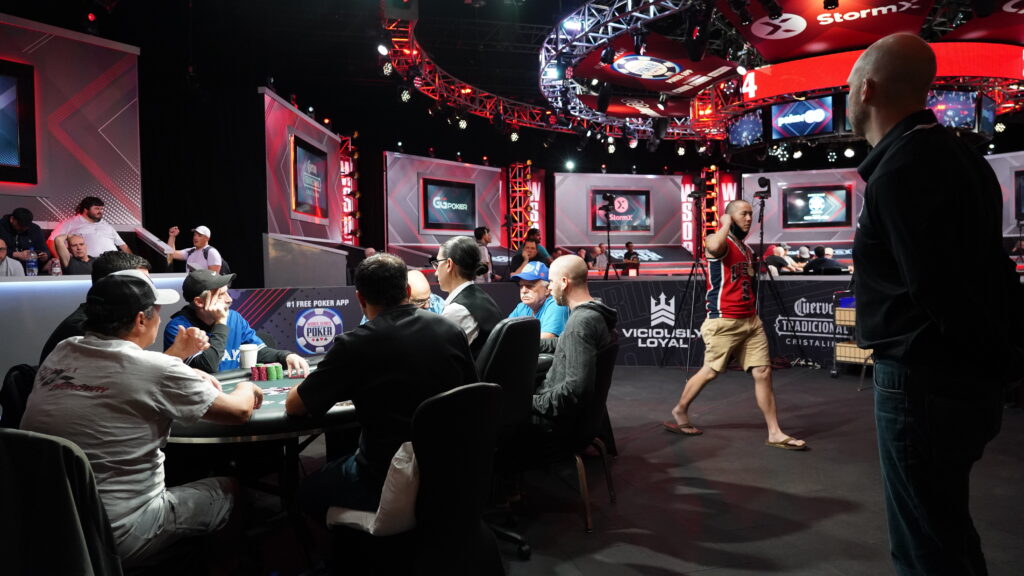
Once you are eliminated from a freezeout tournament, you are out for good.
How to Adjust to Freezeout Poker Tournaments
Let me walk you through the three-stage framework I use for freezeout tournaments, because playing the same way from level one through the final table is one of the most common and costly mistakes I see.
Freezeout tournament strategy is not a single approach: it is three distinct phases, each requiring a different mindset and a different set of decisions. In the early stage, you are protecting chips and building information. In the middle stage, you are applying pressure and accumulating. Late stage, you are exploiting ICM and finishing the job. Here is how I approach each one.
Start Slowly
Freezeout poker tournaments have a tendency to have a slow structure as well, giving you plenty of play in the early levels. The last thing you want to do is drop your chips in a silly spot early in the freezeout poker tournaments, which is why you should be playing tight at the beginning.
By playing a fairly tight and aggressive style of poker early on, you will be able to slowly grow your stack, hopefully without ever risking your entire stack until the later levels.
You want to make small raises and bets, keep the stack-to-pot ratio as big as possible, and allow for a few bad beats along the way.
Fold When You Are Beat
Perhaps the biggest mistake many poker players make in freezeout poker tournaments is that they make the call even when they know they are beaten. Getting sucked out on the turn or river can definitely be annoying, but sometimes there is simply nothing you can do about it.
The nature of tournament poker is such that you will run into bad beats and coolers, and if you bust out every time you do, you will not get very far at all.
Instead, try to think about things systematically and find that correct fold when you see you are clearly beaten. Learn to fight in another hand and take the better spot when it appears.
Exert Pressure When Possible
While playing tight early on in a freezeout tournament is the way to go, there is also a time to start loosening up and exerting some pressure. As the tournament moves into the later levels and you build up your stack, you will notice other players get a bit more desperate.
This is the time to use the chips you have accumulated and put pressure on those players who are approaching the danger zone. Remember that no one wants to lose their last chips in a freezeout poker tournament and exert maximum pressure when the time is right to get the maximum amount of EV from every situation.
The bubble, specifically, is where freezeout tournaments are most often won or lost. I see players make the mistake of tightening up drastically on the bubble when they should be selectively loosening up. If you have a stack of 25 big blinds or more and another player at your table is hovering at 8 to 10 big blinds, that player is the one playing survival poker, not you.
Use that dynamic to steal blinds and antes aggressively from late position. The player who accumulates chips on the bubble almost always enters the money with a stack large enough to go deep, while the player who went into a shell on the bubble cashes for the minimum and gets no extra EV.
Master Push/Fold Ranges for Short-Stack Play
One of the most important skills I tell my students to develop for freezeout tournaments is mastering push/fold ranges for short-stack play. When your stack drops to 15 big blinds or fewer, the decision tree simplifies dramatically: you are either moving all-in or folding. There is no longer any meaningful reason to limp, min-raise, or make a standard open, because the pot-to-stack ratio makes those lines unprofitable.
The good news is that the push/fold strategy is solvable. The correct shove-or-fold decision varies by your stack size, position, number of players left to act, and the payout structure, but the ranges are finite and learnable.
I recommend using PeakGTO, PokerCoaching’s own solver tool, to study these spots. Spend a few sessions drilling push/fold charts from every position, and you will eliminate a major source of EV leakage that costs tournament players real money at this critical stage.
Create Player Profiles
Unlike re-entries and rebuys, where things get hectic, and players come and go all the time, you may be stuck with the same group of players in a freezeout tournament for quite a while.
This is why you want to pay even more attention to the particular players you are playing against and build some player profiles as you go along.
Which guy at your table bluffs every hand? Who only plays to the river when they have the goods? These are all very important things to keep note of.
By creating a mental profile of every player at your table, you will be able to make decisions that you could not have made otherwise.
Keep ICM in Mind
ICM is a concept that many tournament players don’t fully understand, but one that can make you heaps of money in the long run.
Player fields in freezeout poker tournaments are smaller, so you will find yourself hovering around the final table more often than you would in re-entries.
For that reason, you will need to understand the importance of ICM implications in late-game and the ways you can make more of your decisions in this stage of the tournament.
Make sure to practice ICM spots during your study sessions. I recommend PeakGTO, PokerCoaching’s own solver tool, for working through push/fold decisions and final table ICM scenarios.
Running through a few of these spots each week will sharpen your late-game decision-making significantly, especially in the spots where a small edge in chip equity translates to a large difference in prize pool equity.
Big Adjustments on Final Tables
The final tables of freezeout poker tournaments can get quite interesting, as they often have more recreational players than re-entry or rebuy events.
Without the ability to enter the event many times, which the pros take full advantage of, you are more likely to see the pros fall off and recreational players make it to the final table.
Of course, there will usually be a few serious poker players in the final stretch as well, so it’s important to recognize who those players are, assess everyone’s stack and position, and adjust accordingly.
Typically speaking, you will be able to abuse recreational players with middling stacks on final tables quite a bit, as they will not want to bust out unless they have a very strong hand.
On the other hand, other pros will be looking to do the same, which means you can exploit them by getting in the mix when they try to abuse the recs and play right back at them.
For example, imagine you see a recreational player min-raise in the middle position, only for the best player at the table to 3-bet them from the button. You can already see the rec twitching in their seat and getting ready to fold. Now is the time to pounce with a 4-bet, eliminate the rec from the pot, and put the pro in a very tough spot, as they are likely not to have a big hand at all.
It’s plays like this that will give you an ultimate edge in freezeout tournaments and put you in pole position to win the whole thing.
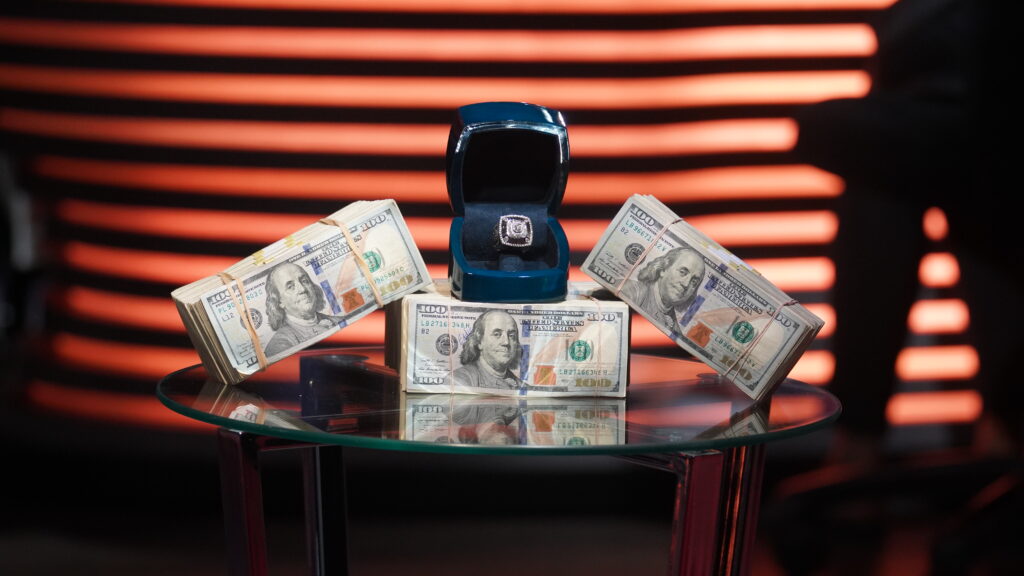
With the right adjustments, you can win trophies and big cash prizes in freezeout tournaments.
Master the Art of Freezeout Poker
Freezeout poker tournaments are unlike any other form of poker, as this is the only format in which you only get one shot, and you are done.
Busting out of a freezeout tournament means having to go home or play another event, but only after the inevitable walks of shame.
This is perhaps the reason the WSOP Main Event is decided over freezeout poker tournament tables: The format puts the pros, and the recs in the same position and means every mistake could be the end of your ride.
If you enjoy the concept more than endless re-entries, then practice the skills needed to thrive in a freezeout environment and play as many freezeouts as you can. Study your game with PeakGTO, PokerCoaching’s own GTO solver tool, which lets you work through freezeout-specific push/fold and ICM spots so that when those situations arise in a real tournament, you already know exactly what to do.
Just keep in mind that there are fewer and fewer freezeout events every day, and if you want to play poker regularly, you may end up having to play at least some re-entry events as well.