
Most Texas Hold’em players learn preflop strategy at 100 big blinds and apply it everywhere. That works fine until you sit down in a game where effective stacks are 200, 300, or even deeper. Suddenly, the decisions that felt automatic start costing you chips.
Deep-stack preflop strategy is one of the most understudied areas of cash-game poker. The adjustments are not complicated, but they are important. Get them wrong, and you will find yourself playing inflated pots with the wrong hands, out of position, with no clear path forward.
In this article, I want to walk you through the core adjustments I make when playing deep stacked. These come directly from GTO preflop charts and years of playing in deep-stacked cash games. If you apply them consistently, they will make a real difference in your results.

Always Play the Effective Stack, Not Your Own
Before getting into hand selection, I want to clarify something that confuses many players: you are always playing the effective stack in a cash game.
The effective stack is the smaller of the two stacks in any given hand. If you have 400 big blinds and your opponent has 100 big blinds, you are playing 100 big blind poker. You cannot reach into your pocket mid-hand to use those extra chips if the action escalates.
This matters because some players think that having a deeper stack gives them extra leverage over opponents with shorter stacks. In a tournament, a survival element makes stack depth relevant beyond the chips immediately at risk. In a cash game, your opponent can reload at any time. The only thing that matters is the effective stack between you.
So when you sit down in a deep-stacked game, the first question is: what is the effective stack against each opponent I am likely to play a pot with?
That number is what drives your preflop adjustments.
How Deep Stacks Change Hand Values
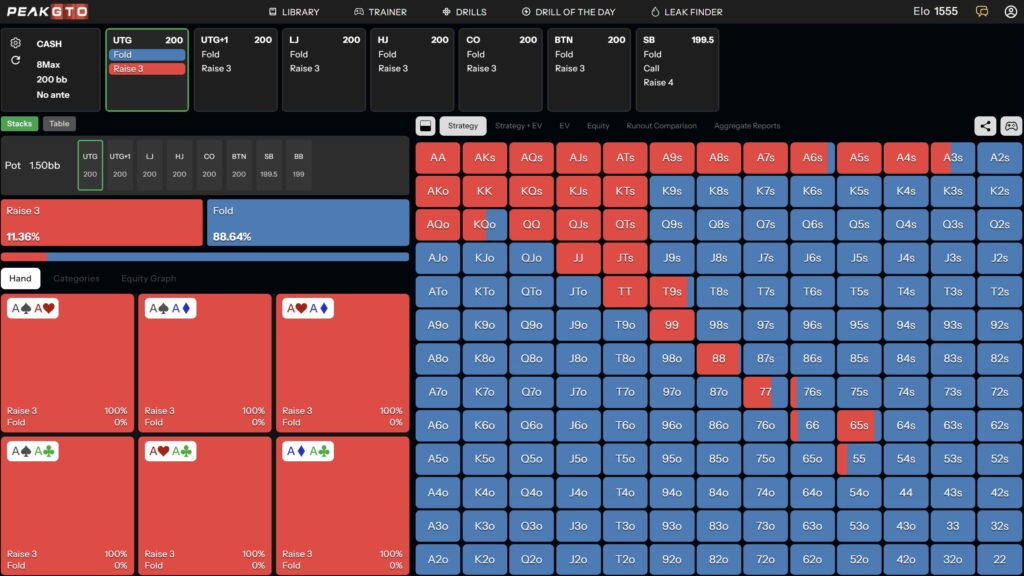
The single biggest shift in deep-stack preflop strategy is in how the value of different poker hands changes.
When more money can potentially go into the pot postflop, hand values do not stay the same. Some hands become significantly more valuable. Others become more dangerous to play.
Hands That Go Up in Value
As stacks get deeper, hands with large implied odds increase in value. These are hands that can build to very strong holdings by the river, the kind that get paid off in big pots.
Specifically:
- Suited aces (A2s through A9s): flush potential and a nut flush draw when you hit
- Suited connectors (67s, 78s, 89s, T9s): can make nut straights and strong flushes
- Small and medium pairs (22 through 99): set mining becomes very powerful deep
The reason these hands go up in value is straightforward. When you hit big with one of these hands, there is a lot of money to win. A set on a wet board against an overpair can stack your opponent for 300 big blinds. A nut flush against a weaker flush is the same story.
These hands are worth calling with preflop, and even worth raising or calling raises with, in a way that would not be justified at shallower depths.
Hands That Go Down in Value
On the other side, certain hands become less profitable when you are playing deep.
Big offsuit hands like ace-jack, ace-queen, and king-queen drop in value, particularly before the flop. When you look at GTO preflop charts comparing 100 big blinds to 200 big blinds, you will often see these hands played more cautiously as stacks increase.
The reason is the difficult postflop situation they create. Say you raise with ace-queen offsuit, get a caller, and the flop comes queen-high. You have top pair, decent kicker. It looks good.
But in a deep-stacked game, if you bet and your opponent check-raises, or if the action escalates across multiple streets, you are often not in a great spot. Top pair top kicker is a strong hand, but it does not hold up well in a 300 big blind pot against a range that is willing to go all in.
Unimproved pocket pairs face a similar problem postflop. Pocket aces on a board of nine-eight-six, deep stacked, against a check-raise is not where you want to be. What looked like a premium hand has become a bluff catcher, and that is not what you signed up for.
Position Becomes More Valuable When You’re Deep
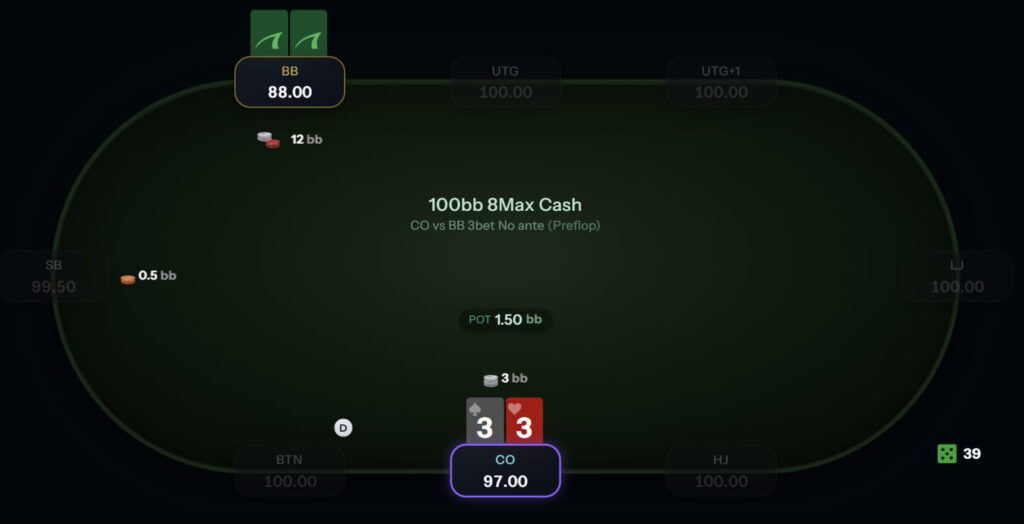
Here is a concept that does not get talked about enough in deep-stack preflop strategy: the positional advantage grows as stacks get deeper.
Think about it this way. If you are playing five big blind poker and it goes all-in preflop, position is irrelevant. There is no postflop play. But when there are 300 big blinds behind after the flop, the player acting last on every street has a huge advantage. They get to see what their opponent does before making a decision, and that information becomes increasingly valuable as the pot and decision sizes grow.
This leads to three specific adjustments:
- Raise tighter from the early position. When you open from under the gun or middle position, you will be playing the rest of the hand out of position against most of the table. Deep stacked, that is a meaningful disadvantage. Tighten your opening range from those seats.
- Raise looser from late position. From the button and cutoff, you have the position locked in. The deeper the stacks, the more your positional advantage is worth, and the more you can open profitably.
- Defend your blinds tighter. This one surprises many players. When you call a raise from the big blind, you are committing to playing out of position for the entire hand. At 100 big blinds, that disadvantage is manageable. At 300 big blinds, it is a more significant problem. As the GTO strategy confirms, blind defense ranges get tighter as stacks increase for exactly this reason.
Watch Out for False Implied Odds Hands

In deep-stacked games, especially loose ones, there is a temptation to call or raise with hands that feel like they have implied odds but actually do not.
The most dangerous category here is what I call false implied odds hands. These are hands that superficially resemble suited connectors or small pairs, but actually produce weak versions of good hands.
In my experience, these are exactly the hands players reach for when a game gets loose, and the table energy is high. Someone stacks off with a bizarre holding, the game feels wild, and suddenly 8-5 suited looks like a reasonable call. It almost never works out the way they imagine.
Take 8-5 suited. It is suited, it is connected, and in a deep game, it might feel like a reasonable call. But when 8-5 suited makes a flush, it is often not the nut flush. When it makes a straight, it is often not the nut straight. You are putting money in with hands that are drawing to second-best holdings, which is a recipe for losing big pots.
Similarly, ace-x offsuit combinations are a trap. When you call a raise with A7 offsuit in a deep game and flop top pair, you have top pair, no kicker. That hand is hard to play deep because you do not know where you stand, and the hand does not improve much.
Connectors like 9-8 offsuit are slightly different. When they make a straight, they tend to have the nuts or close to it. So those hands have a small amount of additional value deep compared to something like 8-5. But do not get carried away with any of these hands.
The rule when playing deep: make sure the hands you are putting money in with can actually win big pots, not just compete in them.
Conclusion
When you sit down in a deep-stacked game, start with the effective stack. That number tells you which version of preflop strategy applies. If you are 200 big blinds deep against the relevant players, you are not playing 100 big blind poker.
From there, the adjustments follow a clear logic: lean toward hands with genuine implied odds over offsuit big cards, tighten up from early position, and take your late-position spots more aggressively. Do not let a loose table pull you into playing junk. The right response to a splashy game is disciplined hand selection with position, not trying to out-wild the wild players.
Spend time with the GTO preflop charts at different stack depths, and you will see all of this reflected directly. Understanding why the charts change between 100 and 200 big blinds is what turns mechanical chart use into genuine strategic understanding.