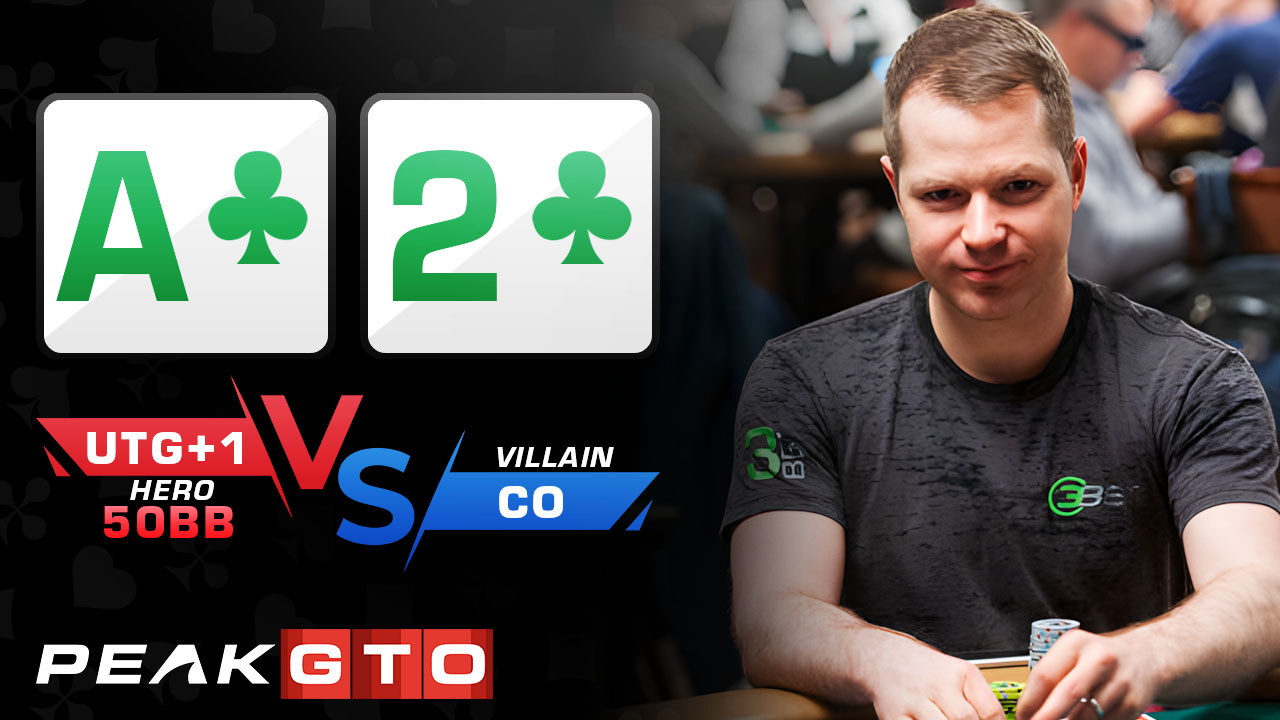
You called a flop bet from the big blind with middle pair. The turn checked through, and now you’re first to act on the river.
Most players check here and hope. If the opponent bets big, they’re stuck guessing. If the opponent checks back, they win a small pot and never get paid by the worse hands that would have called a bet.
A block bet is the small river bet that fixes both problems. This guide covers what a block bet in poker actually is, why it only makes sense out of position, which hands to use it with, when to skip it, and how to beat players who use it against you in Texas Hold’em.

What Is a Block Bet in Poker?
A block bet is a small bet made out of position, almost always on the river, usually somewhere between a quarter and a third of the pot. Some players go even smaller, down to a tenth of the pot or a single big blind.
The classic spot is the one from the intro. You call the flop, the turn goes check-check, and you lead small on the river. When you lead after your opponent checked back the previous street, that’s also a probe bet. A river block bet is simply a probe bet made with a small size.
The name comes from the old idea that you’re “blocking” your opponent from making a bigger bet. That’s part of it, but it undersells the play. The main job of a block bet is to get thin value from worse hands that would never bet themselves. It has nothing to do with blockers, the cards in your hand that make certain opponent hands less likely, even though the names sound alike.
Why Block Bets Only Work Out of Position
The key idea here is what happens when you check.
When the in-position player checks the river, the hand is over. They see a showdown for free and keep all of their equity. So betting small in position rarely makes sense. A small bet has to get called by a worse hand and not get raised, all to win a little extra. That’s why players in position should usually bet half the pot or more, or simply check.
When you’re out of position, checking doesn’t end anything. Your opponent still gets to bet, and often with a size you’d rather not face. Because checking is worth less, betting doesn’t have to clear as high a bar. Hands that would be a check behind can be a bet in front.
The Turn Check-Back Changes the River
There’s a second reason the block bet shows up in this exact spot. When the preflop raiser bets the flop and then checks back the turn, they usually bet their best hands on the turn. What’s left after a check is mostly one-pair hands, ace-high and missed draws.
Meanwhile, your flop calling range is full of pairs and draws, because you folded your junk to the flop bet. By the river, you often have the stronger range. Second pair and third pair are much better than they look here, and many of them are good enough to bet.
When to Use a Block Bet
Use a block bet when three things line up.
- Your hand is ahead of most of the hands that would call, but it can’t handle a big bet or a raise.
- Your opponent’s range is capped, usually because they checked back the turn.
- If you check, you’d face a bet you don’t want to call, or you’d let worse hands check behind for free.
A good test is to ask how your hand does when called. A river value bet only makes money if it wins more than half the time when called. Middle pair against a capped range often clears that bar against a small bet, even when it would lose against the hands that call a big one.
Board changes matter too. If the turn completes straights or two pairs that fit your range better than your opponent’s, leading small can work on the turn as well. Our hand breakdown of quarter-pot turn and river leads with ace-six shows that exact pattern.
A Block Bet at the Table
Here’s a hand I played in the WSOP Main Event. Someone raised, and I called from the big blind with seven-six offsuit. The flop came ten-six-two. I checked, he bet a medium size, and I called with middle pair.
The turn was an eight, and we both checked. The river paired the eight. I bet the minimum, he called quickly, and my pair of sixes won.
If I’d checked and he’d bet big, I’d have been in a terrible spot. If he’d checked behind, I’d have missed a bet from his worse hands. The small bet got paid by those hands, and a better hand like top pair would often just call, worried that I had trips.
Which Hands to Block Bet With and How Big
Think of your river betting range in buckets. Your strongest hands want big bets. Thin value hands, like second pair, third pair, and weak top pair against a capped range, go into the small size. Hands with some showdown value but too weak to bet, like ace-high, check.
You also need a few bluffs in your block range, but only a few. The smaller you bet, the better price your opponent gets, so the fewer bluffs you can afford. This is basic pot odds math.
| Your bet | Opponent’s price | Equity they need to call | Share of bluffs that keeps them indifferent |
|---|---|---|---|
| 1/10 pot | 11 to 1 | about 8% | about 8% |
| 1/4 pot | 5 to 1 | about 17% | about 17% |
| 1/3 pot | 4 to 1 | 20% | 20% |
| 1/2 pot | 3 to 1 | 25% | 25% |
| Full pot | 2 to 1 | 33% | 33% |
Against a quarter-pot bet, your opponent only needs to win about one time in six to call. So most of your block range should be real value, with bluffs made up of your weakest hands, ideally ones that don’t block the ace-high and king-high hands you want them to fold.
What About the Nuts?
In theory, a few very strong hands go into the small size too, so your opponent can’t raise every block bet for free. The best ones don’t block the hands your opponent would raise with. Our breakdown of betting small with the nut flush shows why.
In practice, at small and middle stakes, bet your big hands big. Most players rarely raise a small river bet, even with hands that should. If they won’t put the money in for you, put it in yourself.
When Not to Block Bet
A block bet isn’t automatic. Skip it in these spots.
- Your opponent’s range is polarized. If they bet big on the flop and the turn and you called twice, they have either a strong hand or a bluff. Betting small gets called by the strong hands and folds out the bluffs.
- Your opponent won’t call with worse. Some tight players check behind their weak pairs and fold anything that isn’t strong. Against them, check and save your money.
- Your hand is a good bluff catcher. Betting small takes away your chance to pick off a bluff. Against an opponent who loves to bet when checked to, checking can be worth more.
- The pot is multiway. With more players left to act, someone is more likely to have a strong hand. Bet smaller ranges, weighted heavily toward value.
How to Play Against a Block Bet
When someone bets small into you, the price does most of the work. Against a quarter-pot bet you need to win only about 17% of the time, so most pairs and many ace-high hands should call.
The bigger leak is raising too little. In theory, a block bet should get raised fairly often, by hands that beat the bettor’s thin value range and by some bluffs. In practice, most players just call with the hands that should raise.
So when you face a small river bet, ask what it usually is. Against most players, it’s middle pair or weak top pair. Raise your hands that beat that range, like top pair with a good kicker or two pair, which sit well above it in the hand rankings. If you add bluff raises, choose hands that don’t block the weak pairs and ace-high hands you want them to fold.
Against a player who only bets small with weak hands and never bluffs, you can call with anything that beats a weak pair and raise thinner for value.
Conclusion
The most useful takeaway from block bet poker strategy is simple. After the turn checks through, bet your thin value hands small instead of checking them, because your opponent’s range is weaker than it looks.
Use the small size for hands that are usually good but can’t handle a raise, keep only a few bluffs in it, and bet your strong hands bigger against players who don’t raise.
Once this clicks, you’ll start seeing river spots as a choice of sizes rather than a choice between betting and checking. That’s where a lot of small edges come from.