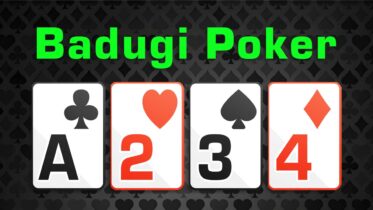

Badugi poker is a four-card draw game where the goal is to build the lowest possible hand using four cards of different suits and ranks. Unlike Texas Hold’em or Omaha, there are no community cards.
Players are dealt four hole cards and have three drawing rounds to replace unwanted cards, aiming for four cards of four different suits with no pairs.
I have played Badugi in high-stakes mixed games at the World Series of Poker, and what makes this game fascinating is how much position and drawing decisions matter. Small edges compound quickly across multiple betting streets.
Whether you are completely new to Badugi or brushing up before a mixed game, this guide covers everything from the basic rules to strategic plays like snowing, starting hand selection, and reading opponents’ draws.
- What Is Badugi Poker?
- Step #1 – The Dealer, Blinds, and Hole Cards
- Step #2 – First Draw and Second Betting Round in Badugi Poker
- Step #3 – Second Draw and Third Betting Round in Badugi Poker
- Step #4 – Third Draws and Fourth Betting Round in Badugi Poker
- Step #5 – Showdown in Badugi Poker
- Player Actions in Badugi Poker
- Poker Hand Rankings in Badugi
- Basic Badugi Strategy
- Starting Hand Selection in Badugi
- How to Snow in Badugi (Standing Pat as a Bluff)
- Where Can You Play Badugi Poker?
- Badugi Poker FAQ
What Is Badugi Poker?
If you are used to playing classic poker games like Texas Hold’em or Pot Limit Omaha, you will be somewhat unfamiliar with the rules and betting patterns of Badugi.
On the other hand, if you have played draw poker games like Five Card Draw or 2-7 Triple Draw, you will have a better understanding of Badugi right out of the gate.
In either case, I am going to walk you through every Badugi rule you need from scratch. By the end, you will have enough to sit down in any Badugi game with confidence.
Unlike most poker games, whose ultimate goal is to create the best possible five-card poker hand, Badugi is a four-card game, which means your final hand will be made up of exactly four cards.

Badugi is also a draw game, which means there are no community cards in play. Instead, each player is dealt exactly four cards, and they get three opportunities to draw and try to improve their hand.
The objective of the game is to make the lowest possible combination of cards of different suits and ranks without any duplicates.
The best possible hand in Badugi is 432A of different suits. Any hand made up of four cards of different suits and without any pairs is called a badugi hand, while cards or one suited card only come into play if no one has a made Badugi at showdown.
Step #1 – The Dealer, Blinds, and Hole Cards
Each hand of Badugi poker starts with the dealer button assigned to one player. For the first hand of the day, the dealer is assigned randomly. From there, it moves one spot to the left each hand.
The two players to the left of the dealer must post the small blind and big blind, which is something No Limit Hold’em players should be well acquainted with. In fact, all of the poker positions that No Limit Hold’em or Pot Limit Omaha are accustomed to apply in Badugi as well.
Once these two forced bets are in place to drive the action, each player is dealt four hole cards, face down. Neither these cards nor any other cards are exposed at any point during a hand of Badugi.
This makes Badugi quite different from games with community cards or Stud games, where quite a few cards are exposed and made visible to every player at the table.
Once each player at the table has received their four cards, the first betting round can commence. Starting from the player to the left of the big blind, each player gets to act on their hand.
Badugi is typically played with a limit betting structure, which means you can only make bets in fixed increments rather than bet and raise to your desired amount.
Step #2 – First Draw and Second Betting Round in Badugi Poker
Once the first betting round is completed, each hand of Badugi proceeds to the first of the three draws, where players get a chance to improve their hands.
The first draw flows in a slightly different order than the first betting round, as the player in the small blind gets the first action if they still have cards.

Each active player at the table gets to discard between one and four cards and receive new cards as replacements for those cards.
The goal of each draw is to replace your weakest cards with ones that improve your hand toward a four-card badugi. For instance, if you hold three low cards of three different suits and one card that duplicates a suit you already have, toss the duplicate and look for the missing suit.
In my experience, the first draw is where many new players make their costliest mistake. They keep a high card hoping it will not matter if the rest of their hand is strong. In Badugi, card value matters even inside a completed four-card hand. A 2-3-4-5 badugi beats a 2-3-4-6 badugi. Keeping that six when you could draw for a five costs you pots at showdown.
After the first draw is completed, players get a chance to make bets once again, as the second betting round starts with the small blind. Once again, every player can make bets in fixed increments.
A maximum of four bets are allowed per street, which means one bet and three raises can be made before the betting street is capped out, and no further raising can be made.
Step #3 – Second Draw and Third Betting Round in Badugi Poker
Following the successful completion of the first draw and the ensuing betting round, players get another chance to draw before getting another chance to bet.
The second draw is identical to the first draw, with all remaining players getting a chance to discard between one and four cards and get new cards instead.
Once the second draw is completed, another betting round starts, and players get a chance to make up to four bets on this penultimate betting street.
Step #4 – Third Draws and Fourth Betting Round in Badugi Poker
The third draw is also the final draw in the hand of Badugi and a final chance for players to improve their hands.
The third Badugi draw is the same as the first two, with each player allowed to exchange up to four cards of their choosing.
By the third draw, you will rarely see anyone pulling more than one card. Hands that still need two or more cards to reach a badugi have very low equity at this stage and should have been folded on an earlier street.
I have reviewed hundreds of hands from students learning draw games, and the most common leak I see at this stage is calling into the final draw with a two-card hand because the pot has grown. The pot odds rarely justify it when you are still drawing to two cards.
Regardless of how many cards are drawn, players are given one last betting opportunity after the third draw, with the betting round following the same pattern as the previous one.
Once all betting is completed, the hand proceeds to a showdown if more than one player is still active.
Step #5 – Showdown in Badugi Poker
When all drawing and betting is completed, each Badugi hand proceeds to a showdown. At showdown, the dealer will compare hands and look for a winner if more than one player is active in the hand.

The showdown follows a typical poker flow, where the player who made the last aggressive action is expected to show their cards first.
If no such action was taken during the last betting round, players should turn their cards over, starting with the small blind and ending with the dealer button.
However, poker etiquette dictates that you should turn your cards over if you believe you have the best hand based on the action flow, regardless of your position.
Once the cards are on their backs, the dealer will compare them and award the pot to the best hand on the table.
If two hands happen to be identical, which is not often the case in Badugi, the pot is split between the two players, regardless of which suits each player has in their hand.
Player Actions in Badugi Poker
Much like many of the easiest poker games to learn, Badugi is relatively simple in terms of basic actions and game flow, and it follows the same betting patterns as more popular poker games like No Limit and Limit Texas Hold’em.
If you have played these games or Five Card Draw before, you will probably know what options you have already, but it’s still worth refreshing your memory.
The one thing that’s different in Badugi is that all betting follows a fixed-limit structure. You can only bet in predetermined increments rather than choosing any size you want. I find this is the adjustment that takes the longest for players coming from No Limit Hold’em.
The urge to shove all-in to represent a big hand simply does not exist in fixed-limit Badugi. Instead, you apply pressure through drawing decisions and well-timed aggression within the betting limits.
In either case, the potential actions you can take in Badugi are:
- Fold: If you don’t like your cards, you can discard them and move on to the next hand without investing further chips.
- Call: You can match the value of the current bet or raise without making further raises. You will proceed to the next round unless another player makes a raise behind you.
- Raise: If there is an active bet in front, you will have the option to take the betting to the next level and put in another bet.
- Bet: If there is no active bet in front, you will have a chance to make that first bet and force your opponents to either call or raise your bet or fold their cards.
- Check: Whenever there is no active bet in front, you will also have the option to simply pass the action to the next player without making any bet.
Poker Hand Rankings in Badugi
The hand rankings in Badugi are unlike anything in standard poker. There are no straights, flushes, or full houses. The entire hand evaluation comes down to two questions: how many cards count (no pairs, no duplicate suits), and how low are those cards?
I tell students to think of it this way: in Badugi, everything that makes a hand strong in regular poker makes it weak here. Pairs are bad. Flush cards are bad. You want diversity of suit and the lowest possible ranks.
The hierarchy of hand types, from strongest to weakest, is:
- Four-card badugi: Four cards, four different suits, no pairs. This is a completed badugi and beats any hand with fewer countable cards.
- Three-card hand: One card in your hand shares a suit or rank with another. You effectively play three cards.
- Two-card hand: Two cards are dead due to suit or rank duplicates. You play two cards.
- One-card hand: Three cards are dead. You play one.
Any four-card badugi beats any three-card hand regardless of card values. So King-Queen-Jack-Ten of four different suits beats 2-3-4 of three different suits. That distinction trips up newcomers more than anything else I see.
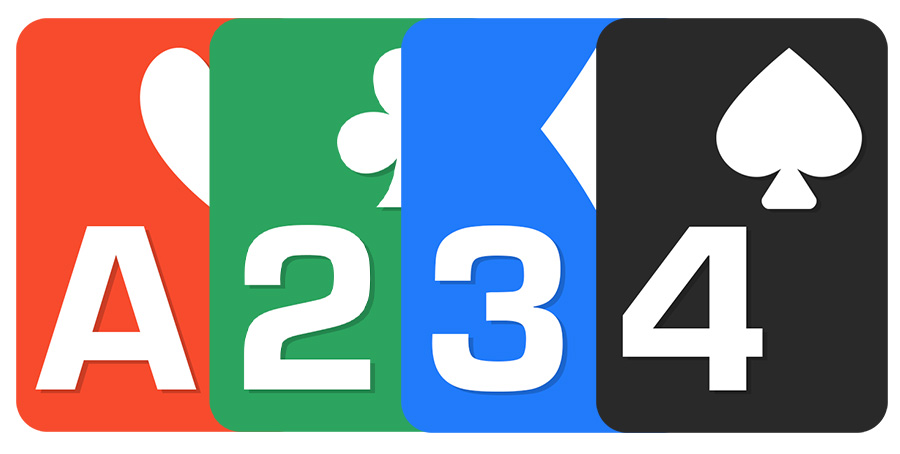
Here are a few examples of hands you might start with in Badugi:
- Badugi: 4s3d2cAh
- Three Card Hand: 6d4c2h2s
- Two Card Hand: 5h5s3h3s
- One Card Hand: 9s6s3s2s
Having a completed Badugi, especially one with low cards in it, is the ideal start. You will want to reach a showdown with a reasonably low Badugi for a chance to win the hand against another Badugi.
In all other situations, you will usually want to draw at least one card, with three card hands very common. In these situations, you want to discard the suited or paired card and look to improve into a Badugi.
Two-card and one-card hands are typically the worst possible hands to start with in Badugi, but they can sometimes be used as bluffing hands if the cards in them are particularly low.
Basic Badugi Strategy
Position is the foundation of Badugi strategy, and its importance is amplified compared to community card games because you gain information from two different sources: betting patterns and drawing patterns.
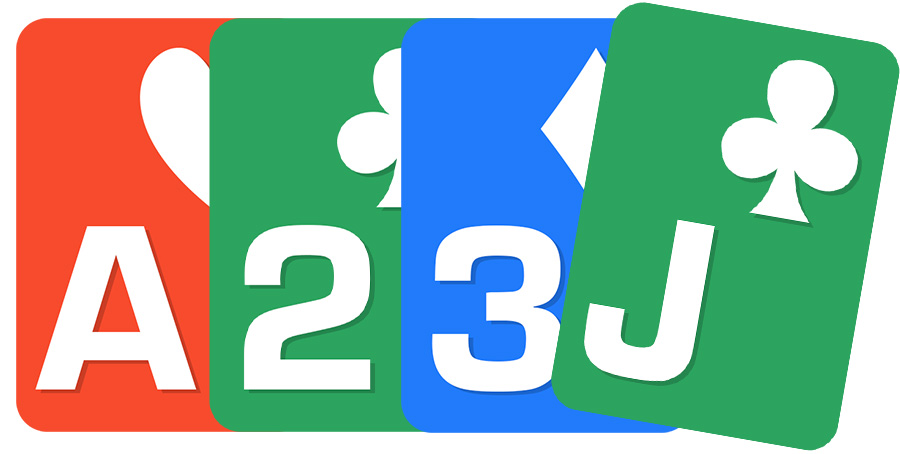
When you are in position, you see how many cards each opponent draws before you act. An opponent drawing two cards tells a completely different story than one standing pat. I have won significant pots in high-stakes mixed games purely by standing pat with a mediocre hand after watching two opponents draw twice, representing a strong badugi and taking down the pot with a continuation bet. That play simply does not exist if you are first to act.
Playing out of position, you are giving up that read. You have to act in both the drawing round and the betting round before your opponents, which means you are playing with incomplete information at every decision point.
The practical fix is straightforward: tighten your starting hand requirements significantly when you are out of position. Out of position, I only continue with hands that are already three-card draws or better, and I am much more cautious about multi-street aggression.
Reading opponents through draws: Track how many cards each opponent draws on each street. A player who draws one card twice is close to a badugi and is dangerous. A player who draws two or three cards on the second draw has a weak hand and is giving you a chance to apply pressure. This read drives almost every positional play in Badugi.
Starting Hand Selection in Badugi
Before the first draw, your starting hand strength in Badugi falls into four clear categories based on how many cards are already working for you.
- Four-card badugi: Four cards of different suits and ranks. This is your strongest starting position. Even a high four-card badugi like King-Queen-Jack-Ten rainbow is valuable because you are already pat. Premium four-card badugis with a hand containing an Ace, Two, Three, or Four should be played aggressively from any position. I raise these hands immediately before the first draw.
- Three-card badugi draw: One card is dead (paired or same suit as another). You are drawing to a four-card badugi. Three-card draws are playable from most positions, though I am significantly more selective out of position. A strong three-card draw containing an Ace plus two other low cards is worth playing for a raise; a weak three-card draw with all high cards warrants more caution.
- Two-card hand: Two cards are dead. You are drawing two cards to reach a badugi. These hands need strong pot odds to continue and are often best folded before the first draw, especially from early position or out of position.
- One-card hand: Three cards are dead. Fold almost always before the first draw. Continuing with a one-card hand is a significant chip leak I see repeatedly in students just learning draw games.
The underlying principle I always come back to when teaching this: in Badugi, your starting hand strength comes from how many live cards you hold, not from card values alone. A hand like Ah-2s-3c-3d looks like a strong Ace-low hand, but the paired Threes mean you are playing a three-card draw, not the four-card badugi your brain wants to see. Identifying which of your cards are dead before you act is the most important skill to build early.
How to Snow in Badugi (Standing Pat as a Bluff)
Snowing is one of the most effective strategic plays in Badugi and one of the most commonly misused. Snowing means standing pat with an incomplete or weak hand, choosing not to draw, in order to represent a completed badugi and bluff opponents into folding.
When you snow, you are sending a clear signal: you have a strong hand and do not need to improve. Against opponents who are still drawing, that message can force folds even when your actual hand is mediocre.
When snowing works
The right time to snow is late in the hand, typically at the second or third draw, when you are in position and have seen opponents draw multiple cards. If two players in front of you have drawn two cards each through two consecutive drawing rounds, their hands are still incomplete. Standing pat after they both draw creates significant pressure and often wins the pot uncontested when they check to you on the final betting round.
When snowing fails
Snowing into a player who has been standing pat themselves or drawing only one card for multiple rounds is a mistake. That player likely has a made four-card badugi or is very close. I have made this error in high-stakes mixed games, and it is always costly. Before you snow, ask yourself what your opponent’s drawing pattern implies. If they are clearly strong, do not snow.
The fixed-limit consideration
In fixed-limit Badugi, snowing is more valuable than in pot-limit formats because the cost to call is predictable and relatively small per street. A player holding a three-card hand has to make multiple calls to stay in against a pat player. That ongoing cost adds up, and many players fold rather than pay it off. I have found that snowing at the right moment in fixed-limit Badugi is one of the highest-EV plays available, especially when combined with position.
Where Can You Play Badugi Poker?
Finding a regular Badugi game is the most common complaint I hear from players who want to improve at the game. It is simply not spread as a standalone cash game or tournament format at most venues. Instead, Badugi shows up as part of a mixed game rotation alongside games like 2-7 Triple Draw, Razz, and Stud.
If you want to become a good Badugi player playing live poker, you will probably be best off looking for mixed games venues that include Badugi (or its variants like Baducey and Badacey) or mixed games tournaments that include Badugi in the rotation.
In the meantime, there are several online poker sites that offer Badugi tournaments and Badugi cash game tables where you can hone your skills for significantly lower stakes and master the game without having to make a big investment.
Badugi Poker FAQ
How do you play Badugi poker?
Badugi is a four-card lowball draw poker game. Each player is dealt four cards and has three draws to improve their hand. Hands are ranked according to lowball rankings, where low and unpaired cards of different suits beat other cards, making 432A of different suits the best possible hand.
What is the best hand in Badugi?
The best possible hand you can have in Badugi is 432A of four different suits. Any hand with unpaired cards of different suits is called a Badugi. If two of the cards in your hand are suited, your hand will lose to any Badugi.
Does a Badugi beat any three-card hand?
Yes! Any four cards of different suits and without pairs will beat any hand that has a pair or two suited cards in it. For example KsQdJsTd is better than 4s3c2h2d. The first hand is a Badugi, while the second hand has a pair in it, making it a three card hand.
Do pairs count in Badugi?
No! If you pair up one of your cards in Badugi, you should be looking for draw again and get rid of that card. In Badugi, you want your hand to contain no pairs and no suited cards. If you have a pair, you will lose to any Badugi.
Do flushes count in Badugi?
No! Suited cards are a bad thing in Badugi and any hand with two suited cards will lose to any Badugi. If you have all four cards of the same suit, your hand will lose to virtually anything, so make sure not to go to showdown with a “flush.”
Is Ace high or low in Badugi?
An Ace is considered a low card in Badugi. If you get to a showdown with a hand containing an Ace, this Ace will be viewed by the dealer as the lowest card in the hand, while any King would be considered as the highest.
What is Baducey and Badacey?
Baducey and Badacey are two alternate versions of Badugi in which one half of the pot is awarded to the best Badugi hand and the other half to the best 2-7 Triple Draw or A-5 Triple Draw hand, respectively.