
GTO poker and exploitative poker are the two dominant strategic frameworks in modern No-Limit Hold’em.
GTO play aims to be unexploitable by maintaining a mathematically balanced strategy, while exploitative play deliberately deviates from balance to attack specific weaknesses in your opponents. Neither is universally superior.
I have used both throughout my career, and the right choice in any given session depends on who you are sitting with and how much information you have on them.
Comparing GTO and Exploitive Strategies
GTO Poker Definition and Principles
Game Theory Optimal poker represents a mathematically perfect approach to the game. It ensures that your strategy is unexploitable, meaning that no opponent can consistently counter it for a profit. GTO poker focuses on balance, constructing ranges that mix strong hands, medium-strength hands, and bluffs in a way that prevents opponents from finding patterns in your play.
For example, if you only bet with strong hands, skilled opponents will fold their weaker holdings and reduce your profits. Conversely, if you bluff too often, they’ll call you down more frequently, exploiting your over-aggression. A GTO approach eliminates these vulnerabilities by ensuring your actions remain balanced and unpredictable.
What I find most valuable about studying GTO is not that it makes me unexploitable, but that it gives me a baseline I can consciously deviate from. When I know what a balanced strategy looks like, any adjustment I make is deliberate rather than reactive.
PokerCoaching’s own solver, PeakGTO, is built for exactly this kind of study: you can run any spot to see the GTO frequencies, then decide where your specific opponents create profitable deviation opportunities.
When to Use GTO
GTO is most effective in the following scenarios:

- Against Unknown or Balanced Opponents:
When you have no reliable read on an opponent, adhering to GTO ensures you’re not easily exploited. It acts as a safety net, allowing you to play profitably even in the absence of specific information. - In Competitive Environments:
At higher stakes or in games with skilled opponents, deviations from GTO can quickly backfire. Against players who adapt well and exploit leaks efficiently, sticking to a GTO strategy minimizes risk and ensures long-term profitability.
From my experience playing high-stakes cash games and major tournaments, GTO is the correct default whenever I lack reliable information about an opponent. In practice, this means the first several orbits at any new table.
The moment I observe a consistent pattern, I begin evaluating whether to deviate. But until I have real evidence of a specific exploitable tendency, the GTO baseline protects me from being the one who gets exploited first.
Risks of Playing Pure GTO
GTO is a powerful foundation, but playing a purely GTO strategy has real limitations that I have seen hurt players at every stake level.
The first limitation is that GTO is designed to be unexploitable, not to maximize profit. Against opponents who are making significant mistakes, a balanced GTO strategy deliberately leaves money on the table.
If your opponent folds too often to aggression, a GTO strategy will bluff at the correct frequency and miss the additional folds your opponent would give you. Pure GTO is a ceiling-free defense mechanism, not an offense strategy.
The second limitation is practical: true GTO play is computationally unreachable for human players. What most players call “playing GTO” is an approximation. If your approximation has systematic errors, and all human approximations do, you are leaving yourself open to exploitation by players who have identified your deviations.
This is why studying GTO with a solver like PeakGTO (peakgto.com) is valuable: it reveals where your approximation differs most from equilibrium, which is where your largest leaks live.
Exploitative Poker Definition and Principles
Exploitative poker is the art of adjusting your strategy to capitalize on the mistakes and tendencies of your opponents. Unlike GTO, which focuses on balance, exploitative play deliberately deviates from optimal lines to maximize short-term profit against specific players.
For example, if you notice an opponent who is just learning how to play poker and calls too often against continuation bets (c-bets) regardless of the size, you can exploit this by increasing your c-bet size when you have a strong hand. Similarly, against an opponent who overcalls with weak hands, you can value bet more aggressively with a wider range of hands.
Exploitative play is where I make most of my money in live poker. When I sit down at a table with a player who is visibly scared of pressure, I am thinking about every opportunity to apply that pressure with a wider range than GTO would call for.
The key discipline is to maintain this as a targeted adjustment rather than a default mindset. If you are always exploiting without a GTO foundation, you become the exploitable one the moment you face a player who has you correctly read.
Advantages of Exploitative Play
- Higher Short-Term Profitability: Exploitative play allows you to capitalize on opponents’ mistakes, generating more immediate profit compared to a strictly balanced GTO approach.
- Tailored Strategies: By observing your opponents and adjusting accordingly, you can customize your play to suit the specific dynamics of your table, making you a more effective player overall.
I have had cash game sessions where I made three to four times my expected hourly rate purely from exploitative adjustments against a single player at the table. Those opportunities do not last, as players either leave or adjust. But while they exist, exploitative play extracts significantly more than balanced play would. The ability to recognize and act on these windows quickly is one of the most underrated skills in live poker.
Risks of Exploitative Play
Exploitative play has higher profit potential than GTO play against weak opponents, but it carries risks that many players underestimate.
The most significant risk is acting on bad information. If you believe an opponent is bluffing too often and adjust by calling more widely, but your read is wrong, you will lose significantly more than you would have with a balanced strategy. I have seen this mistake destroy bankrolls: a player identifies what they think is an exploit, runs it against the wrong opponent, and attributes the losses to variance rather than a bad adjustment.
The second risk is creating counter-exploits. When you deviate from a balanced strategy, you are creating an imbalance in your own range that a skilled player can identify and attack.
In live games against recreational players, this risk is low because most opponents are not observant enough to notice your adjustments. Against a strong regular in a high-stakes game, exploitative deviations are dangerous unless you are genuinely more observant than they are.
Use exploitative play as a targeted tool, not a default mode. The rule I follow: I need a sample size of at least three to five consistent observations before I will make a significant exploitative adjustment against any opponent.
Identifying Opportunities for Exploitative Play
Recognizing Opponent Weaknesses
Exploitation starts with keen observation. Here are some signs to look for:
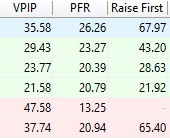
- Betting Patterns: Are they c-betting too frequently or not enough? Are they overly aggressive or excessively passive on later streets?
- Tendencies: Do they fold too often to aggression or call down too light? Do they play predictably in certain spots, such as always checking the turn when weak?
- Overreliance on Specific Lines: Watch for opponents who habitually take certain actions, like raising only with premium hands or bluffing in specific scenarios.
By identifying these patterns, you can tailor your strategy to exploit their specific weaknesses.
What I tell students is to treat the first orbit at any table as a free information-gathering session. I am not trying to make fancy plays. I am watching how everyone handles their first decision of each street and filing it away.
By the time I have played one orbit, I typically have enough data to identify one or two players with tendencies I can exploit. You do not need a complete profile. One consistent pattern is enough to justify an adjustment.
Table Dynamics and Player Profiles
The overall table dynamic can also influence your poker strategy. For instance:
- Tight Tables: At a table where players are overly cautious, you can open up your range, steal blinds more frequently, and apply pressure with marginal hands.
- Aggressive Tables: Against loose and aggressive players, tightening your range and trapping with strong hands can be more effective.
- Player Profiles: Tailor your approach to individual opponents. Against a loose-passive player, exploit their tendency to fold under pressure by betting more aggressively. Against an overly aggressive player, capitalize on their overbluffing by calling down lighter.
Specific Scenarios to Play Exploitatively
Exploitative play isn’t a one-size-fits-all approach. It thrives in specific situations where opponent tendencies are apparent.
In my hand review sessions with students, the most common missed opportunity is passive player exploitation. Players at every stake routinely fail to extract enough value from opponents who call too widely and never raise without the nuts.
The adjustments below are not aggressive deviations from sound play. They are straightforward applications of information that is sitting right in front of you.
Against Passive Players

Passive players are often reluctant to bet or raise unless they hold strong hands. Exploit them by:
- 3-Bet Larger for Value: Use larger sizes when you 3-bet preflop with your strongest hands.
- Value Betting Thin: Extract maximum value from their tendency to call with weaker hands.
- Applying Pressure: Use frequent c-bets and double-barrel bluffs to force them to fold marginal hands.
Against Aggressive Players
Overly aggressive players can be a goldmine for exploitation. Take advantage by:
- Trapping: Slow-play strong hands to induce bluffs and extract additional value.
- Calling Down Light: Don’t overfold against their aggression. Look for opportunities bluff catching opportunities.
Against Predictable Players
Predictable players are easy to read and exploit. For example:
- Exploit Overbluffing: If a player bluffs too often on scare cards, call with a wider range.
- Exploit Underbluffing: If they rarely bluff, you can comfortably fold marginal hands to their aggression.
Balancing GTO and Exploitative Strategies
Adaptive Play
The best poker players are those who can fluidly shift between GTO and exploitative strategies. Start by defaulting to a GTO approach, which keeps you balanced and unexploitable. As you gather information about your opponents, adapt your strategy to exploit their weaknesses.
My own approach is: start every session playing close to GTO, identify one exploitable tendency per opponent, make the targeted adjustment, and monitor whether it continues to work. The moment an opponent adapts, I return toward the GTO baseline.
This is not complicated in principle, but it requires honest self-assessment. Most players overestimate how many exploits they have found and underestimate how often their “reads” are just variance. Be conservative with your exploitative adjustments and generous with your returns to GTO.
Practical Examples
Consider the following hand:
- Situation: You’re playing a 6-max online cash game, and you notice the player on the button folds to 3-bets 80% of the time.
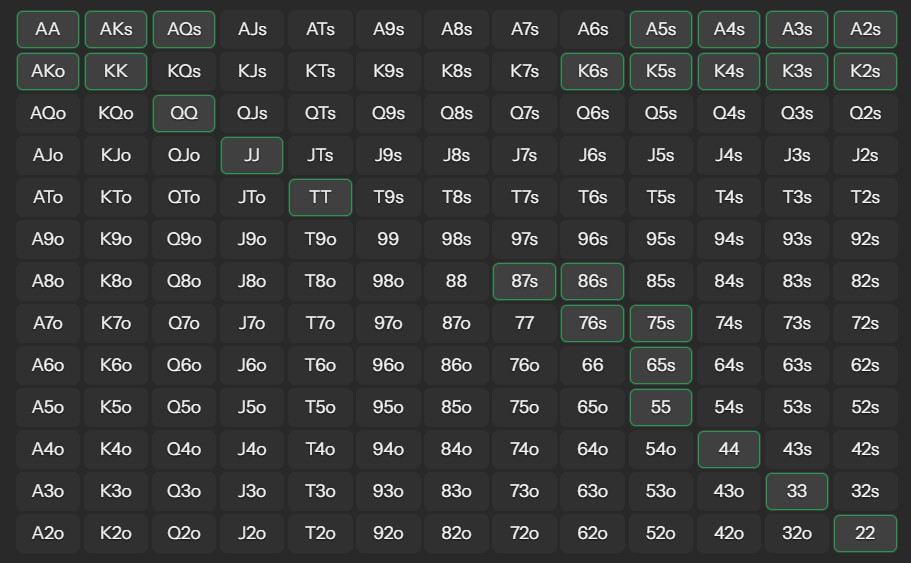
- GTO Play: A GTO 3-betting range from the small blind might include premium hands like AA, KK, and balanced bluffs like suited connectors.
- Exploitative Adjustment: Against this specific player, you can widen your 3-betting range to include more bluffs, such as Ax and Kx, small pairs, and suited connectors, knowing they’re likely to fold.
This ability to adjust based on opponent tendencies is what separates good players from great ones. The important discipline is to log your adjustments mentally and evaluate them over multiple hands, not single pots.
A player who folded to three 3-bets in a row might be running cold, not exploitable. A player who has folded every time you have 3-bet them over 90 minutes of play is giving you a genuine exploit.
Conclusion
The debate between GTO and exploitative poker is not about which is superior but about understanding when to apply each approach. GTO provides a robust foundation, ensuring you’re unexploitable in competitive environments. Exploitative play, on the other hand, allows you to capitalize on the mistakes and tendencies of specific opponents for higher short-term profits.
Ultimately, the most successful players master the art of balance. By starting with a GTO framework and making exploitative adjustments as opportunities arise, you’ll maximize your edge and become a formidable force at the poker table.
Remember, poker is a dynamic game that rewards adaptability. Keep studying, observing, and refining your strategy to stay ahead of the competition. Whether you’re playing for fun or grinding for profit, the key to success lies in your ability to think critically and adjust on the fly.