A nit in poker is a player who voluntarily enters only 10 to 12 percent of hands, preferring premium holdings and folding to almost any pressure in marginal situations. I have reviewed hundreds of hand histories against nits during my coaching sessions, and the pattern is always the same: players either give the nit too much credit and leave free money on the table, or they attack indiscriminately and run straight into the narrow but powerful range a nit always shows up with.
This guide covers the six adjustments that turn a nit’s predictability into your most reliable profit source at the table.
- What Is a Poker Nit?
- Tip#1 – Beware of the Nit’s Open
- Tip #2 – Steal the Nit’s Blinds Relentlessly
- Tip #3 – Re-stealing from the Nit
- Tip #4 – Using the Board versus the Nit
- Tip #5 – Using Big Bets
- Tip #6 – Check-Raise the River When They Stop-and-Go
- Formulating Your Perfect Formula Against Nits
- Poker Nit FAQ
What Is a Poker Nit?
The term “nit” was coined long ago by live poker players to describe someone playing the game in a particularly snug position.
Poker nits play very tight before the flop, often only entering pots with the top 10% of the best starting hands and even tighter than that in early positions at the table.
A true nit will easily find a fold UTG with pocket nines, will not call a raise with KQ, and will never 3-bet AQ, while usually only flat-calling a hand like TT, JJ, or AK as well.
With such a tight range, nits really aren’t a problem in more than 80% of all the hands since all they do is fold their cards without seeing a flop. However, they do still enter some pots, and when they do they also play in a very particular way that can be easily exploited.
A poker nit plays poker “in a vacuum” and often does not care who he is up against. He is willing to fold big hands like AA when the board gets scary and will easily give up on bluffing, even with a strong draw.
So, now that you know what a nit in poker is, let’s take a look at some potential strategy adjustments that you can make to start printing money when facing nits.
If you use a HUD in your online sessions, identifying a nit is straightforward: look for a VPIP (Voluntarily Put In Pot) below 15 percent in a six-max game, or below 12 percent in a full ring game.
A player with those numbers is playing so few hands that their range becomes transparent within a few orbits of observation. In my coaching sessions, I find that many students underestimate how exploitable this transparency actually is, because the nit appears harmless until you realize how much dead money they are surrendering in spots they should be defending.

Some poker pros have gained a reputation for being on the “nitty-er” side.
Tip#1 – Beware of the Nit’s Open
The most common mistake I see students make against nits is 3-betting an early position raise with a hand like AJs or KQs, getting 4-bet all-in, and losing three times the value they needed to risk. Early position nit opens represent an extremely strong range, and that is the one place where your instinct to attack needs to be overridden by your instinct to play pot control.
A nit’s opening range is very tight, and it becomes even tighter in early positions (EP), to the point where some nits only open AQ+ and JJ+ from early seats.
Against a range like this, you need to be very careful not to put more money into the pot than you have to, which means 3-betting a nit’s EP raise is usually a recipe for disaster.
Instead, what you can do is call such a raise with quite a few speculative hands, banking on both hitting big hands to get paid on some boards and being able to bluff the nit out on others.
However, remember that a hand like 66 or 87s has very little equity going up against pocket aces or KK, so even if you will win some pots by calling a nit’s EP raise, simply staying out of the way in such situations is often the best play.
If you are given a chance to see the flop somewhat cheap, and you have a reasonable hand, you can peel that flop but don’t bank too much on getting AA to fold on later streets.
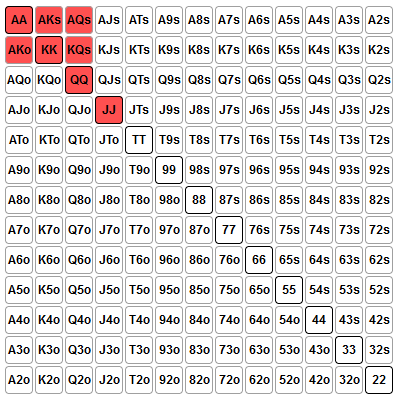
Do not take a nit’s preflop raising range lightly, it is usually quite strong.
Tip #2 – Steal the Nit’s Blinds Relentlessly
In my experience, the most reliable free money at any poker table with a nit is their big blind. I have reviewed hands where students sitting next to a nit were raising from the button with a standard range and collecting the blind with minimal resistance for entire sessions without adjustment.
My recommendation is straightforward: when a nit is in the big blind, raise with the top 70 to 80 percent of your normal opening range and expect to take the pot down uncontested more often than not.
Most players know to defend their blinds wide, but poker nits are well behind the times, and this is not an adjustment they have made.
For that reason, a nit’s big blind is more or less free money, as most nits only defend the big blind with less than 25% of all hands, and their small blind even less.
This means that anytime a nit is in the big blind, especially in tournaments, you get to raise with a much wider range than you normally do and make a direct profit from the nit folding too much.
Even when the nit does decide to defend his big blind, he will not be as sticky after the flop as most other players. A nit will routinely chuck the second pair into the muck postflop on many boards, and a simple c-bet will be enough to take it down most of the time.
Stealing the nit’s blinds is the best way to keep making money from having him at the table, as his general involvement, on the other hand, is very limited.
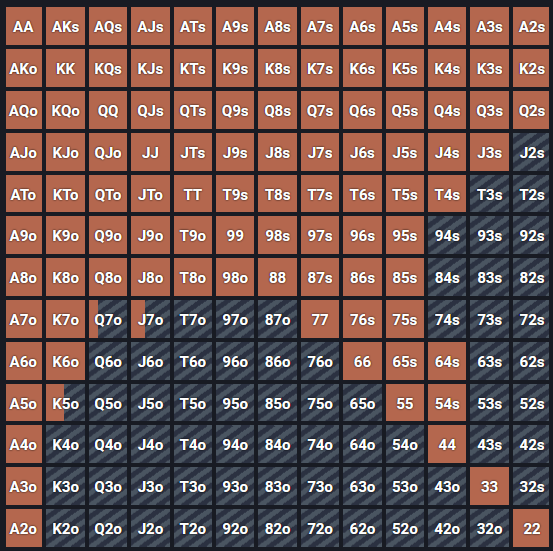
While your button preflop raising range should be wide,
it can be even wider when facing nits in the blinds.
Tip #3 – Re-stealing from the Nit
What I find most useful when studying 3-bet spots against nits is that their response to re-raises is almost entirely predictable. Their Fold to 3-Bet percentage in late position is frequently 80 percent or higher, meaning you are not guessing at their range: you are exploiting a documented tendency that compounds into significant profit over volume. When a nit opens the button, I will 3-bet with a wide range of suited hands and expect a fold most of the time. As the nit’s position shifts, he will open a wider range of poker hands.
On the cutoff or button, a nit will open suited Broadways, suited connectors, and middling pairs for a standard raise. However, the one thing a nit is not equipped to properly deal with is 3-bets, which is why he is the perfect candidate to re-steal from.
When a nit opens the button, you can easily get away with re-raising him with a wide range of suited hands, expecting quite a few folds right away.
While most players will defend against 3-bets quite wide in position, a nit will only play the face value of his cards and often fold hands like 98s to a 3-bet, giving you instant profit.
When a nit does call your re-raise, a simple c-bet will often take it on the flop. You may even win against a hand like JJ or QQ when an A or K hits the flop and the nit decides to give up.
Playing against nits is very different than playing against other poker players like calling stations, so make sure to always keep in mind the type of player you are going up against.

Apply pressure on nits by 3-betting their late position raises.
Tip #4 – Using the Board versus the Nit
There is nothing that puts a nit in a more uncomfortable spot than a board that completely bypasses their range, and I use this in two specific ways. First, I look for boards where a nit’s opening range has minimal interaction and apply pressure immediately.
Second, I use the float-and-bet strategy: when a nit c-bets the flop but checks the turn, I bet the turn regardless of my own hand strength. Nits c-bet the flop at a high rate but abandon the turn far more often than balanced players, and that gap between their flop and turn c-bet frequencies is where significant EV lives.
There is nothing scarier to a nit than a board made up of a bunch of low cards in suits he does not have, and when playing them live, you will be able to see their discomfort in real-time.
When playing pots against nits, you should be very aware of how linear their range tends to be and what types of boards don’t interact with it at all.
For example, a nit raising in the early or middle position will have very little, if any interaction with a board like 6♥5♥2♦ or 9♣7♣6♥, making both boards ideal to take the pot away from him.
While the unit will always have some nut flush draw combos on boards like this, these draws and overpairs are the only hands you need to worry about.
What’s even more, further scare cards may help you win the pot even against an overpair, while the flush draws will usually give up when they miss.
Floating c-bets on a board like this and going for a bluff on later streets is the recipe for success against the nit, who will be very uncomfortable calling big bets even with AA once further cards connect with the low board.
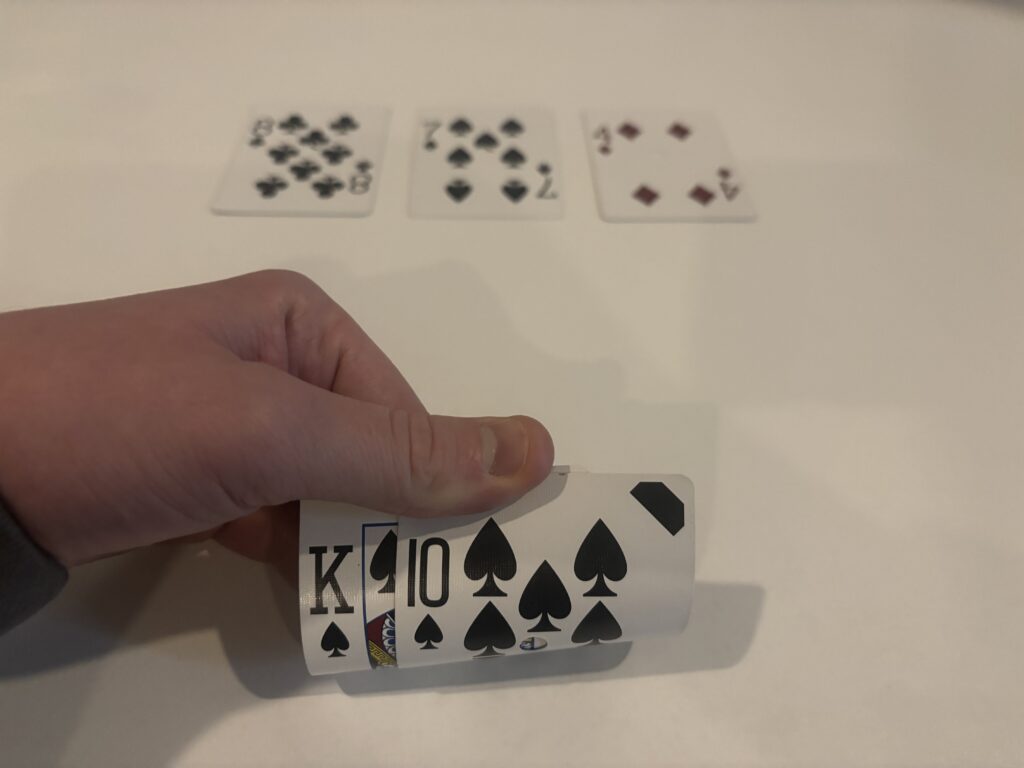
Use favorable boards to apply pressure on the nit.
Tip #5 – Using Big Bets
In my experience, nits are far more affected by large bets than almost any other player type, and I use this systematically rather than situationally. When I identify a nit at the table, I shift my default bluffing size up by one level in every spot where I am applying pressure, because the larger bet converts folds at a significantly higher rate against this specific profile than it would against a balanced opponent.
Unlike LAGs or TAGs, poker nits tend not to be very studied poker players but rather old-school players who learned how to play the game on the go.
There isn’t really too much method to their play, and their entire strategy is predicated on the idea of avoiding losing big pots while winning some small ones along the way to break a small profit.
The problem with that strategy in a game like No Limit Hold’em is that we, their opponents, have a chance to bet big and bet often, and this goes directly against the nit’s desire to stay out of big pots.
So, when playing against a nit, you can often win the pot with pure aggression. Making big bets with your draws or relatively weak hands will often make them fold top pair or better, as he is afraid of monsters.
This isn’t to say that you should try to bluff the nit out every chance you get, as their range will often be so strong, but when you do try to win a pot off him, you should make sure to bet big and with confidence, as that’s the one thing nits are most afraid of.
Tip #6 – Check-Raise the River When They Stop-and-Go
One of the most profitable plays I use against nits is the river check-raise when they have employed a stop-and-go line: they call the flop, check back the turn for pot control, and then bet small on the river. This line almost always indicates a marginal made hand such as top pair, weak kicker, or second pair, because a nit with genuine strength would have built the pot on the turn rather than pot-controlling with it.
When I see a nit bet the river after checking back the turn, I know their range is capped. They are never betting three streets with a hand strong enough to call a large raise, because they would have raised on an earlier street if they had that kind of holding.
A check-raise in this spot puts them in a position their strategy is not designed to handle: they must either call a large river raise with a marginal hand or fold something they should have protected earlier in the hand. They will fold everything except the very top of that capped range at a high frequency, and the hands they do call with are encountered randomly, not as a result of any systematic read error on your part.
This play requires patience, because it only surfaces when the nit has used that specific turn check-back line. But once you train yourself to recognize it, it becomes one of the most reliable exploits available against this player type.
Formulating Your Perfect Formula Against Nits
Poker nits are perhaps the easiest poker players to play against, as they tend to play their hands without much balance or disguise, often advertising the strength in advance. A poker nit will play his big hands very aggressively while playing everything else passively and just calling, helping you narrow down his range much more precisely.
Nits are very afraid of big bets, which is why you should utilize them when bluffing, and this should be your plan anytime the board does not work well with the nit’s range, even if your hand isn’t particularly good.
Your game plan against nits should diverge significantly from what GTO strategy recommends, because the ranges they defend are far narrower than what a solver assumes for a balanced opponent.
That said, I do recommend using PeakGTO, PokerCoaching’s own solver, to understand the GTO baseline before making exploitative deviations. Once you know what balanced calling ranges look like, the spots where a nit is under-defending become much clearer, and the size of the edge in each spot becomes quantifiable rather than estimated.
Apply these six adjustments consistently, and you will find the nit spending most of the session folding, while the rare moments they play back always represent strength you can comfortably step aside for.